
Thai Prince Becomes a Gardener in Bandung, His Reason is Heartbreaking
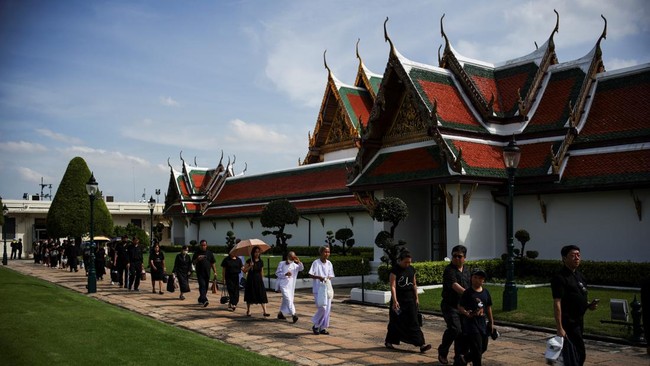
A drastic change in lifestyle from the opulent surroundings of the royal palace to that of an ordinary citizen was experienced by Prince Siam Paribatra Sukhumbandhu, whose territory is now known as Thailand. He lived a simple life as a gardener in Bandung due to the effects of major political turmoil that struck his country.
As the son of King Chulalongkorn and Rama V, Paribatra grew up in the elite royal circle while holding several strategic positions in the government. In the book Thailand: A Short History (2004), Paribatra is recorded as having served as Commander of the Navy, Minister of the Interior, and royal advisor. However, all those privileges and powers were instantly destroyed after the coup on 24 June 1932, which ended the dominance of absolute monarchy.
The coup directly impacted Paribatra, given that he was part of the royal family both politically and by bloodline. He had to leave the palace he had occupied for decades and essentially lost his footing in his birthplace.
After the coup, Paribatra was initially confused about determining his next life direction. He considered going to Europe but ultimately chose the Dutch East Indies as a place of refuge.
Archives from the newspaper De Indische Courant edition of 6 August 1932 record that Paribatra arrived in Batavia before settling in the Cipaganti area, Bandung. He arrived with his wife, five children, and several other followers—marking a new chapter in the life of a prince who fell from the centre of power to a simple existence in a foreign land.
Paribatra’s decision to stay in the Paris of Java was chosen because the city’s atmosphere suited him as a retiree. There, the atmosphere was so cool, quiet, and full of beautiful natural scenery.
Although considered an exile in Thailand, Paribatra was highly respected in the Dutch East Indies. High-ranking officials still regarded him as a great and meritorious figure. It is no wonder that he was given freedom in Bandung.
The daily De Indische Courant (22 August 1933) reported that Dutch East Indies officials provided three large houses in Bandung as his residence. That residence was then used by the prince to channel his hidden activity, which was becoming a gardener.
Bandung historian Haryoto Kunto in Semerbak Bunga di Bandung Raya (1986) recounts that Paribatra became an orchid plant expert in his new home.
Day by day, Paribatra became a gardener and successfully built a beautiful flower garden in front of the house. From that garden, Paribatra introduced orchid seedlings that were later widely distributed in the Bandung area. Quoting the magazine Mooi Indie (1937), he willingly became a gardener because he felt Bandung was still lacking in flowering plants.
In addition to gardening, Paribatra also enjoyed touring Java, Sumatra, and Bali. Every time he went on holiday, Paribatra’s footsteps always attracted the attention of many media outlets.
During the period 1933-1938, he is recorded as having visited Malang, Surabaya, Yogyakarta, Bali, Kediri, Bogor, Medan, and so on. Usually, Paribatra came with a group and stayed in hotels for several days.
When visiting Malang, for example, the newspaper Soerabaijasch Handelsblad (15 June 1937) reported that Paribatra and 12 others were provided hotel facilities by local officials. Subsequently, they were taken on tours to tourist spots. Sometimes, Paribatra also retraced the steps to areas previously visited by Rama V in the Dutch East Indies.
Several years later, Paribatra Sukhumbandhu’s life ended on 18 January 1944. He passed away at the age of 62 and was buried in Bandung. However, in 1948, his remains were repatriated to his birthplace to be cremated at the Royal Palace in Bangkok.