
TGKH M Zainuddin Abdul Madjid: Father of Building Many Madrasahs and Mosques
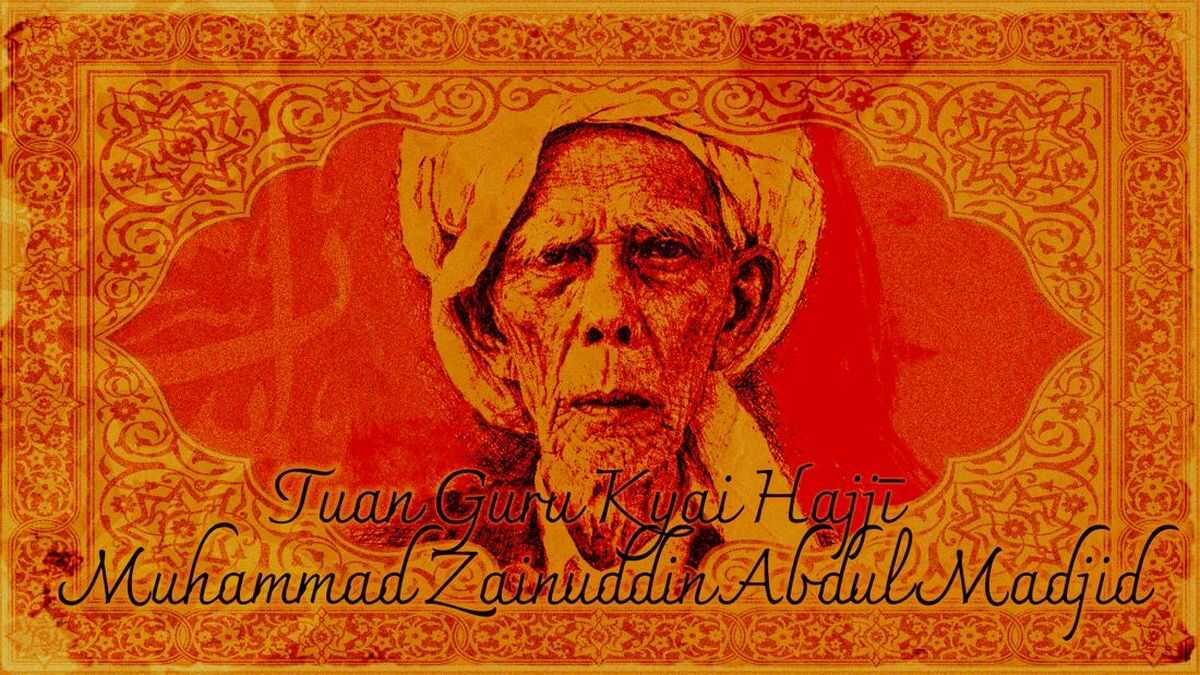
Tuan Guru Kiai Haji (TGKH) Muhammad Zainuddin Abdul Madjid, known as the ‘Sun from the East’, advanced Islamic education in West Nusa Tenggara (NTB). Not only a cleric, he was also a fighter for Indonesia’s independence. He was subsequently designated as a National Hero of Indonesia by the state on 9 November 2017 through Presidential Decree No. 115/TK/Tahun 2017. He bore the birth name Muhammad Saggaf. His name was changed to the present form because his father was inspired by a charismatic and virtuous ulama, Muhammad Zainuddin Serawak. Zainuddin was the youngest of six siblings. He had two wives, each with one daughter. Quoting from the biography Biografi Tokoh: Tuan Guru Kiai Haji (TGKH) Muhammad Zainuddin Abdul Madjid, published by Kantor Bahasa NTB for the Ministry of Education and Culture (Kemdikbud), his educational journey began with four years at Sekolah Rakyat Negara (Sekolah Gubermen). After that, Zainuddin’s father entrusted him to study with several teachers, including TGKH Syarafuddin, TGKH Muhammad Sa’id, and TGKH Haji Abdullah. From these teachers, Zainuddin studied religious knowledge with Arab-Melayu texts and Arabic. He then continued his studies to Mecca at the age of 15. He studied at Madrasah Asshaulatiah, a school that produced thousands of ulama in the Kingdom of Saudi Arabia. He completed his studies in six years, out of the nine-year curriculum. Returning from Mecca, Zainuddin went back to Lombok and founded the pesantren Al-Mujahidin. Three years later, in 1937, he established Nadhlatul Wathan Diniyah Islamiyah (NWDI), a male-only school. In 1943, he founded Nahdlatul Banat Diniyah Islamiyah (NBDI), a school for girls. These two madrasahs were the first on Lombok Island. Students who had studied at NWDI and NBDI were then sent to the far corners of the archipelago. Consequently, madrasahs, including mosques, under Zainuddin’s aegis were established across Indonesia. As the number of madrasahs increased, Zainuddin founded an organisation to oversee them named Nahdlatul Wathan (NW) in 1953. Therefore, he became known by the nickname Abu Madaris Wal Masajid, meaning ‘Father of Building Many Madrasahs and Mosques’. In addition to his roles in education for the Sasak people or the Muslims of Nahdlatul Wathan, he also played a major role for Indonesia during the colonial era. In 1945, he was a pioneer of Indonesia’s independence in Nusa Tenggara, particularly Lombok. Then in 1946 he pioneered the assault on the NICA forces in Selong, East Lombok. NWDI and NBDI were used as training centres for patriots to prepare to fight and drive away Japanese and Dutch colonial occupation. After the proclamation of independence, Zainuddin also became a member of the Indonesian Constituent Assembly elected in 1955. He was also a participant in the Asia-Africa Islamic Conference (KIAA) in Bandung. In politics, his role as a legislator also included 1972-1982 as a member of the People’s Consultative Assembly (MPR) of the Republic of Indonesia. Zainuddin Abdul died at the age of 99. He passed away at the Hamzanwadi Nahdlatul Wathan boarding school complex in Pancor Village, East Lombok. This article is part of a series about Muslim scholars, figures, and intellectuals who became National Heroes of Indonesia published by CNNIndonesia.com during Ramadan 1447 AH.