
Testing the Quality of Investments Amid Surging Foreign Capital Commitments
In the midst of a global economic landscape shaken by geopolitical tensions and slowing trade, Indonesia has recorded an apparently impressive achievement: investment realisation in the first quarter of 2026 exceeded targets, while investment commitments are flowing strongly from various partner countries.
However, behind these glittering figures lies a fundamental question: are the incoming investments truly of high quality and capable of driving economic transformation, or do they merely inflate statistics without real impact on society?
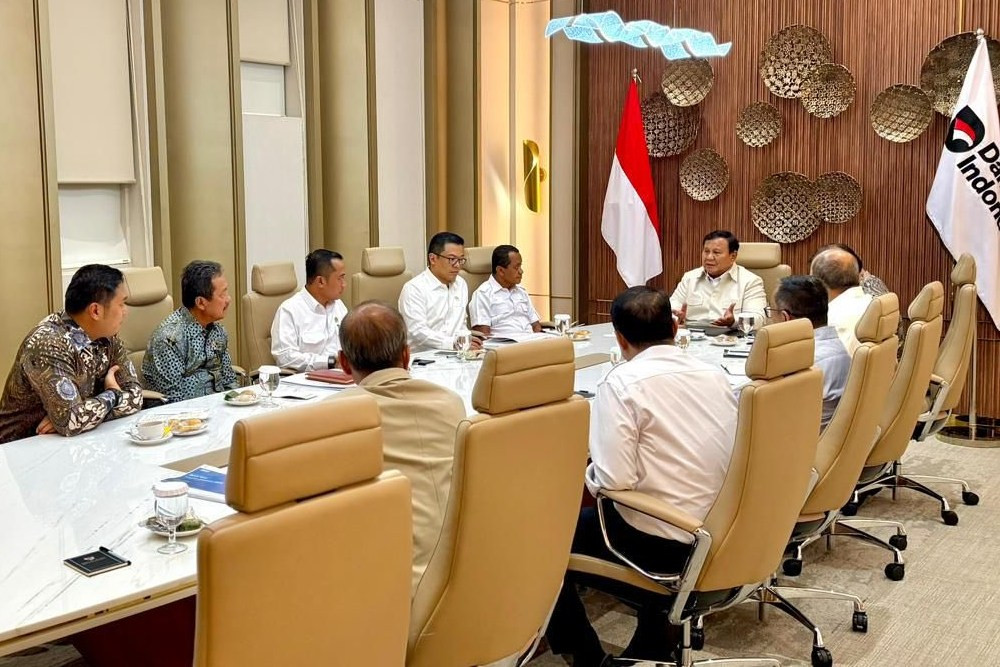
Following a recent meeting with Prabowo Subianto at the State Palace, Rosan Perkasa Roeslani provided a broad overview of the dynamism in Indonesia’s investments.
He had just completed a series of visits to several key countries, from Singapore and China to accompanying the President to South Korea and Japan.
“In every event, when accompanying the President, there is always a meeting with the business world, with entrepreneurs, either on a large scale, in the market say more than 100 people, or smaller ones around 12 people that the President meets directly,” he told reporters.
From these meetings, Rosan discerned a common thread: global investor interest in Indonesia remains undiminished, even amid global uncertainties.
“From what we see, despite the current situation, wars, global geopolitics, global geo-economics, their interest and enthusiasm for investing in Indonesia is very high, still very good. And this is proven by the investments coming in, which are still in line with our plans,” he stated.
This optimism is not unfounded. Official data shows that investment realisation in the first quarter of 2026 reached Rp498.79 trillion—exceeding the Rp497 trillion target or equivalent to 100.36%. On an annual basis, this figure grew by 7.22% year-on-year (yoy).
Not only that, the investments are claimed to have absorbed 706,569 workers, up 18.93% annually.
Big Ambitions: From Rp9,100 Trillion to Rp13,000 Trillion
The government is targeting a surge in investments over the next five years. If in the last decade from 2014–2024 the investment realisation was around Rp9,100 trillion, then for the 2025–2029 period, the target is more than Rp13,000 trillion as stated in the national development planning document prepared by Bappenas.
Investment Minister/Head of BKPM Rosan Roeslani said the target is indeed a significant increase compared to previous achievements, but is still considered realistic to achieve.
He also revealed that investment commitments from several partner countries are substantial. Japan is potentially investing more than US$30 billion or about Rp517.5 trillion, South Korea around US$10 billion or equivalent to Rp172.5 trillion, while China remains one of Indonesia’s main investors.
“If in Japan, if I’m not mistaken, it’s almost more than US$30 billion. In Korea, it reached almost US$10 billion at that time. So, alhamdulillah, it’s very good,” he said.
However, these figures are essentially still commitments—not realisations.
Rosan conveyed that President Prabowo Subianto emphasised that investments should not only be large in nominal terms but also impactful in creating quality jobs.
He added that the president is also pushing for regulatory reforms to avoid hindering investments, in line with efforts to enhance Indonesia’s competitiveness compared to other ASEAN countries and global standards like the Organisation for Economic Co-operation and Development (OECD).
Upon closer examination, Indonesia’s investment structure is still dominated by resource-based sectors. The five largest sectors include basic metal industry (smelters), services, mining, industrial estates and housing, as well as transportation and telecommunications.
“The largest sector is actually the basic metal industry or metal goods, like smelters and others. Then other services Rp60.2 trillion, mining Rp51.9 trillion, then housing, industrial estates Rp47.9 trillion, and the fifth largest transportation, warehousing, and telecommunications around Rp45.4 trillion,” Rosan explained.
Quality Questioned
Nevertheless, Teuku Riefky, a researcher at LPEM FEB UI, assesses that this investment achievement does not yet fully reflect the expected quality.
He emphasised that while this composition shows the success of downstreaming policies, particularly for commodities like nickel, on the other hand, reliance on extractive sectors also raises concerns.
“It feels not yet; so far, we haven’t seen the creation of quality jobs from these investments. Thus, wage levels and people’s purchasing power remain stagnant,” Riefky said.
He also highlighted the distribution of investments, which is still uneven, especially since investments outside Java are concentrated in certain areas.
In the context of downstreaming, Riefky assesses that the impact of investments on society is still not optimal. He stated that to date, the benefits of these investments have not fully materialised in the form of job creation for the community.
A similar view was expressed by INDEF economist Muhammad Rizal Taufikurahman. He reminded that investment commitments cannot be equated with realisations.
“The Rp1,314 trillion investment commitments in the first quarter of 2026 need to be placed in a realistic context because not all of it can be immediately realised. Empirically, the investment conversion rate in Indonesia is generally only in the range of 30–50% within the first 1–2 years,” he explained.
According to him, the main challenges are still structural, namely in permitting, land, and central-regional coordination. In addition, non-economic factors such as social resistance and environmental issues often become sources of project delays.
He also underlined the risks if the government focuses too much on numbers.