
Testing a Trade Agreement with the US: Will Indonesia Gain or Lose?
Robert Gilpin, one of the principal architects of international political economy studies, once reminded us that “the market is embedded in a political order; it does not exist independently of power.” He emphasised a point that is often overlooked: global markets do not always follow the laws of supply and demand alone, but operate in the shadow of power structures. Trade rules, technical standards, and even who is permitted to impose tariffs and who must adapt—all emerge from political structures. Thus, when international trade is wrapped in pleasant language such as “reciprocity”, “strategic partnership”, or “mutually beneficial cooperation”, the question becomes: who holds the pen when these rules are written? In global political economy, what appears to be a market transaction is often actually a negotiation of power in more elegant packaging.
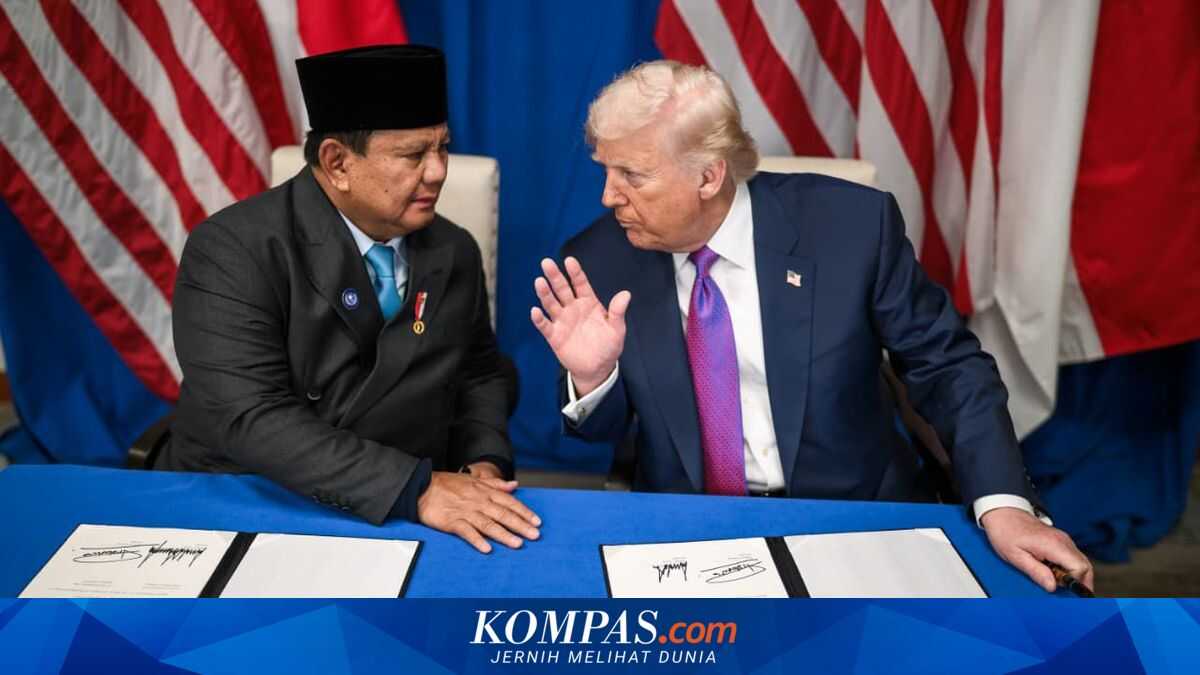
On 19 February 2026, President Prabowo Subianto and United States President Donald Trump signed an Agreement on Reciprocal Trade (ART), which ended a period of uncertainty triggered by the imposition of a 32 per cent “reciprocal tariff” on Indonesian exports in April 2025. The agreement reduces the additional tariff to 19 per cent and exempts 1,819 Indonesian tariff lines—1,695 industrial products and 124 agricultural products—from the additional tariff. Additionally, a tariff-rate quota (TRQ) mechanism for textiles allows the additional tariff to become zero within a certain volume limit.
The question is whether this is rational and strategically safe across three time horizons: short term (export protection), medium term (reciprocal balance), and long term (policy space for development).
In the short term, the government’s argument has a solid empirical basis. Indonesia exports approximately 28–30 billion US dollars in goods to the United States annually. In 2024, the US recorded a trade deficit of approximately 19 billion US dollars against Indonesia—a figure that subsequently became the basis for imposing reciprocal tariffs. If the 32 per cent additional tariff were implemented broadly, Indonesia’s competitiveness in labour-intensive sectors such as textiles, footwear, furniture, and rubber products would be severely damaged. Reducing the additional tariff to 19 per cent and exempting 1,819 tariff lines has the potential to reduce this pressure significantly. If most of Indonesia’s major exports are indeed included in the exemption list and face only normal most-favoured-nation (MFN) tariffs, then the average effective tariff rate facing Indonesian exports could be in the single to double digits range, not approaching 30 per cent. In the context of 4–5 million workers in labour-intensive sectors dependent on the US market, avoiding this competitiveness shock has real social and economic value.
However, whether this agreement is balanced or unbalanced requires deeper examination. First, it must be understood that exemption from additional tariffs does not mean duty-free status. Many products such as apparel and footwear continue to face MFN tariffs in the range of double digits. Most-Favoured Nation tariff is the standard import duty that a country applies equally to all WTO members without discrimination. The textile TRQ is also conditional and volume-limited, and is linked to the purchase of inputs from America such as cotton and synthetic fibres. This Tariff Rate Quota (TRQ) mechanism means that Indonesian textile and apparel products will be tariff-free up to a certain quota limit, with normal tariffs applying once the quota is exceeded. This pattern resembles managed trade rather than pure liberalisation. In such a structure, trade relations shift from market logic towards quota logic and continuous negotiation.
Second, Indonesia’s commitment to eliminate tariffs on 99 per cent of US products is a legally binding concession. The government argues that Indonesia’s effective tariff is indeed relatively low—approximately 8 per cent average MFN—and many US products whose tariffs will be reduced are capital goods or raw materials that actually increase the competitiveness of domestic industry. This argument is valid from a microeconomic perspective. Reducing tariffs on machinery, components, or raw materials can lower production costs and increase productivity.
However, when liberalisation is codified in international agreements, policy flexibility narrows. A country loses some space to use tariffs as an instrument for balancing industrial cycles, as a tool for trade negotiations, or as a selective protection instrument. In the medium to long term, this constraint shapes the room for manoeuvre in future industrial policy.
Third, the ART does not only touch on tariffs. Adjustments to non-tariff barriers, simplification of import licensing, recognition of US regulatory standards in certain sectors such as medical devices and pharmaceuticals, and relaxation of foreign ownership limits in several sectors expand the implications of this agreement into Indonesia’s domestic regulatory architecture.