
Tesla Rolls Out Full Self-Driving Supervised V14 Software in Australia
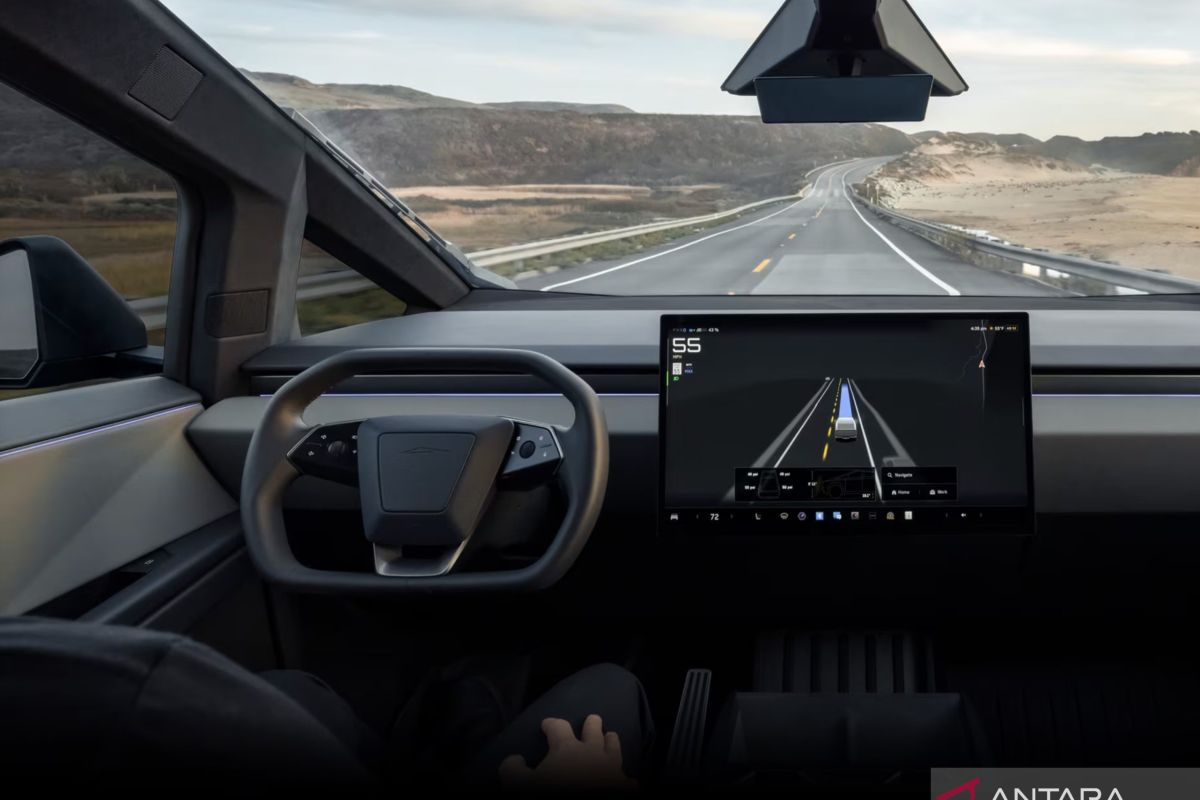
Tesla has commenced the rollout of its Full Self-Driving (FSD) Supervised version 14 software update to users in Australia. The update brings enhanced semi-autonomous driving assistance capabilities, which the company claims are faster and more intelligent in responding to traffic situations across various road conditions. The latest update reportedly improves the vehicle’s ability to detect road obstacles, change lanes, operate in bad weather, and make decisions when facing complex traffic scenarios. Despite these improvements, Tesla emphasises that FSD Supervised is still not a fully autonomous driving system. Drivers are still required to pay attention to road conditions and be ready to take over control of the vehicle at any time. FSD V14 is currently being distributed in stages via over-the-air software updates to Tesla owners who have purchased the FSD Supervised package and are using vehicles equipped with Hardware 4 cameras. Hardware 4 is used in Tesla Model 3 vehicles produced since September 2023 and Tesla Model Y vehicles produced since January 2024. Due to the phased launch process, not all eligible vehicle owners will receive the update immediately. Meanwhile, Tesla has not provided certainty on when owners of older vehicles still using Hardware 3 will be able to access FSD Supervised, either version V13 or V14. The version becoming available in Australia and New Zealand is FSD V14.3.3, the latest version that was first launched in the United States approximately two months ago. Tesla states that V14 offers faster and more accurate decision-making compared to V13, thanks to broader artificial intelligence training and software architecture refinements. In update notes sent to customers, Tesla claims the new system has a 20 percent faster response time than the previous generation. The system is also said to have a better understanding of rare situations and low-visibility conditions. Other updates include improved responses to emergency vehicles, school buses, road users violating right-of-way, and various rarely encountered vehicle types. The system is also claimed to be more capable of recognising small animals, unusual objects protruding into the vehicle’s path, and managing complex intersections with more complicated traffic light configurations. Tesla has also improved the driver monitoring camera, which functions to ensure the driver remains attentive to the road while the FSD Supervised feature is active. According to the company, the new system offers more accurate eye gaze tracking, the ability to recognise users wearing glasses, and better performance in various lighting conditions. Improvements have also been made to the system’s capabilities when facing bad weather that can reduce camera visibility. Tesla has been testing FSD Supervised V14 on Australian roads over the past several months. Two weeks ago, the company stated that the software had entered the final stage of local development. Version V14 also serves as the foundation for the development of unsupervised Full Self-Driving, which is currently being tested on autonomous taxi fleets based on the Tesla Model Y in several cities in the United States, both with and without a test driver behind the wheel.