
Terror as a Political Message
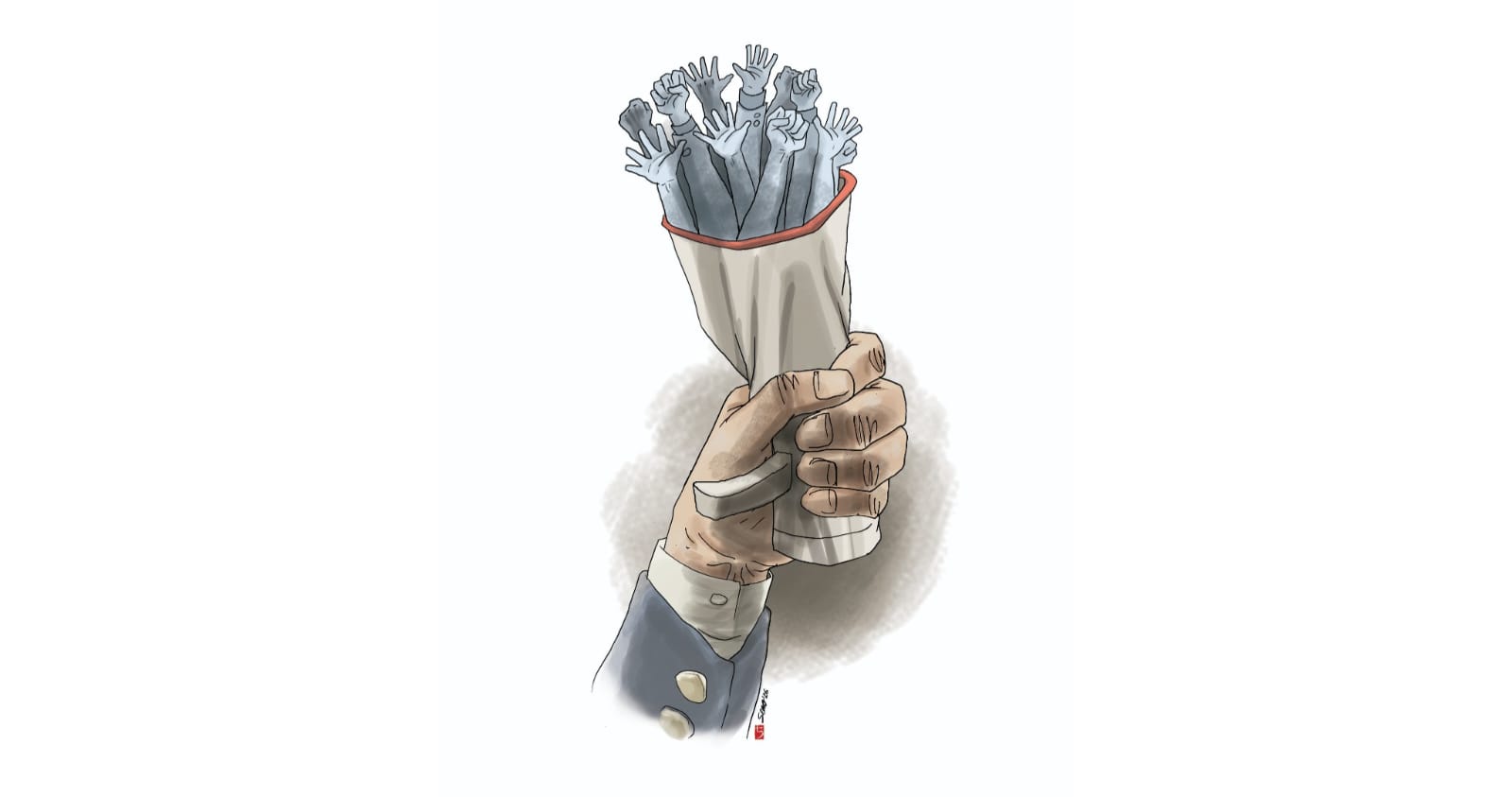
The intellectual world has just bowed its head, bidding farewell to Jürgen Habermas at the age of 96. The sage of critical theory spent nearly a century dreaming of an ‘agora’—a public sphere where humans humanise each other through the power of argument, not physical force. Habermas leaves behind a fundamental legacy of thought on the meaning of freedom unisolated from power. Yet, just as the world contemplates these lofty ideals, a bitter irony unfolds in our homeland with the acid attack on Kontras activist Andrie Yunus.
This incident jolts our reason with a painful question: is the public sphere dreamed of by Habermas as an ‘unfinished project’ now dying at the hands of physical intimidation? If Habermas believed that democracy lives on the breath of rational communication, then the acid that wounds an activist’s body is the most primitive and brutal form of communication. From the perspective of political communication, this act is not merely street crime but a forcibly constructed terror communication as a symbolic message to silence every voice daring to offer an alternative reality outside the narrative of power.
THE DEATH KNELL OF CIVIL REASON
Indonesia is not alone in the erosion of civil decency, which has become a global phenomenon. In Europe, Reporters Without Borders reports a ‘drastic decline’ in media freedom due to political pressure and rising direct physical threats to journalists and activists. Meanwhile, in the United States, extreme affective polarisation has turned political opponents into enemies prone to intimidation. This global phenomenon seems to confirm Habermas’s concern that the democratic project will always be threatened with collapse if physical violence begins to replace the power of reason.
World political communication intellectual Doris Graber reminds us that political language manifests not only in rhetoric or state speeches but also in physical actions such as protests, boycotts, and symbolic violence. The attack on Andrie Yunus is a symbol of cruelty sent to the entire civil society. Its goal is clear: to send a signal that criticism comes at an extremely high price, with the body as the stake.
This terror serves as a message to civil society that there is a very high price for those who dare to offer an ‘alternative definition’ of the reality constructed by power. It is an effort to delegitimise criticism that creates a chilling effect by dehumanising public reason. The terror against the Kontras activist is truly a residue of coercive reason that grows in the womb of democracy.
When acid becomes the ‘answer’ to argument, the substance of democratic values has been crushed, leaving only empty procedures that look beautiful on paper. The Economist Intelligence Unit (EIU) 2025 report, which places Indonesia’s democracy score at 6.44 in the flawed democracy category, serves as a statistical reflection validating that physical wound.
DISCORDANT VOICES AND THE DEATH OF CRITICAL DIALOGUE
Habermas dreamed of the public sphere as a clear field of dialectics, where citizens think critically without repressive barriers. However, the reality in Indonesia today presents what Barbara Pfetsch calls dissonant public spheres. Unlike the idealism of seeking consensus, our public sphere is now defined by the noise of unsynchronised voices, contradictory claims, and modes of communication that have breached the ethical boundaries of humanising deliberation.
In this dissonant situation, dehumanisation of political opponents or critics becomes the norm. When criticism is no longer answered with counter-arguments but with labelling and character attacks, the interlocutor ceases to be seen as a dialogue partner and is instead positioned as an enemy to be eliminated.
It is at this point that physical violence like the acid terror against the Kontras activist emerges as a logical consequence of a communication climate that delegitimises criticism as a threat to stability. That acid is the physical outlet of unmanaged hatred by communication ethics, proof that our political communication has shifted from a arena of persuasion to an arena of elimination through fear.
RESTORING THE SOVEREIGNTY OF CIVIL DECENCY
Democracy requires more than mere procedural rules. It demands real efforts towards restoring civic virtue. Although political elites today are quick to condemn the terror act against the Kontras activist as not aligning with the President’s agenda of upholding human rights, communication must not stop at lip service or performative rhetoric. Real solutions demand measurable evidence, transparent law enforcement, and impartial justice so that the legitimacy of power is not crushed in the public’s eyes.
Unfortunately, we often witness symptoms of an ‘allergy’ to criticism, with power responses tending to be elitist and defensive. If elites continue to toy with tolerance or even construct narratives that delegitimise critics, it risks becoming a boomerang of massive distrust.
Václav Havel once advised that democracy is a horizon, an ideality that we must continually approach, even if it may never be fully achieved. However, in Indonesia today, that horizon seems increasingly distant, shrouded in a fog of intimidating fear. When terror communication in the form of an acid attack on a Kontras activist becomes the ‘answer’ to critical arguments, we are not approaching that horizon. On the contrary, we are steering a ’ship