
Terrifying Making War, Wall Street in Flames - Oil Surges Past US$110/Barrel
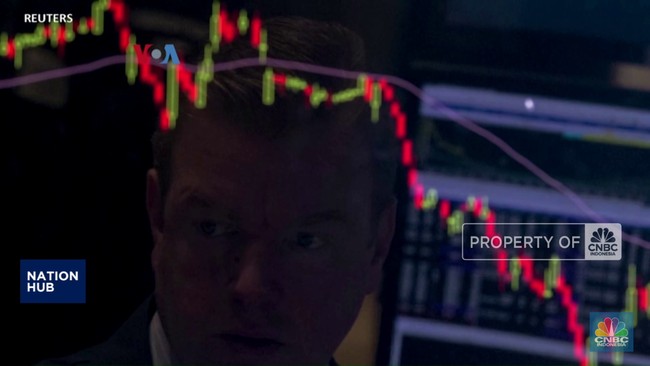
The United States stock market closed lower on Wednesday (19/3/2026) afternoon local time. This occurred after being pressured by a surge in global oil prices amid rising geopolitical tensions and signals of higher inflation from the US central bank.
Wall Street’s main indices all ended in the red. The S&P 500 fell 1.4%, the Dow Jones weakened 1.6%, and the Nasdaq corrected 1.5%.
Negative sentiment was triggered by the sharp jump in world oil prices following attacks on Iran’s main gas facilities. Brent crude prices surged more than 6% to near US$110 per barrel before closing up around 3.8% at US$107.38 per barrel.
This rise in energy prices further burdened the market after Federal Reserve Chair Jerome Powell stated that inflation could increase in the short term. He emphasised that the central bank would take a ‘wait and see’ approach while keeping interest rates steady.
“We are still in the early stages, and it is not yet clear how significant the impact will be or how long it will last,” Powell said.
Inflation & Interest Rates Pressure Sentiment
In addition to energy factors, the market was also pressured by US wholesale inflation data (PPI) for February, which rose higher than expected. This strengthened concerns that price pressures have not fully eased.
According to Steve Sosnick, an analyst at Interactive Brokers, the combination of various negative factors has left the market without positive catalysts. “There is nothing driving the market higher at the moment. High interest rates, poor inflation data, and the Fed not ready to ease policy,” he said.
Middle East Conflict Triggers Oil Surge
The rise in oil prices was triggered by the escalation of conflict in the Middle East. Iran threatened to attack energy facilities in the Gulf region after accusing Israel of being behind the attack on the South Pars gas field.
Iranian President Masoud Pezeshkian warned that this situation could have widespread global impacts. Retaliatory attacks were also reported targeting energy facilities in Qatar, including the Ras Laffan complex, sparking concerns over global energy supply disruptions.
Previously, oil prices had weakened after Iraq announced the resumption of limited exports through the Ceyhan port in Turkey—an alternative route that bypasses the Strait of Hormuz. This strategic strait typically handles around 20% of the world’s oil supply but is currently disrupted due to conflict and attacks on vessels.