
Tense Predictions for This Year's Isbat Session
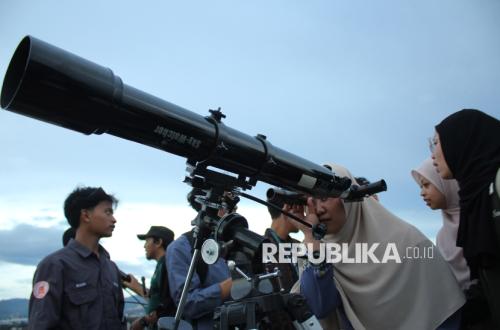
As the sun sets on the western horizon, it brings back an annual question: when exactly will Muslims in Indonesia celebrate Idul Fitri? Amid the slowly darkening sky and millions of hearts preparing to welcome the day of victory, the answer will be decided in the Sidang Isbat held by the Ministry of Religious Affairs of the Republic of Indonesia.
The Sidang Isbat is not merely an administrative forum. It is a meeting between science and faith, between mathematical calculations and sky observations, aimed at providing certainty for the faithful in navigating the times of worship.
In this forum, two main approaches converge: hisab and rukyat. Hisab brings precision through astronomical calculations, determining the moon’s position with numbers and formulas. Meanwhile, rukyat relies on the human eye gazing at the horizon, seeking the thin crescent of the hilal as a sign of the new moon.
That is where the uniqueness of the Sidang Isbat lies: it does not choose one over the other but embraces both. An effort to maintain balance between scientific rationality and the long-rooted religious traditions in Islamic history.
This tradition itself is not new. Since the early days of independence, the state has paid attention to the determination of religious holidays. In 1946, under Soekarno’s leadership, Government Regulation Number 2/Um was born, regulating the importance of determining major religious days. Since then, the determination of Idul Fitri has become part of the state’s responsibility through the Minister of Religious Affairs.
Entering the 1950s to early 1960s, the Sidang Isbat began to be institutionalised more systematically. During the tenure of Minister of Religious Affairs Saifuddin Zuhri, this mechanism was strengthened through Ministerial Decree Number 47 of 1963. Since then, the Sidang Isbat has become a shared space where ulama, scientists, and the government sit at the same table to determine the start of the Hijriah month.
The process begins long before the decision is announced. The Hijriah calendar unification team presents the hilal position based on hisab. At the same time, observers across the country, from coasts to hills, gaze at the evening sky, trying to capture the appearance of the hilal which is often so thin and faint.
Field data is then brought into a closed session led by the Minister of Religious Affairs. There, representatives of Islamic social organisations, ambassadors from friendly countries, as well as institutions like BMKG and BRIN are present. All views are considered, all data is tested, before a final decision is made.
However, just as the sky is not always the same in every place, the decision is sometimes not entirely uniform with the views of some groups. Differences in determining the start of the Hijriah month are not new in the history of Indonesian Muslims. Nevertheless, the Sidang Isbat remains a space for literacy, where the faithful learn to accept differences with maturity.