
Tens of Thousands of Officers Begin Field Verification of Health Insurance Subsidy Recipients Today
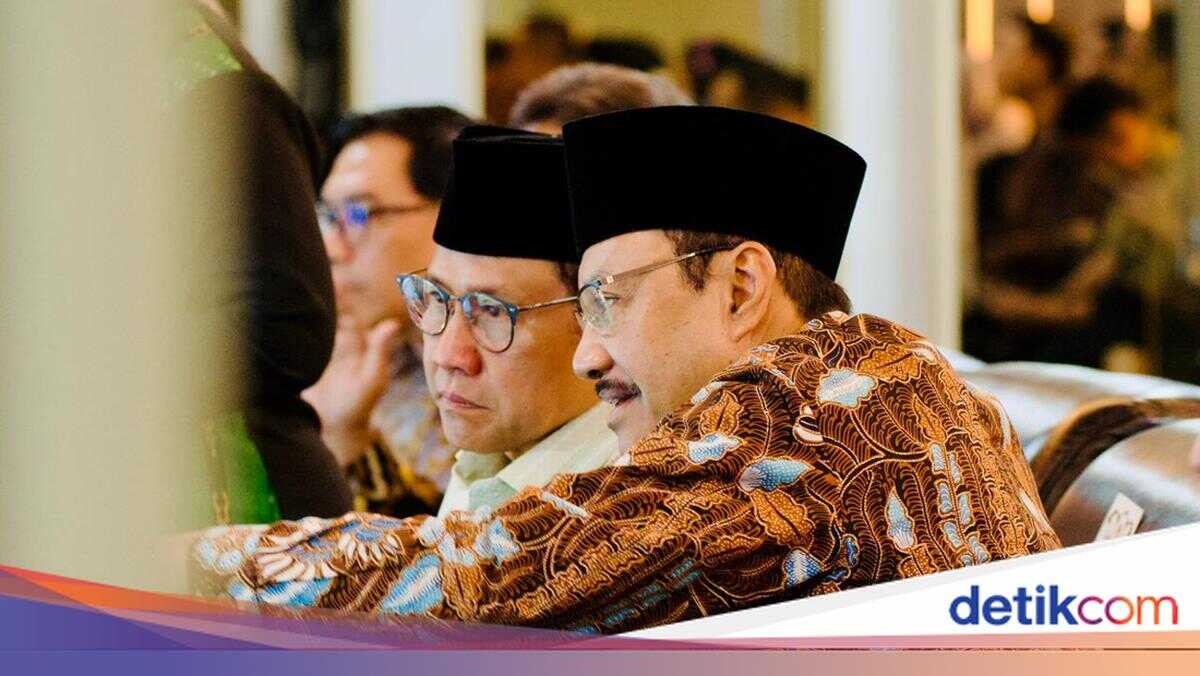
Minister of Social Affairs Saifullah Yusuf (Gus Ipul), Coordinating Minister for Community Empowerment Muhaimin Iskandar (Cak Imin), and Head of Statistics Indonesia (BPS) Amalia Adininggar Widyasanti have launched a ground check or field verification programme. The initiative aims to validate data on BPJS Kesehatan participants in the Contribution Assistance Recipients for Health Insurance (PBI-JK) segment whose coverage had previously been deactivated.
“In accordance with the Coordinating Minister’s directive, today we are following up on the joint decision with the House of Representatives some time ago to commence the ground check,” said Gus Ipul in a statement on Thursday (19/2/2026).
He made the remarks at the ground check launch event held at the National Statistic Command Centre (NSCC), BPS headquarters, Jakarta, on Thursday (19/2).
On the occasion, Gus Ipul provided guidance to PKH social workers, regional BPS officers, and statistical partners who will be involved in the ground check process as part of updating the National Socio-Economic Single Data (DTSEN).
“This involves tens of thousands of PKH social workers, BPS officers or statistical partners, and hopefully the public will provide the most honest information possible,” he said.
In his briefing to the social workers, Gus Ipul emphasised that the ground check must comply with BPS standards, follow the instruments with discipline, and not be filled based on assumptions but rather on objective conditions found in the field.
Furthermore, social workers must ensure that the data collected is accurate, honest, and objective.
“Remember, the data you fill in will determine who is protected by the state,” he said.
Gus Ipul asked PKH social workers to strengthen coordination with BPS and regional Social Affairs offices. He also urged them to carry out the ground check in a timely and responsible manner.
“This ground check is a national mandate that we must complete together,” said Gus Ipul.
As a final message, Gus Ipul expressed hope that social workers would maintain their spirit, integrity, and sense of dedication.
“I understand that this task is not light, especially as it is being carried out during the holy month of Ramadan. However, it is precisely in this month of blessings that every step you take becomes part of a service that holds the value of worship,” he said.
Meanwhile, Amalia explained that the ground check would be conducted in two phases. The first phase would begin today, with training for social workers tomorrow, and field implementation commencing next week with a target completion date of 14 March 2026.
The first phase of the ground check will cover PBI participants suffering from catastrophic or chronic illnesses.
“The first phase of the ground check will cover 106,153 individuals or approximately 104,000 families,” said Amalia.
In parallel, BPS will also prepare for the second phase of the ground check at the end of February. Field verification for the second phase will be conducted after the Eid al-Fitr holiday, beginning on 1 April 2026, and will take approximately one month.
The second phase will cover all deactivated PBI participants who are not suffering from chronic illnesses.
“It is estimated that the second phase will be completed by the end of April, covering approximately 11 million individuals or, converted to families, roughly 5.9 million families,” she explained.
Cak Imin expressed hope that the ground check process, as part of the DTSEN update, would make data more accurate and ensure programmes are properly targeted.
“Today, the Ministry of Social Affairs, regional Social Affairs offices, PKH officers, and the entire BPS apparatus are beginning the ground check of the data we need, so that contribution assistance recipients who truly deserve it can receive it, and those who are not eligible will recognise that there are others more deserving,” he said.