
Ten Occupations Most Easily Replaced by AI: Workers Must Prepare for Career Transition
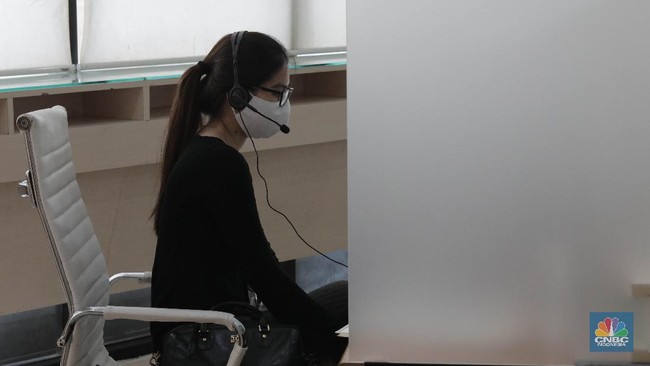
Jakarta – The rapid advancement of artificial intelligence (AI) is increasingly impacting various professions. A latest report from Anthropic reveals ten occupations most affected by AI automation, with computer programmers leading the list.
The report, titled “Labour Market Impacts of AI: New Measure and Early Evidence,” employs a new methodology called “observed exposure,” which measures the extent to which work tasks have actually begun to be automated by AI, rather than merely examining theoretical potential.
This approach distinguishes between AI’s theoretical capabilities and AI usage already occurring in the workplace.
The findings show that computer programmers represent the profession with the highest AI exposure, reaching 74.5 per cent. This means that the majority of tasks in that occupation—coding, creating updates, and managing software—are increasingly being automated by AI technology, particularly large language models.
Positions following closely include customer service representatives (70.1 per cent), data entry specialists (67.1 per cent), and medical records specialists (66.7 per cent).
Based on the report’s data, the following are the ten professions with the highest AI exposure:
Computer programmers (74.5 per cent): Programmers occupy the top position. The majority of their tasks—coding, creating updates, and managing software—are increasingly being automatically taken over by AI.
Customer service representatives (70.1 per cent): Customer interactions, order processing, and complaint handling are gradually being replaced by AI chatbots.
Data entry specialists (67.1 per cent): Repetitive work such as reading source documents and inputting data into systems.
Medical records specialists (66.7 per cent): Compiling, synthesising, and coding patient data has become a task easily replaced by systems.
Market research and marketing analysts (64.8 per cent): Tasks including report preparation, creating data illustration graphics, and interpreting complex research findings are now readily performed by machines.
Wholesale and manufacturing sales workers (62.8 per cent): The work of contacting customers to demonstrate products and request orders has a relatively high level of AI exposure.
Financial and investment analysts (57.2 per cent): Analysing financial information to project business, industry, or economic conditions can be performed quickly by AI.
Software quality analysts and testers (51.9 per cent): Tasks of modifying software to fix bugs or improve performance can already be handled by AI.
Information security analysts (48.6 per cent): Conducting cybersecurity risk analysis and testing data processing security also fall within the automation trend.
Computer support specialists (46.8 per cent): Answering user questions about software or hardware operation can now be handled by AI agents.
However, many tasks and occupations remain beyond AI’s reach, from physical work in the agricultural sector such as tree trimming and operating farm machinery, to legal work such as representing clients in court.
The following are some occupations most difficult to be replaced by AI:
Teachers and educators: While AI can now assess homework or student assignments, it cannot manage and teach a classroom.
Nurses and healthcare practitioners: The nursing profession has a very low level of AI exposure.
Field and manual labourers: This includes agricultural work (tree trimming, operating tractors and machinery), motorcycle mechanics, chefs and dishwashers, lifeguards, bartenders, and clothing attendants.
Litigation lawyers: Specific legal work requiring client representation verbally in courtroom proceedings remains far beyond the reach of AI automation.