
Ten Global Giant Companies Facing Bankruptcy Risk Due to Iran Conflict
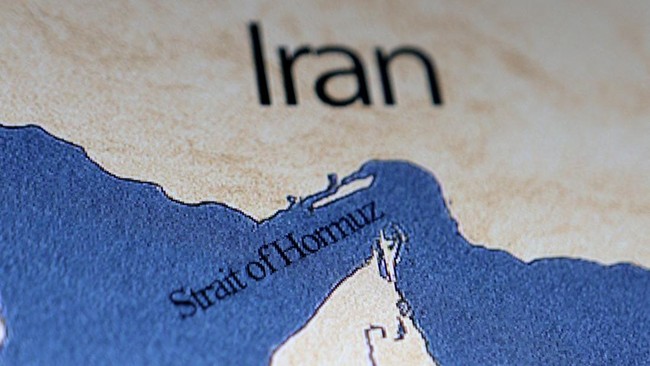
Jakarta — Geopolitical tensions involving the United States, Israel, and Iran have entered an alarming phase for global economic stability.
Market participants are now focusing on the Strait of Hormuz, a narrow maritime passage that serves as the lifeline for the world’s energy and commodity distribution.
Disruption to this critical waterway is certain to trigger operational disruptions for numerous multinational corporations, both those based in the Middle East and international entities globally.
Statistically, the Strait of Hormuz plays a vital role in handling crude oil flows of approximately 21 million barrels per day, equivalent to 21% of total global oil consumption. However, the importance of this passage extends beyond the energy sector alone.
Based on international trade data, the Strait of Hormuz also serves as the primary route for food commodities such as wheat, soy, and industrial raw materials including iron ore and aluminium that support global manufacturing.
Energy and Petrochemical Sector Disruption in the Region
Four major companies in the Middle Eastern energy sector now face significant operational risks. Saudi Aramco and Kuwait Petroleum Corporation (KPC) must contend with severe distribution challenges.
Whilst theoretically rising oil prices could benefit producers, security risks to refinery facilities and soaring tanker shipping insurance costs represent real margin-reducing factors. Export barriers through the Strait of Hormuz are forcing these companies to implement complex and costly logistical adjustments.
Particularly acute impacts are being felt by QatarEnergy. As a provider of 20% of global liquefied natural gas supply, their dependence on uninterrupted access to the Strait of Hormuz cannot be replaced.
Disruption to this passage automatically threatens revenue flows for the nation and energy supply stability to Asian and European markets. Meanwhile, in the metals and petrochemical sector, Aluminium Bahrain (Alba) is experiencing difficulties in distributing products to international markets, potentially leading to force majeure declarations due to severed maritime logistics access.
Impact on Infrastructure, Transport, and Telecommunications Sectors
Beyond the energy sector, three other major Middle Eastern entities are facing severe pressure. Emirates airline must bear the burden of rising jet fuel costs and additional expenses from rerouting flights to avoid conflict zones.
The narrowing of safe airspace around the Persian Gulf is forcing the company to adjust schedules with impacts on their global connectivity through the Dubai hub.
On the port logistics side, DP World has experienced efficiency declines at its cargo terminals in Jebel Ali due to reduced frequency of international container vessel visits, as shipping companies choose to avoid high-risk zones.
From Iran’s domestic perspective, Mobile Telecommunication Company of Iran (MCI) faces the highest risk. As the primary telecommunications service provider, the company is vulnerable to physical infrastructure damage and systematic cyber attacks that could paralyse economic coordination and national communications during wartime conditions.
Systemic Pressures on International Entities
Beyond the Gulf region, three global giant companies—Maersk, MSC, and Mitsui & Co.—represent how these economic impacts are expanding to global markets.
Two major global maritime logistics companies, Maersk (Denmark) and MSC (Switzerland), have taken preventive measures by halting or rerouting voyages from the Strait of Hormuz. This policy has resulted in cargo accumulation and rising container shipping rates globally.
Rerouting ships through the Cape of Good Hope in South Africa adds up to two weeks to travel duration. This not only increases fuel consumption but also disrupts production schedules for manufacturers across countries awaiting component shipments.
In the investment sector, Japanese trading company Mitsui & Co. faces uncertainty over the viability of its long-term energy projects in the region. Declining asset values and supply chain barriers represent genuine threats to their financial performance in the 2026 fiscal year.
Disclaimer: This article is a journalistic product representing the views of CNBC Indonesia Research. This analysis is not intended to encourage readers to buy, hold, or sell products or investment sectors in question. The decision rests entirely with the reader, and we are not responsible for any losses or gains arising from such decisions.