
Telkom University Develops Circular Economy in Garut Through Banana Stem Waste Utilisation
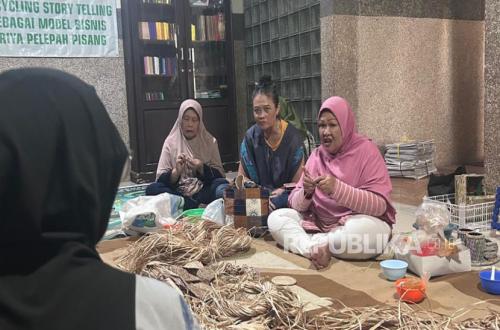
A community service team from Telkom University’s Master of Management programme is continuing a community empowerment initiative through a circular economy approach. After successfully assisting a women’s group in Cipaganti, Bandung, the programme has now been extended to Naringgul Village, Pakuwon, Cisurupan District, Garut Regency. Located approximately 100 km from the Telkom University campus, the academic team is transferring knowledge across regions to optimise local waste potential. The programme aims to drive rural economic transformation through sustainable women’s empowerment. In Pakuwon Village, post-harvest banana stem waste is extremely abundant. Previously, this waste was typically burned, posing a potential environmental hazard. Meanwhile, the women’s group managing a waste bank in Naringgul Village had primarily focused on collecting inorganic waste with relatively low economic value. The majority of participants are former female migrant workers who have chosen to return to their hometown to support their families and build new lives. Through this programme, they receive training to process banana stems into high-value craft products, such as coasters, small wallets, and mini bags. A distinctive feature of the programme lies in the application of storytelling as an innovative business model. The craft products are not merely sold as goods but also carry narratives about environmental conservation and the struggles of former migrant women workers rising up and creating in their homeland. This approach serves as an initial step before the products are marketed independently through digital platforms. To ensure the programme’s sustainability, the Telkom University Master of Management team implements a PENTAHELIX collaboration model involving academics, the private sector, the community, village government, and the media. This collaboration is strengthened by the involvement of Serat Nusa as a technical knowledge transfer partner for natural fibre crafts, and Rumah Zakat as a digital media publication partner and community liaison. Furthermore, support from the industrial sector is expected to play a role in providing communication infrastructure and internet access in rural areas, enabling the craft groups to develop digital storytelling practices independently, effectively, and sustainably. The programme also supports the achievement of Sustainable Development Goal Target 8.3, which promotes entrepreneurship, creativity, and innovation. Additionally, it aligns with the second mission of West Java’s 2025-2029 Regional Medium-Term Development Plan, which focuses on inclusive, independent, competitive, and environmentally sound regional economic development. Through this mentoring, Telkom University demonstrates its commitment to driving the transformation of waste into high-value creative commodities while strengthening the economic resilience of village communities through a sustainable circular economy approach.