
Tehran's Sky Darkens as Oil Refinery Attack Triggers Toxic Cloud
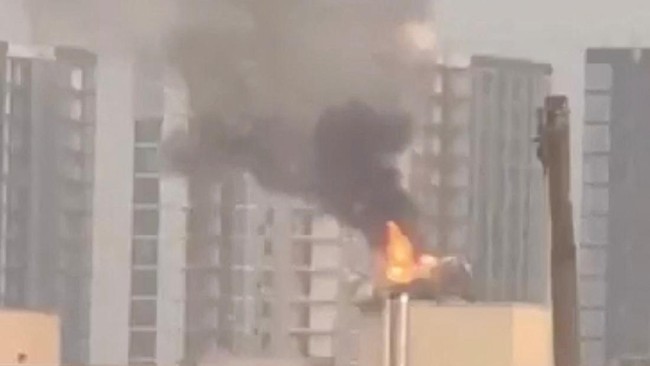
Airstrikes against Iranian energy facilities have triggered an environmental crisis in the country’s capital. Explosions at fuel depots and oil refineries have sent massive clouds of black smoke blanketing Tehran, carrying hazardous chemical particles into the air of the city with a population of nearly 10 million.
According to Reuters reports on the Iran Crisis, airstrikes on 7-8 March 2026 struck multiple fuel depots and oil refineries around Tehran and Alborz province. The targeted facilities comprised critical energy storage and distribution networks essential to the capital.
The attacks ignited massive fires. Crude oil and refined petroleum burned at several locations, producing thick black smoke that billowed high into the atmosphere. The fires released toxic hydrocarbons, sulphur dioxide, and nitrogen oxide into the lower atmospheric layers above the city.
The pollution cloud subsequently spread across Tehran. Maps from the reports depicted smoke from the energy fires forming a dense pollution cloud enveloping most of the metropolitan area.
Iran’s government responded immediately following the attacks. Iranian Foreign Ministry spokesperson Esmaeil Baghaei stated that the strikes against fuel facilities opened a dangerous new phase of conflict. He asserted that the bombing of energy depots released hazardous materials into the air and threatened civilian safety.
When the pollution cloud mixed with atmospheric moisture, a more dangerous phenomenon emerged. Sulphur dioxide and nitrogen dioxide reacted with water vapour, producing acid rain that fell across parts of the city.
Diagrams in the reports depicted this rain carrying corrosive chemical particles that fell back to the city’s surface mixed with rainwater.
Health authorities immediately raised concerns about the consequences. The Iranian Red Crescent Society warned that rain containing such chemical content could cause chemical burns on skin and serious lung damage.
Inhaled acidic particles can irritate the respiratory tract. In certain conditions, fine particles can penetrate deep into the lungs and enter the bloodstream, increasing pressure on the cardiovascular system.
The risk is magnified because the pollution stemmed from the burning of vast quantities of petroleum. The energy facility fires released a combination of carbon particles, hydrocarbons, and toxic gases capable of persisting in the air for extended periods.
As a result, the emerging crisis involved not only damage to energy infrastructure but also the air quality residents breathe daily. The pollution cloud hanging over the city darkened Tehran’s sky, whilst chemical particles dispersed via wind and rainfall.
Attacks on energy facilities in modern conflicts frequently produce such consequences. When fuel tanks burn, effects extend from the attack site into the city’s atmosphere. In Tehran’s case, the oil depot fires transformed into an air quality crisis directly affecting the lives of millions of residents.