
Tehran Prepares Regulations to Tax Ships Passing Through the Strait of Hormuz
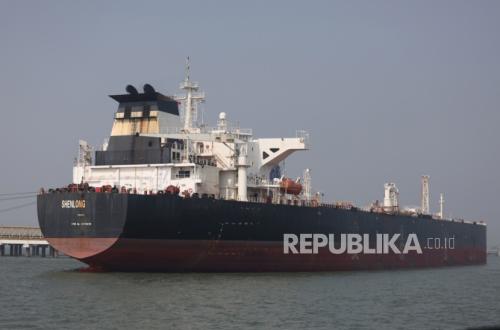
Tehran — Iran’s parliament is preparing a draft law (RUU) that will impose transit fees on ships passing through the Strait of Hormuz. Tehran authorities describe this step as a reciprocal fee for guaranteeing “safe passage” in the world’s most crucial shipping route.
Member of Iran’s Parliamentary Economic Committee, Saeed Rahmatzadeh, stated that the imposition of maritime transit fees is a “common practice in many important sea routes around the world.” According to a report from the ISNA news agency on Sunday (22/3/2026), this policy aims to increase national revenue while strengthening maritime security along the route.
This parliamentary initiative reinforces Iran’s decision on 2 March to restrict navigation in the Strait of Hormuz. Tehran has warned that ships passing without direct coordination with Iran’s military could become targets of attack. This step is claimed as a response to US-Israel aggression that began at the end of February.
The Strait of Hormuz is the global energy lifeline, with approximately 20 million barrels of oil passing through it every day. Even the slightest disruption in the area has triggered spikes in shipping costs and insurance premiums, threatening global economic stability.
Coalition of 20 countries
In response to Iran’s actions, Bahrain and the United Arab Emirates (UAE) have joined more than 20 countries—including the UK, France, Germany, Japan, and Canada—in a joint statement. They expressed readiness to maintain international navigation in the Strait of Hormuz.
This coalition condemns what they call Iran’s “de facto closure” of the strait. Based on the UN Convention on the Law of the Sea (UNCLOS), they affirm that freedom of navigation is a fundamental principle that must not be violated. The coalition also welcomes the International Energy Agency’s (IEA) decision to release strategic oil reserves to stabilise the market.