
Technical Guidance for Food Handlers Strengthens Kitchen Hygiene Standards in Free Nutritious Meal Programmes
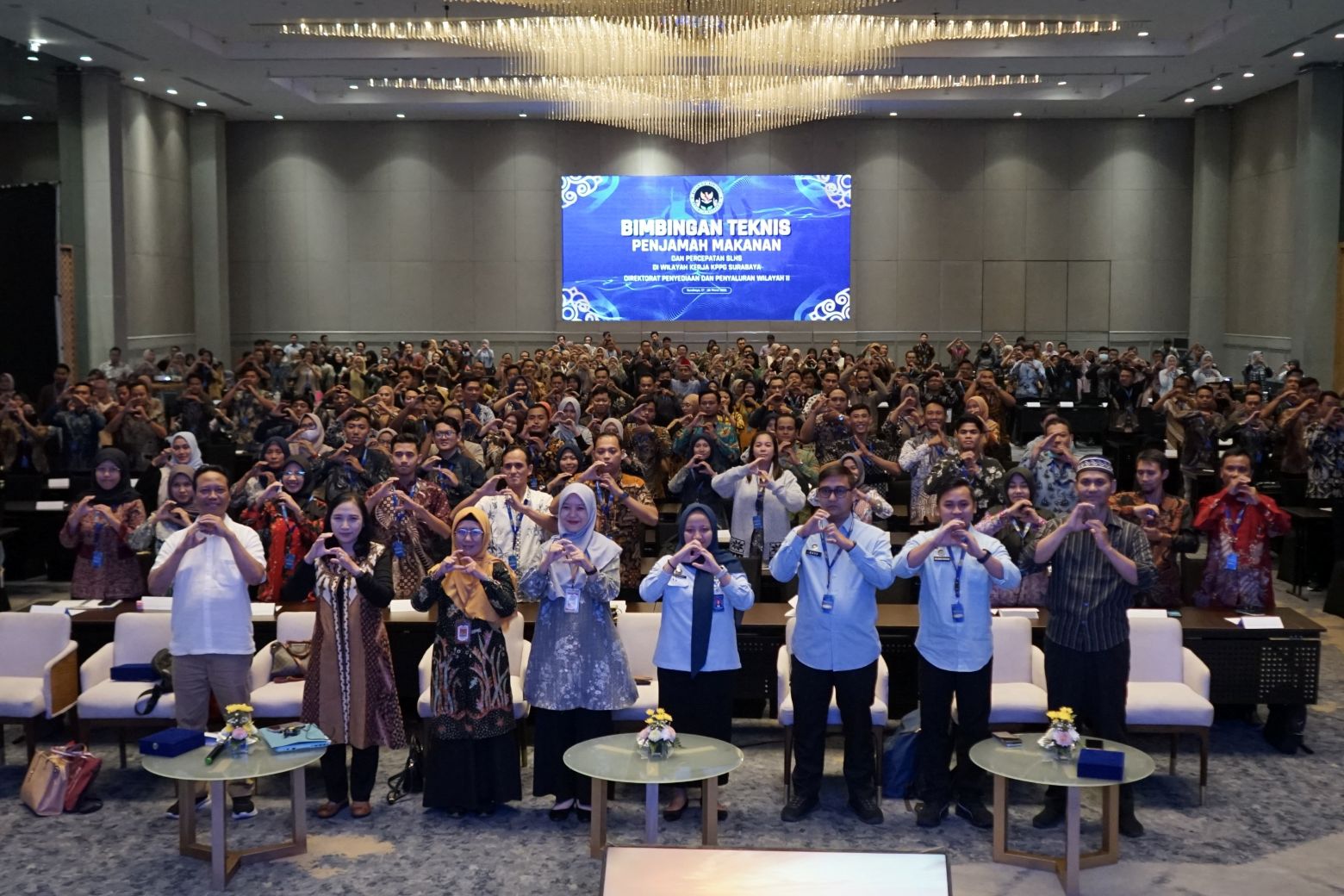
The government is strengthening food safety standards in the implementation of the Free Nutritious Meal Programme (MBG) through technical guidance activities for food handlers and the acceleration of Food Safety Hygiene Certificate (SLHS) issuance. The activities took place on 7–8 March 2026 and were implemented simultaneously across eight regional offices of the Nutrition Fulfilment Programme Coordination Office (KPPG).
The eight regions hosting the activities were KPPG Jakarta, Bogor, Bandung, Cirebon, Semarang, Sleman, Surabaya, and Jember. Each day, approximately 500 participants from various implementing units of the Nutrition Fulfilment Service Units (SPPG) attended the activities.
Participants comprised SPPG heads, partner organisations or managing foundations, nutrition supervisors, field assistants, and cooks directly involved in operating the kitchens providing meals for the MBG programme.
The technical guidance aimed to enhance the capacity of food handlers in applying food hygiene and sanitation standards, whilst accelerating the process of issuing Food Safety Hygiene Certificates for SPPG kitchens.
FOOD QUALITY
The Deputy for Distribution and Provision at the National Nutrition Agency, Brigadier General (retired) Suardi Samiran, stated that food quality is determined not only by the raw materials used, but also by the processing, storage, and presentation methods.
“Food quality is not determined solely by the ingredients used, but also by the preparation method, storage, and presentation. Therefore, food safety standards must be applied comprehensively at every stage of SPPG kitchen operations,” Suardi said when opening the hybrid activities.
He stressed that the technical guidance activities were expected to increase the knowledge and skills of personnel involved in the MBG programme, so that all food provision processes could be conducted in accordance with health and sanitation standards.
According to him, accelerating the issuance of Food Safety Hygiene Certificates is also a government priority to ensure every SPPG kitchen meets food safety standards.
“Through this activity, we want to ensure that all personnel involved possess adequate knowledge, skills, and awareness in carrying out their duties at each SPPG,” he said.
Suardi added that the certificate represents a commitment and responsibility of the programme administrators in providing safe and hygienic food to the public.
TRAINING PARTICIPANTS
The activity was also attended by heads of KPPG from the eight regions hosting the activities. During the event, they expressed appreciation for the initiative to conduct the technical guidance.
The KPPG heads assessed that this activity was an important step to ensure the Free Nutritious Meal Programme is fulfilled not only in terms of the quantity of food distributed, but also in terms of food quality and safety.
Through this activity, food handlers and SPPG managers gained more comprehensive understanding of food safety standards, including the procedures that must be met in applying for and obtaining Food Safety Hygiene Certificates.
Several KPPG heads in areas such as Surabaya, Bogor, Sleman, and Jakarta also emphasised the importance of accelerating SLHS issuance to guarantee food safety for MBG programme beneficiaries.
They assessed that the certificate is not merely an administrative requirement, but must be realised in day-to-day operational practices through the consistent application of hygiene and sanitation standards in SPPG kitchens.
Additionally, they assessed that the success of the MBG programme is highly dependent on cooperation among various parties, from the central government, local governments, health workers, to food processing personnel.
INITIAL STEP
Nurjaeni, Director of Provision and Distribution for Region II at the National Nutrition Agency, stated that the technical guidance activity represents an initial step in building a mechanism for continuous mentoring and monitoring of SPPG kitchen operations.
“This activity is an initial step in building a mechanism for continuous mentoring and monitoring of SPPG operations across various regions,” Nurjaeni said.
She hoped that through cross-sector coordination, the SLHS application process would not stop at the training stage alone, but would continue until the certificate was issued and hygiene sanitation standards were applied consistently in the field.
According to her, this approach is expected to strengthen the operational management of SPPG kitchens whilst improving food processing quality in the MBG programme.
“Through this approach, we hope the Free Nutritious Meal Programme can truly deliver optimal benefits to the public through the provision of safe, healthy, and quality food,” she said.
With the technical guidance, the government hopes that food safety standards in the MBG programme will be further strengthened so that food distributed to the public is not only nutritious, but also safe and hygienic for consumption.