
TBS Energi Utama 2025 Performance: Waste Revenue Rises, Coal Exposure Falls
PT TBS Energi Utama Tbk (BEI: TOBA) announced its 2025 financial report, reflecting the company’s strategic steps in transforming its business composition towards more sustainable and internationally-oriented sectors.
Throughout 2025, the company undertook portfolio restructuring through strategic repositioning to strengthen its financial foundation and enhance business resilience. This move was designed to direct the portfolio towards sectors assessed as having more stable revenue growth potential and higher long-term valuations.
On an operational basis, the company maintained positive performance with adjusted EBITDA of US$47.2 million. Cash position also improved to US$102.3 million, rising 15% compared to 2024.
On the business expansion front, the company completed the acquisition of Sembcorp Environment, now operating under the name Cora Environment. This acquisition strengthened the company’s position in waste management in Singapore whilst adding asset capacity to drive long-term revenue growth.
In 2025, the waste management segment contributed revenue of US$155.4 million, representing approximately 41% of total company revenue. This contribution increased as part of the business diversification strategy, also aimed at reducing exposure to global coal price fluctuations.
Meanwhile, the mining and coal trading segment recorded revenue of US$194.6 million, accounting for approximately 51% of total revenue. This proportion declined compared to the 81% contribution in the same period the previous year.
The reduction in coal contribution reflects the company’s strategic direction to progressively decrease dependence on the commodity and expand its sustainable business portfolio.
Despite recording positive EBITDA, the company reported a net loss of US$162 million in 2025. This loss was influenced by a decline in global coal prices and a non-recurring non-cash loss from the divestment of coal-fired power plant (PLTU) assets of US$97 million. Management regards this accounting loss as part of the business transition process towards a portfolio expected to generate more stable cash flows in the future.
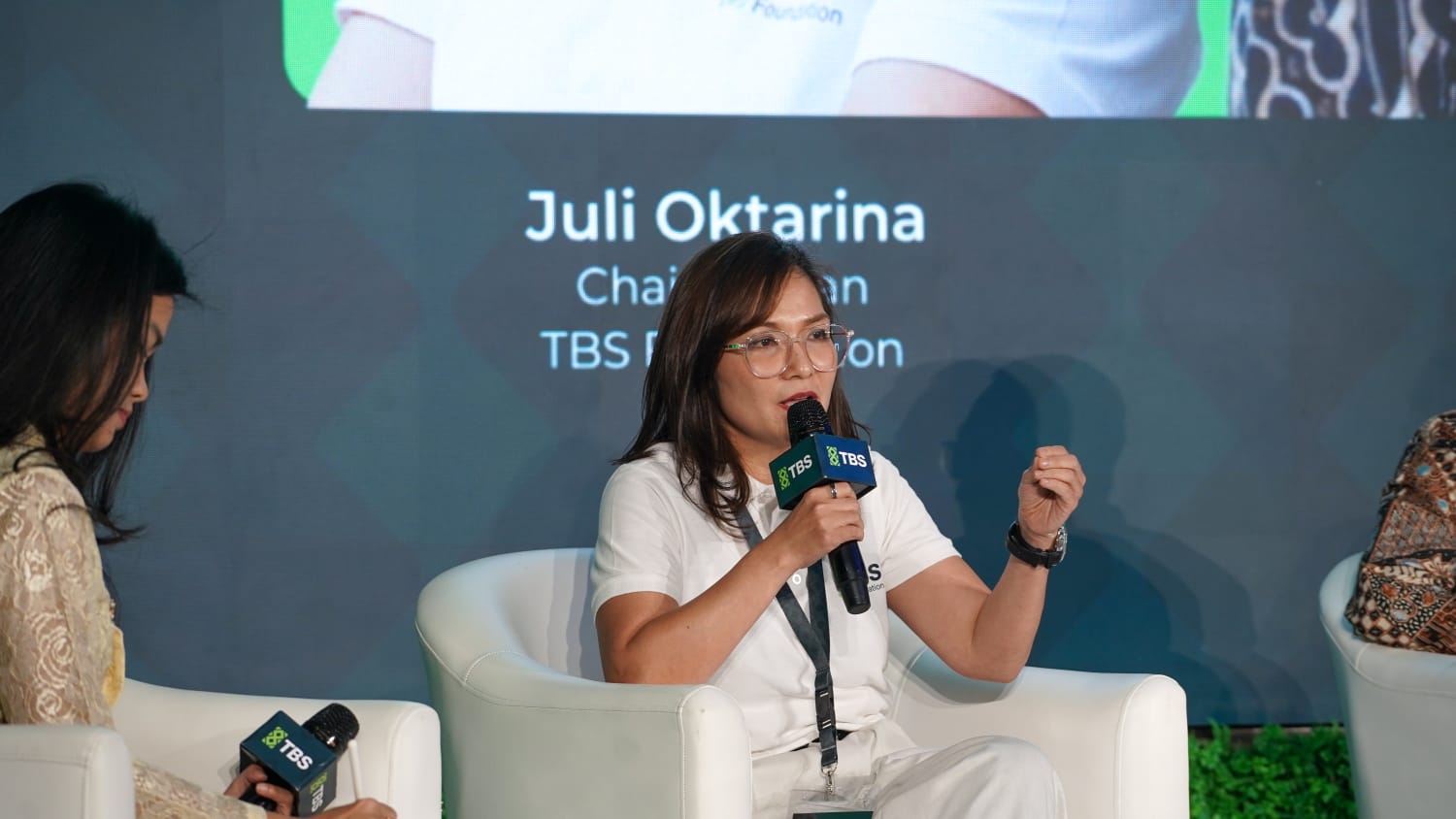
TBS Energi Utama Director Juli Oktarina stated that 2025 became an important phase in the company’s business transformation.
“Following strategic repositioning of our business foundation in 2025, we look forward enthusiastically to 2026 and the years ahead. Structural adjustment decisions were made considering long-term interests, to accelerate growth in three pillars of the company’s future business: waste management, renewable energy, and electric vehicles, which are essential services with strong growth potential in Indonesia and abroad,” she said.
According to the company, business diversification is considered important amid increasing geopolitical tensions that could affect the global energy market.
“Our current business strategy provides flexibility for the company to continue growing, where the waste management, renewable energy, and electric vehicle sectors become crucial opportunities for national energy security. Through innovation such as the rent-to-own scheme in the Electrum electric motorcycle ecosystem, TBS not only mitigates the impact of oil price fluctuations for informal sector workers, but also strengthens the foundation of green business to ensure long-term economic sustainability,” it explained.
The company also reported progress in its TBS2030 sustainability roadmap. This included the divestment of two PLTU units that previously contributed approximately 86% of the generation portfolio’s emissions, or approximately 1.4 million tonnes of CO2 annually based on 2024 emission profiles.
Additionally, in November 2025 the company launched a Climate Transition Plan (CTP) serving as a guide for operational and business portfolio decarbonisation. This step forms part of the company’s target to achieve carbon neutrality by 2030 within the framework of its vision Towards a Better Society.