
Taxpayers Should Not Casually Delete Withholding Evidence from Annual Tax Returns; Here Are the Consequences!
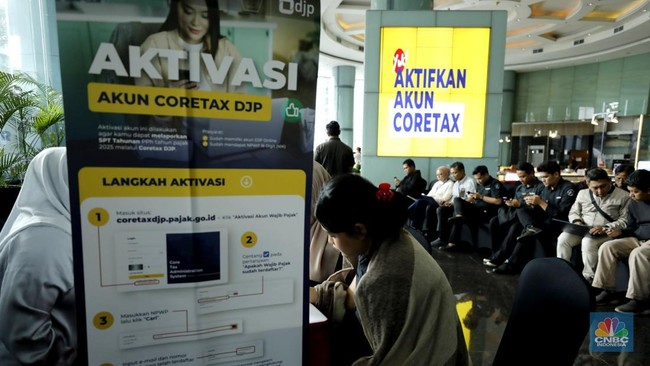
One of the standout features of Coretax DJP compared to its predecessor is the “Posting SPT” button, which allows withholding evidence data to be automatically filled into the SPT. This feature is claimed to save time in reporting SPT. However, for some taxpayers, it has become the cause of new “obligations”. “Through this feature, data on taxpayers who work for two employers in one year, receive commissions, or obtain other additional income becomes more ‘visible’,” stated Kania Laily Salsabila, an employee of the Directorate General of Taxes, in her article on the Pajak website, quoted on Monday (6/4/2026). Kania explained that this additional income often causes underpayment in the annual SPT, especially if the employer does not account for previous workplace income or annualise income when calculating tax on commissions or other additional income. So, is this the employer’s fault, leading to underpayment? Kania explained that the company or employer should have fulfilled its obligations in accordance with the provisions for withholding PPh Article 21. The obligations reflected in the annual individual income tax SPT are the result of recalculating all income over one year and are the responsibility of the relevant taxpayer. If so, can the withholding evidence be deleted from the annual SPT? “The answer is yes, it can,” Kania wrote in her article. However, the next question is whether the annual SPT remains compliant with the provisions? According to Article 3 paragraph (1) of the KUP Law, taxpayers must fill out the SPT correctly, completely, and clearly. Correct means accurate in calculation, in accordance with provisions, and in line with reality. Complete means including all income, assets, liabilities, and other elements that must be reported in the SPT. Clear means also reporting the origin or source of the income received or obtained. “Even if you try to delete one or more withholding evidences from the Annual SPT, unfortunately, the trace of that withholding evidence will never disappear from the tax master file,” said Kania. Withholding evidence is essentially issued by the tax withholding party, such as the employer company or other parties making income payments. When the withholding evidence is issued, the data is also reported by the withholding party through the tax administration system. This means, Kania clarified, that the existence of the withholding evidence is not only recorded on the taxpayer’s side but also on the withholding party’s side. Both data are essentially interconnected as part of a broader tax administration. In the short term, deleting withholding evidence may seem like a quick solution. The SPT status, previously underpaid, could change to nil. The reporting process feels lighter, and the additional obligations arising from the initial calculation seem avoidable. However, Kania reminded that such decisions need careful consideration. The Annual SPT is essentially a taxpayer’s statement regarding their income condition and tax obligations during one tax year. “Every figure stated in it is not just administrative data but part of the responsibility conveyed by the taxpayer to the state,” she said. When the information provided does not reflect the actual condition, the taxpayer risks receiving a “love letter” from the tax office in the future, and the obligations to be fulfilled later become larger due to administrative sanctions. For underpayment in SPT, what should taxpayers do? The first step taxpayers can take is to re-examine all data entered into the SPT. Ensure that the reported income is accurate, withholding evidence is correctly listed, and no data is missed or incorrectly input. Taxpayers can also double-check if all tax credits have been properly entered. Sometimes, the underpayment status arises not due to income errors but because there is withholding evidence not entered as income or not properly credited. If after checking it still shows underpayment, a tax billing code will be printed once the taxpayer clicks “Pay and Report”. Although it may feel burdensome at first, this step provides certainty that tax obligations have been fulfilled in accordance with applicable provisions. What if the taxpayer has already reported the annual SPT but only later discovers this? “Don’t worry, taxpayers can still amend the annual SPT as long as no examination has been conducted on them,” said Kania. She explained that ultimately, the self-assessment system provides flexibility for taxpayers to manage their own tax reporting. Taxpayers can fill, adjust, or even delete certain data in the SPT before submission. However, this freedom comes with responsibility. Every data entered into the SPT should truly reflect the actual condition. Therefore, when faced with the choice between deleting data to make the calculation feel lighter or reporting according to the actual condition, the wise choice is to adhere to the principles of correct, complete, and clear reporting. “In this way, SPT reporting is not only completed administratively but also reflects tax obligations carried out with full responsibility as citizens,” she emphasised.