
Tax Scheme Changes: Consumers Need to Watch Initial Costs for Electric Vehicles
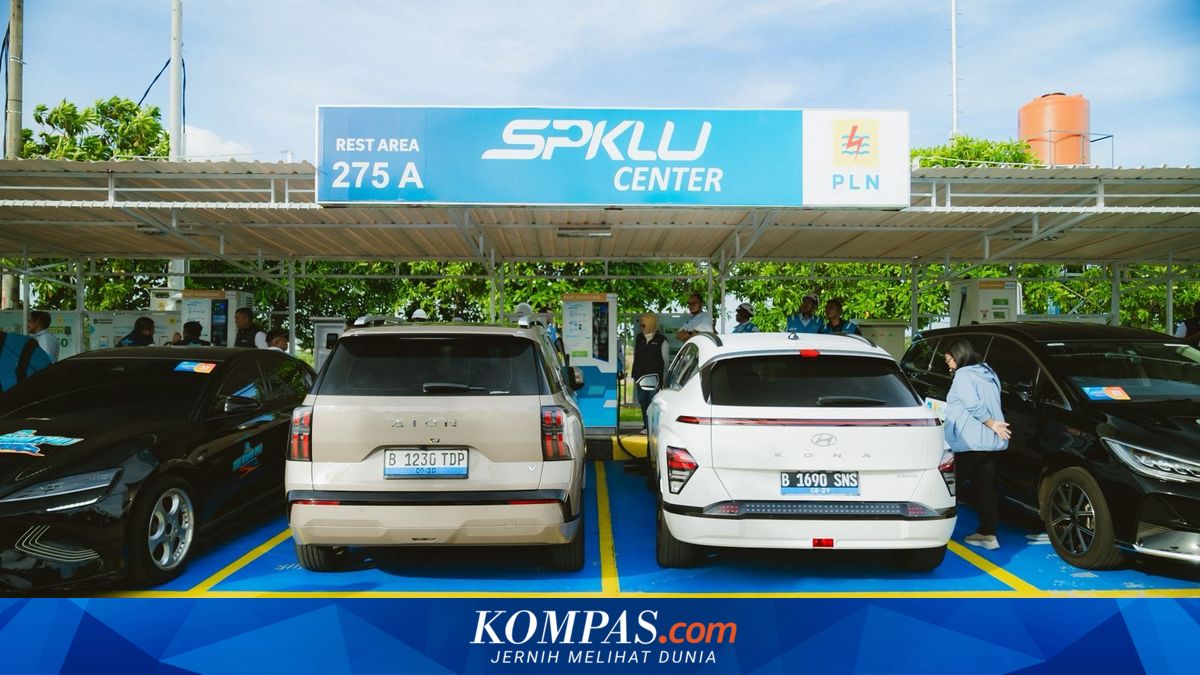
JAKARTA, KOMPAS.com – The tax scheme for electric vehicles has changed following the issuance of Ministry of Home Affairs Regulation No. 11 of 2026. This regulation no longer provides national certainty for tax exemptions, instead delegating incentive policies to each regional government.
With this change, electric vehicles are no longer automatically exempt from motor vehicle transfer fees (BBNKB) or motor vehicle taxes (PKB).
Regional governments still have the option to provide exemptions or reductions in taxes, with amounts that may vary by region.
Head of the Center of Industry, Trade and Investment at INDEF, Andry Satrio Nugroho, stated that this change could affect public interest in purchasing electric vehicles.
“As an illustration, an electric vehicle priced at around Rp 400 million could be subject to transfer fees of up to Rp 48 million. This must be paid upfront, plus annual taxes of around Rp 5 million,” he told Kompas.com on Tuesday (21/4/2026).
These figures represent a scenario with full tax burden. In practice, the costs that consumers must prepare depend on policies in each region.
Andry illustrated that for an electric vehicle priced at around Rp 400 million, the transfer fee could be around Rp 20 million if the region still provides incentives. If incentives are reduced, the cost could rise to around Rp 24 million to Rp 32 million. In a scenario without incentives, it could approach Rp 48 million.
These differences make the initial ownership costs for electric vehicles non-uniform across regions. Consumers not only face additional costs but also uncertainty about the tax amount depending on the region where the vehicle is registered.
On the other hand, the government is pushing to accelerate vehicle electrification to reduce dependence on fuel oil (BBM). President Prabowo Subianto has previously reaffirmed the commitment to expand the use of electric vehicles domestically.
Andry assessed that consistency in incentives is one of the important factors in maintaining the attractiveness of electric vehicles in the domestic market. Without such certainty, electric vehicles risk being seen again as products with high initial costs.