
TAUD Deems Motive of Personal Vendetta Implausible, Andrie Yunus Unacquainted with Acid Attackers
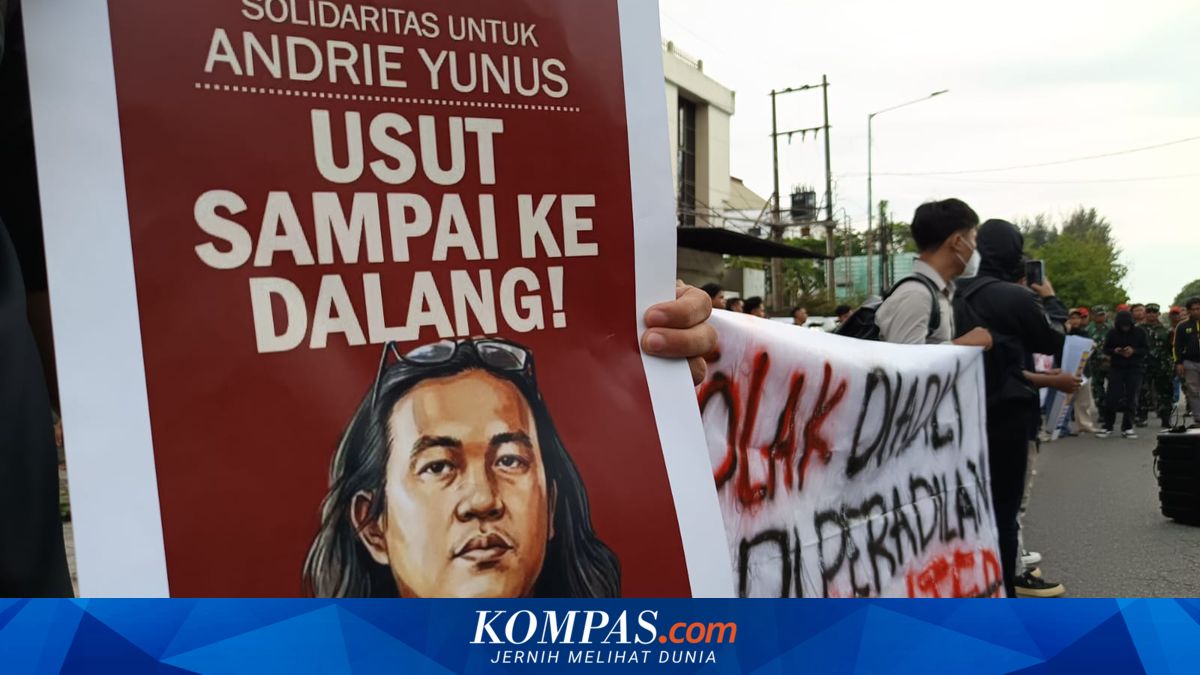
JAKARTA — The Advocacy Team for Democracy (TAUD) has assessed that the motive of personal vendetta in the acid attack case against KontraS Deputy Coordinator Andrie Yunus is implausible.
This assessment was made in response to the Military Prosecutor’s statement claiming the attack was driven by personal motives.
Director of LBH Jakarta, Fadhil Alfathan, stated that the suspicion of personal vendetta is difficult to accept because the victim and the perpetrators are said not to know each other.
Fadhil also doubts the personal motive due to the large number of individuals allegedly involved in the attack. According to him, personal conflicts do not typically involve many parties.
“What kind of personal issue could mobilise more than a dozen people to carry out an attack that, based on our findings so far, involves 16 people or possibly more in the future, just the field perpetrators alone,” Fadhil said.
He assessed that if there were truly a personal motive, the directly interested parties should be involved, not just the field perpetrators who are now defendants.
“Even if they want to say it’s possibly a personal vendetta of a high-profile individual. It’s unlikely that the personal vendetta of those who became field executors,” he explained.
Fadhil believes the attack was a planned action related to Andrie’s human rights advocacy activities.
Previously, the Head of the Military Prosecutor’s Office II-07 Jakarta, Colonel Chk Andri Wijaya, stated that the motive for the acid attack on Andrie Yunus was allegedly driven by personal vendetta.
“For the motive, up to now what we have explored through the examination report is that the motive carried out by the defendants is still a personal vendetta against Brother A (the victim),” Andri said at the Military Court II-08 on Thursday (16/4/2026).
Andri mentioned that the motive would be explained in more detail in the reading of the indictment at the trial. He also left open the possibility of additional suspects based on the evidence presented in court.
“However, if during the proof at the trial there are additions or otherwise, further investigation will still be conducted. If there is a civilian suspect, it will be split,” he revealed.
“This is in accordance with the procedural law and SOP of the Supreme Court of the Republic of Indonesia; we must still carry it out,” Andri added.