
Tarique Rahman Sworn In as Bangladesh Prime Minister
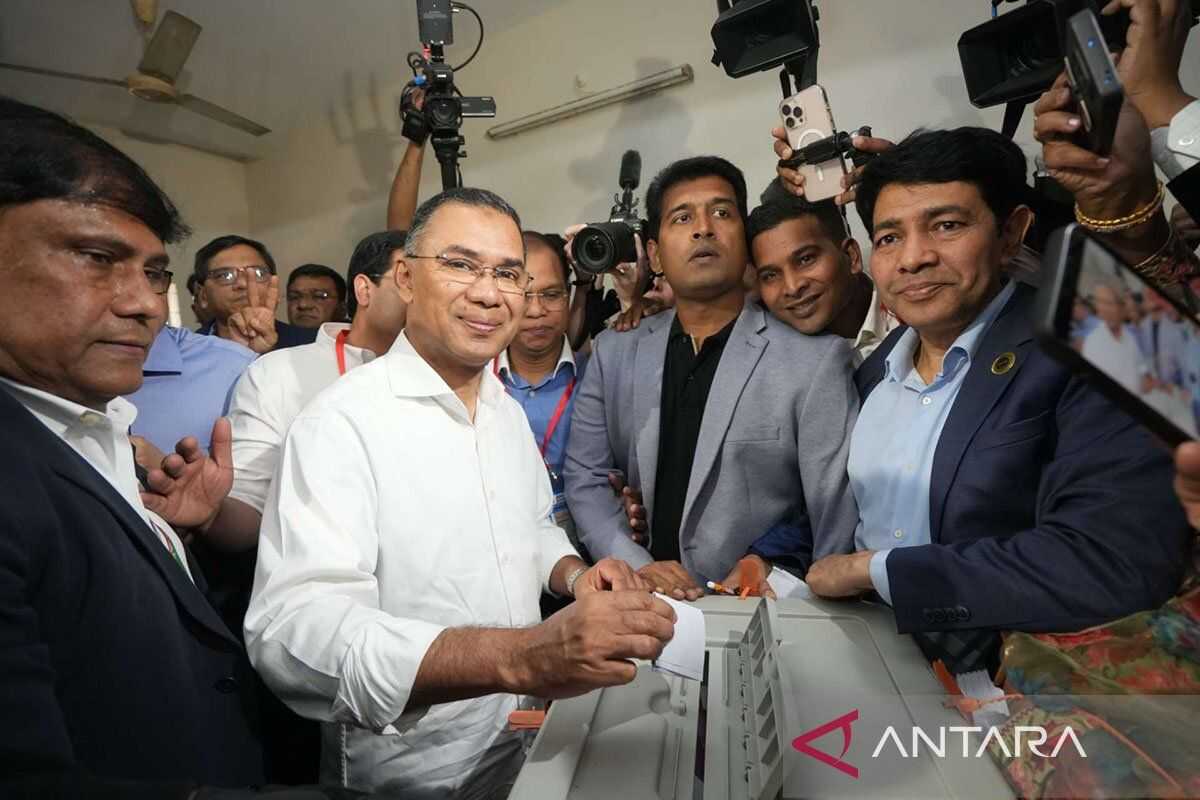
Dhaka, Bangladesh (ANTARA) — Bangladesh Nationalist Party (BNP) leader Tarique Rahman was officially sworn in as the country’s 11th prime minister on Tuesday (17/2), marking the start of a new government formed through elections held the previous week.
The elections were the first since the 2024 uprising that overthrew the Awami League government after 15 years in power.
The oath of office was administered by President Mohammed Shahabuddin in front of the parliamentary building in the capital Dhaka, alongside the swearing-in of 49 cabinet members. Earlier, 297 parliamentarians had been inaugurated as members of the 13th parliament.
The newly sworn-in parliamentarians included representatives from the bloc led by Jamaat-e-Islami Bangladesh.
The inauguration ceremony was attended by a number of foreign leaders and officials, as well as Nobel Peace Prize laureate Muhammad Yunus, the head of the interim government, who would hand over power to the new administration.
Among the foreign guests in attendance were Maldivian President Mohamed Muizzu, Bhutanese Prime Minister Tshering Tobgay, Pakistani Planning Minister Ahsan Iqbal, and British Deputy Secretary-General Seema Malhotra.
The interim government had led Bangladesh since 8 August 2024, after former Prime Minister Sheikh Hasina left the country on 5 August amid waves of mass protests.
Yunus and his team organised the elections last week, producing Bangladesh’s first elected government in 18 months.
In the elections, the Awami League did not participate, whilst the BNP and its coalition secured a two-thirds majority with 212 parliamentary seats.
Of the total 300 parliamentary seats, voting for three seats was postponed. Additionally, there are 50 reserved seats for women to be allocated proportionally based on parties’ seat shares once parliament begins sitting.
More than 127.6 million Bangladeshi citizens were registered as voters, with a turnout rate of 59.44 per cent — an increase compared to 41.8 per cent in the January 2024 elections.
A simultaneous referendum on constitutional reforms also received majority support, with votes in favour exceeding 60 per cent.
Source: Anadolu