
Tanzanian Pollinating Insects Released, Palm Oil Productivity Boosted Through Biological Innovation
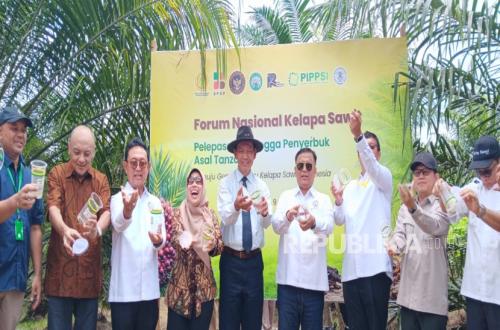
REPUBLIKA.CO.ID, JAKARTA — The Palm Oil Research Centre (PPKS) has released three new species of pollinating insects to strengthen national palm oil productivity. This step marks a science-based effort to maintain the sustainability of the industry amid challenges in efficiency and productivity.
The three introduced species originate from Tanzania, namely Elaeidobius subvittatus, Elaeidobius kamerunicus, and Elaeidobius plagiatus. They were released at the PPKS Marihat Unit in Simalungun, North Sumatra, on Thursday (9/4/2026) as part of efforts to strengthen the natural pollination system.
Director of Seedling Affairs at the Ministry of Agriculture, Ebi Rulianti, who read out the remarks of Minister of Agriculture Amran Sulaiman, stated that this innovation continues the important history since the introduction of pollinating insects in 1982, which has proven to increase palm oil productivity. “We learn from history that small innovations can bring big impacts,” said Ebi.
She explained that natural pollination by insects is a key factor in the formation of palm fruit, which determines oil production. The presence of these insects is also considered capable of reducing cultivation costs, particularly in the pollination process.
“We are marking a strategic step in the sustainability of Indonesia’s palm oil industry. The presence of these insects is very capable of lowering costs in palm oil productivity,” said Ebi.
The entire introduction process has undergone scientific stages and rigorous testing. “Starting from exploration from the country of origin, then comprehensive testing involving biological agents as well as ministries and institutions. From all these tests, it shows that the introduced species have a high level of safety. The step we are taking is a science-based policy, measured, and still upholds the principle of prudence,” said Ebi.
Chairman of GAPKI, Eddy Martono, said that this release reflects the continuity of innovation in the palm oil industry. “This is not just about insects, but about how we safeguard the future of Indonesia’s palm oil industry,” said Eddy.
The introduction of these insects involves various parties, from the Ministry of Agriculture, GAPKI, BPDP, the Indonesian Quarantine Agency, to farmer associations and industry players. This collaboration is expected to strengthen a more adaptive and sustainable palm oil plantation ecosystem.
The three species have been declared safe and ready to be developed to support a more optimal pollination system. This step also opens opportunities for productivity improvements without adding to production cost burdens.