
Tanker Vessels Stranded in Strait of Hormuz as 20 Per Cent of Global Oil Supply Held Up
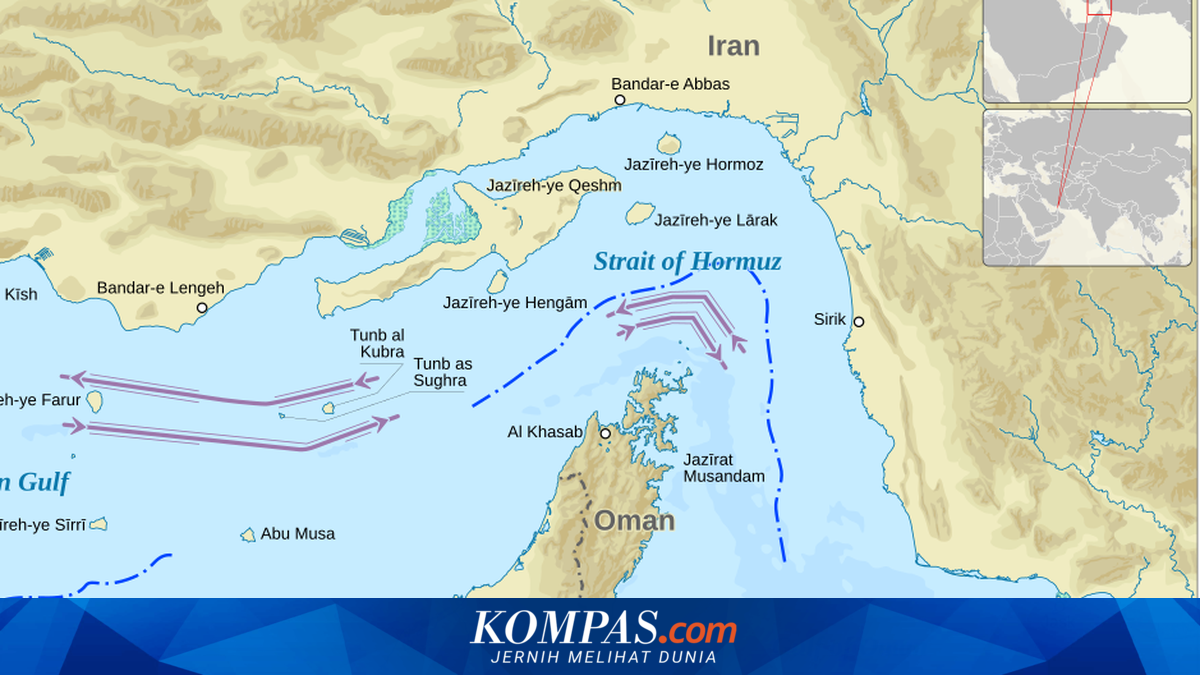
Escalation of the conflict between the United States and Israel against Iran has directly shaken one of the world’s most vital energy corridors, the Strait of Hormuz. This narrow passage has long been a critical artery for the distribution of crude oil and global gas.
Tehran’s decision to close the Strait of Hormuz has led tanker owners, major oil companies, and global trading houses to temporarily halt shipments of crude oil, fuel, and liquefied natural gas (LNG). This measure was taken in anticipation of increased security risks in the region.
“Our vessels will remain in place for several days,” said a senior executive at one of the major trading companies, cited by Reuters on Sunday (1 March 2026).
The decision illustrates how geopolitical tensions rapidly translate into economic pressure, particularly in the energy sector, which is sensitive to distribution disruptions.
Ship broking firm Poten & Partners noted that traffic flow has not come to a complete halt, but disruption is developing rapidly as security uncertainty increases.
The international tanker association INTERTANKO also stated that the United States Navy has warned of sailing risks throughout the Persian Gulf, Gulf of Oman, the northern Arabian Sea, and the Strait of Hormuz, as safety cannot be guaranteed.
This situation demonstrates how fragile the global energy supply chain is when armed conflict touches strategic distribution points.
Rapid responses also came from global shipping companies. Hapag-Lloyd has temporarily suspended all sailings through the Strait of Hormuz.
Maersk stated it is coordinating with security partners for operations in the Red Sea and Gulf of Aden. Meanwhile, CMA CGM has instructed its vessels to seek protection.
These measures underscore that the impact of conflict is not only military and political in nature, but directly touches the pulse of the global economy through energy and logistics sectors.