
Tangled Cables in Jakarta: Not Just an Aesthetic Issue, but a Matter of Life and Death
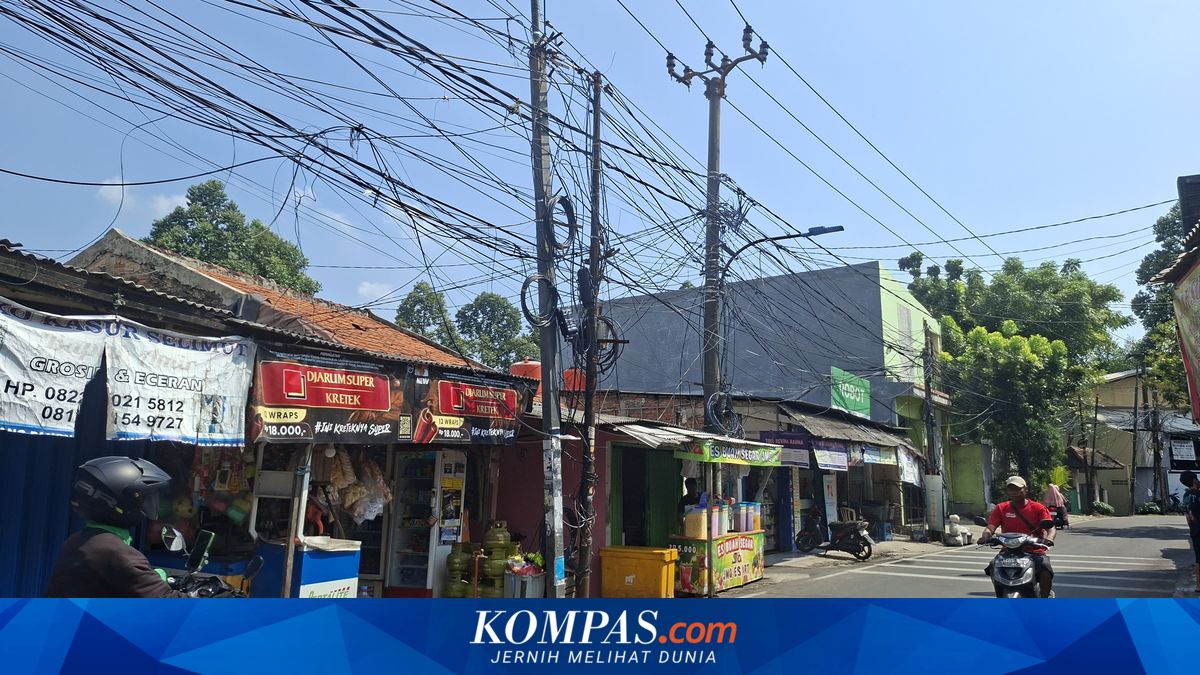
JAKARTA - The sight of tangled utility cables piling up on residents’ rooftops is a common occurrence in Jakarta. However, these dangling and disorderly cables do not merely cause aesthetic problems for the city but also endanger residents’ safety. M. Azis Muslim, an urban planning observer from the University of Indonesia, emphasised that the issue of utility cables in the capital must be addressed urgently with a long-term approach, rather than temporary rearrangements. According to Azis, several factors explain why cable management has not yet become standard in Jakarta’s dense areas. One of them is the legacy of infrastructure from the city’s rapid growth, which lacked integrated utility planning. “We see various telecommunications providers, electricity networks, fibre optic cables, and various other network installations each on separate poles. If not, they are bundled on electricity poles,” Azis explained. In addition to infrastructure issues, the cost factor of relocating cable networks underground or through ducting, which requires substantial funding, also poses a challenge. The Jakarta Provincial Government (Pemprov DKI Jakarta) has actually attempted to revive the Integrated Utility Network Facilities (SJUT) project. Azis assessed that this initiative to move cable networks from overhead to underground is excellent, but it must be closely monitored to ensure it becomes a sustainable programme. “For example, PLN has its own network, and various telecommunications operators and other networks also have their own. This shows fragmentation, lack of integration, and absence of collaboration. Because each is showing its own ego,” he said. This situation is exacerbated by weak enforcement of regulations against illegal cables. The government’s crackdown on non-standard cables has so far been seen as reactive and not routinely implemented. Yet, the risks from tangled cables in densely populated areas are very high, particularly the risk of fire.