
Tambora Residents' Misery: Living in Homes Without Walls or Doors After Fire
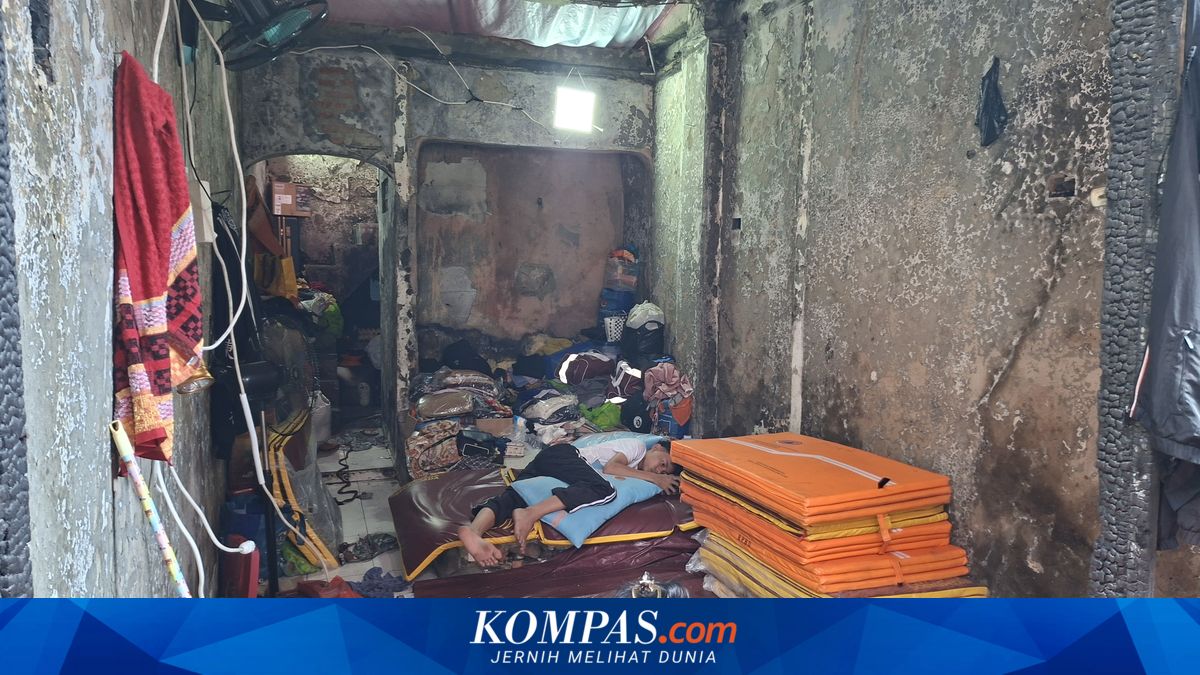
A number of residents on Jalan Tanah Sereal 13 in Tambora, West Jakarta, have been compelled to return to their homes that were nearly consumed by flames.
The residents had no choice but to go back to their incomplete homes, as the emergency shelter tents were closed after operating for just one week following the fire on Friday, 13 March 2026.
Kompas.com observations at the site on Monday, 23 March 2026, revealed that Jalan Tanah Sereal 13, previously filled with shelter tents from the Jakarta Social Services Agency and BPBD, is now empty again. Vehicles occasionally pass by.
In the narrow alley of the residential area, debris from the burnt buildings still litters parts of the road.
Police tape remains strung across the fire’s origin, the site of a four-storey garment factory where the upper sections collapsed, leaving the walls tilted and blackened.
Homes adjacent to the factory appear in a pitiful state.
One such home belongs to Soleh (65). Originally a three-storey house, the upper floor collapsed after the fire and is no longer habitable.
Meanwhile, the ground floor, previously used as a small grocery shop, was almost entirely burnt, leaving minimal space for activities. A mat is laid out there for Soleh and his family to sleep on.
There are no longer any doors or walls in front of Soleh’s house, exposing the interior clearly from outside.
Inside, the walls appear pitch black. Residual smoke from the fire has left traces of mould.
Amid these conditions, various donated household items are piled haphazardly in the corners of the rooms.
Eleven family members, including Soleh’s children and grandchildren, are forced to live in the now cramped, dusty, and incomplete house.
Soleh’s youngest grandchild can be seen sleeping soundly on two stacked orange mats.
In the rear area, which serves as the kitchen and bathroom, all walls are blackened but still in use for bathing and washing.
Meanwhile, the stove and some other household appliances are placed in front of the house, next to the collapsed garment factory building.
Soleh recounted that he and his family had no choice but to return to the now uninhabitable home because the shelter tents had been dismantled.
“On Friday night into Saturday, they started moving us back here, right before Eid,” said Soleh when met by Kompas.com at the site on Monday, 23 March 2026.
The closure of the shelter felt suffocating for Soleh, as it occurred on the eve of Takbiran, when residents should be preparing to welcome the day of victory.
“Because it turns out that in the tents, at the shelter, the maximum stay is only one week; from the 13th when it happened until the 20th,” he lamented.