
Takbir at the Silent Boundary
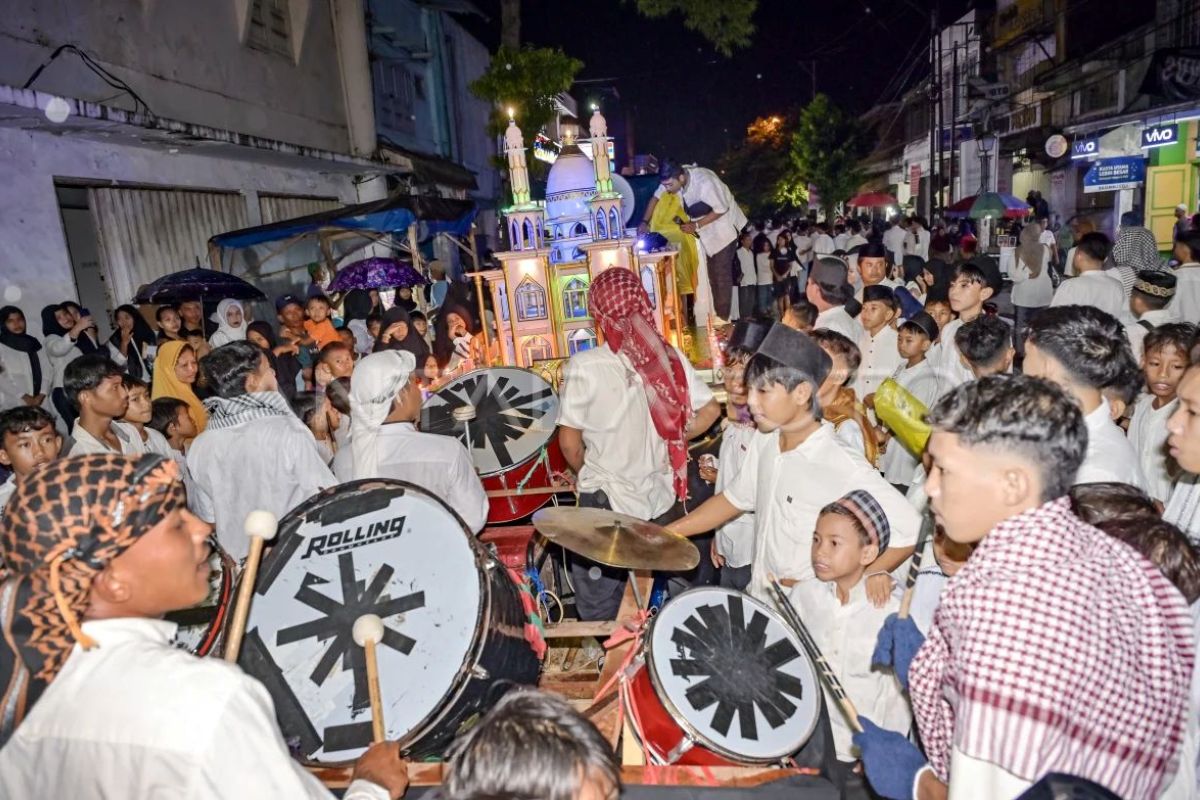
Takbiran in Mataram this year teaches a simple yet profound lesson: victory is not always celebrated in the same manner. Some observe it in silence, others in exuberance. Yet both converge on the same values.
Mataram (ANTARA) - The night sky in the city of Mataram on the eve of 1 Syawal this year holds an unusual story. The echoes of takbir still resound, but not everyone arrives at the same time.
In some corners of the city, takbir was heard first on Thursday night, 19 March 2026. Meanwhile, in other corners, the same echoes will peak only a day later. This difference is not merely about timing, but a reflection of the dynamics of the faithful living in the same space.
This year, Takbiran in Mataram, West Nusa Tenggara (NTB), not only confronts the euphoria of Lebaran but also two realities at once: the differing determinations of Eid al-Fitr and its encounter with Nyepi Day.
This situation turns Takbiran into more than just a tradition; it becomes a testing ground for social maturity, tolerance, and the ability to manage differences.
Two times, one meaning
A portion of the Muslim community, particularly Muhammadiyah followers, celebrated Eid al-Fitr earlier on Friday, 20 March 2026. This means their Takbiran night took place on Thursday evening, adjacent to and even overlapping with the Nyepi atmosphere.
In that context, takbir does not emerge as unrestrained exuberance but rather more restrained, more reflective, even tending towards silence.
On the other side, the government has set Eid al-Fitr on Saturday, 21 March 2026. Thus, the Takbiran night for the majority of the community occurs on Friday evening, when the Nyepi series has ended. The space for expression becomes more open, processions are held again, and the echoes of takbir fill the city streets once more.
These two timings give birth to two faces of Takbiran in one city. The first, Takbiran that accompanies silence, demanding adjustment and self-control. The second, Takbiran that arrives after silence, providing space for broader collective expression.
This phenomenon shows that Takbiran is not a rigid practice. It is flexible, adapting to the existing social context and diversity. Differences in timing do not fracture meaning but enrich the ways of celebrating victory.
In this situation, Mataram demonstrates one important thing: internal differences within the faith community do not have to become a source of friction. Instead, they can become a space for learning to respect one another on a more nuanced scale.