
Tajikistan bans hijabs and Eid celebrations
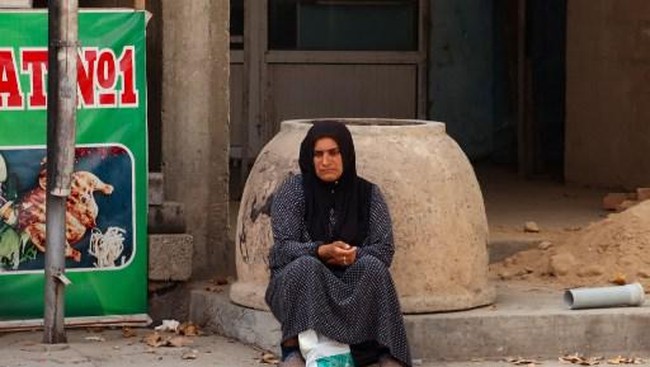
Tajikistan’s government has officially issued regulations banning foreign clothing for residents, including hijabs for Muslim women. In Islamic teachings, men are required to safeguard women’s modesty by covering their bodies from head to toe with a hijab, as per the Quran, Surah Al-Ahzab verse 59. Under the law backed by Tajikistan’s upper house parliament, violators face fines ranging from 7,920 Tajik somoni (approximately £600) for ordinary citizens to 54,000 somoni (approximately £3,900) for government officials. Religious leaders could be fined up to 57,600 somoni (approximately £4,200). Beyond clothing restrictions, the regulations also target religious practices, including Eid al-Fitr and Eid al-Adha traditions. One such tradition, ‘iydgardak’, involves children visiting homes to collect pocket money similar to Indonesia’s THR (Eid bonus). For men, religious symbols such as beards and mosques have also become targets of repression. Although there are no legal restrictions on beards in Tajikistan, reports indicate that law enforcement has forcibly shaved men with thick beards, viewing them as potential signs of extremist religious views. The Parental Responsibility Law, enacted in 2011, penalises parents who send their children abroad for religious education. The same law prohibits those under 18 from entering places of worship, including mosques, without permission. A 2017 statement by Tajikistan’s Committee on Religious Affairs revealed that 1,938 mosques were closed in a single year, with some converted into teahouses and medical centres. Recent laws were prompted by deadly attacks in neighbouring countries, including the Crocus City Hall attack in Moscow in April. Four attackers apprehended by Russian authorities were said to be from Khorasan – also known as Islamic State-Khorasan (ISIS-K) – and all held Tajik passports. Meanwhile, President Emomali Rahmon has stated his aim to make Tajikistan a democratic, sovereign, law-based, and secular state. This quote comes from the preamble of the 2016 Constitution, which advises citizens to ‘Love God with [their] hearts’. ‘Do not forget your own culture,’ he said at the time. The Tajik government claims the measures are necessary to ‘protect national cultural values’ and ‘prevent superstition and extremism’. As a result, citizens are banned from importing, selling, wearing, or advertising hijabs. Instead, the government encourages the country’s 96% Muslim population – out of over 10 million residents – to wear national attire. However, the hijab ban is seen as reflecting the political path of lifelong president Rahmon, who has ruled since 1997. Citing Euronews, the policy was initially a method to eliminate the opposition Tajik Islamic Renaissance Party (TIRP). Historically, after a peace deal ended a five-year civil war in 1997, Rahmon reached an agreement with the TIRP. Under the peace deal, the Sharia-leaning TIRP was supposed to hold 30% of government positions. However, Rahmon gradually eliminated this share, and by 2015 had banned the TIRP entirely, labelling it a terrorist organisation. The terrorist designation came after the party was accused of involvement in a failed coup attempt. General Abdulhalim Nazarzoda, a top government official, was killed during the incident. Hijabs have been banned since 2009 in public institutions, including universities and government buildings. Rahmon’s regime has implemented formal and informal rules to prevent neighbouring countries from exerting influence, while consolidating his control over the nation.