
Syngenta launches innovation to combat thrips attacks on chilli crops
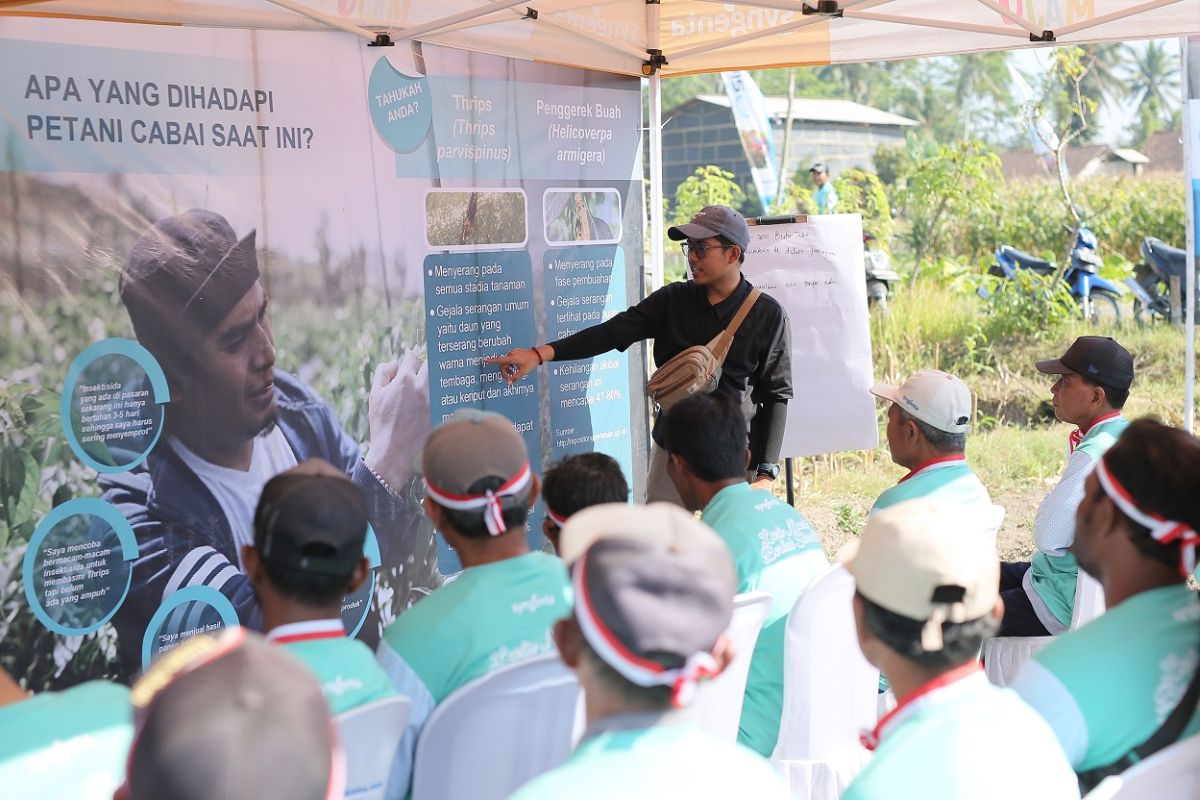
Horticultural farmers, including those cultivating chillies, face three primary challenges: drought, volatile commodity prices, and pests and diseases that impact production.
PT Syngenta Indonesia has launched an insecticide innovation based on Plinazolin technology to assist farmers in controlling thrips attacks on chilli plants. Fauzi Tubat, National Sales Head of Syngenta Indonesia, stated that horticultural farmers face various challenges that can affect productivity.
“Horticultural farmers, including those growing chillies, face three main challenges: drought, uncertain commodity prices, and pests and diseases that affect production,” he said in a statement in Jakarta on Tuesday.
To address pests and diseases, he added, efforts can be made through the use of appropriate plant protection products. Thrips are a type of agricultural pest consisting of very small, slender insects.
According to him, chilli is an important horticultural commodity with high market demand and significant economic value. However, the productivity and harvest quality of chillies can face various challenges, ranging from weather conditions to attacks by plant pests (OPT), including thrips.
These challenges become even more relevant when environmental conditions support the development of pest populations. The El Niño phenomenon, for instance, can cause the dry season to arrive earlier and last longer, potentially increasing pest pressure on crops.
“Support from appropriate plant protection technology, including the control of ‘thrips’, is one of the important factors in helping to maintain productivity and harvest quality,” he said.
Effective thrips control can help chilli plants grow healthier, particularly in the shoots, leaves, flowers, and fruit. With more controlled thrips pressure, plants can have healthier shoots, leaves with less wrinkling or curling, and brighter flowers that do not drop easily.
Ultimately, these conditions can help reduce the risk of deformed chilli fruit and maintain harvest quality. Therefore, he continued, the company launched the Simodis insecticide technology in Jember Regency, East Java, to assist farmers in controlling thrips and maintaining chilli productivity and quality.
Jember was chosen as the launch location because it is one of the chilli production centres in East Java. According to data from the Indonesian Central Bureau of Statistics (BPS), chilli production in Jember Regency reached 176,234 quintals throughout 2024.
Fauzi added that, in addition to expanding education regarding thrips control, the launch event provides an opportunity for more farmers to recognise and try plant protection technology directly.
Local chilli farmer Arif Saifur Rohman stated that using this technology to control thrips attacks has resulted in his chilli plants being well-maintained, from the shoots and leaves to the flowers.
“Harvests have increased and fruit quality is better. There is also less deformed fruit, so the selling value is higher,” he said.