
Synergy of Literacy and Regulation Drives Sustainable Islamic Economy
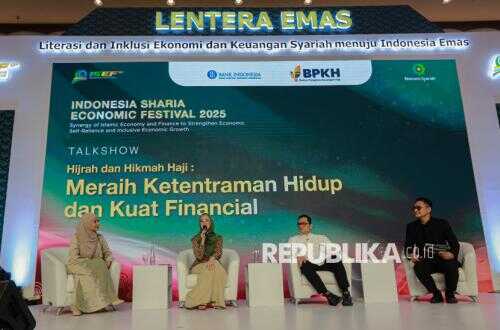
Bank Indonesia and regional offices are strengthening Islamic economy and finance across Indonesia through coordinated grassroots literacy efforts and national-level regulatory development.
In South Sulawesi, Bank Indonesia’s provincial office collaborated with the Islamic Pesantren Business Economics Association (Hebitren) to conduct Training of Trainer (ToT) sessions and Islamic preaching competitions as part of the broader Islamic Economy Week (PESyar) 2026 during Ramadan. A total of 140 Islamic school students participated in the training, which covered personal branding development, Islamic economy and finance, and halal lifestyle to equip them as effective communicators of Islamic economic principles.
The initiative positions student preachers as agents of inclusive, just, and sustainable economic transformation. Following the ToT, a preaching competition for secondary school students selected ten finalists—five male and five female preachers—to represent South Sulawesi at the Eastern Indonesian Islamic Economy Festival (FESyar KTI) this year.
Similar efforts are underway in North Sulawesi, where Bank Indonesia’s provincial office reaffirmed commitment to help Indonesia achieve first place in the State of the Global Islamic Economy (SGIE). Indonesia currently ranks third globally in the SGIE Report 2024/2025 whilst maintaining the highest position in the global Islamic economy ecosystem.
Indonesia leads worldwide in Muslim fashion with first-place ranking and demonstrates competitiveness in halal food, Muslim-friendly tourism, pharmaceuticals, and halal cosmetics. To reach the top position, strengthening underperforming sectors remains essential.
Bank Indonesia is directing Islamic economy and finance development policy through three pillars summarised as “IKLAS”: Islamic Industry, Islamic Finance, and Islamic Literacy. The industrial pillar focuses on halal food, modest fashion, and Muslim-friendly tourism. The Islamic finance pillar promotes innovation and service digitalisation, whilst the literacy pillar operates through continuous education and outreach.
This strategy ensures Islamic economy development grows as a solid, integrated ecosystem rather than isolated sectors.
Islamic economic practices are rapidly expanding at grassroots level, with citizens distributing productive zakat and endowments, businesses obtaining halal certification, and customers choosing Sharia-compliant financing. However, this growth is not adequately matched by an integrated regulatory framework.
The Head of the Legal Division for Islamic Economy Development at the National Islamic Economy and Finance Committee (KNEKS) emphasises that Islamic Economy Law should address genuine social needs. Current Islamic economic practices operate widely, but regulations remain scattered across various sectoral laws, creating fragmented norms that fail to unite subsystems into a cohesive ecosystem.
This fragmentation causes complex inter-agency coordination, high administrative costs, and weak legal certainty, particularly affecting small businesses and ordinary citizens. This is evident in the treatment of productive zakat and endowments under fiscal policy and tax incentives for Islamic instruments, including murabahah contracts.