
Synergy Between Farmers and Industry to Create Food Security in Mining Areas
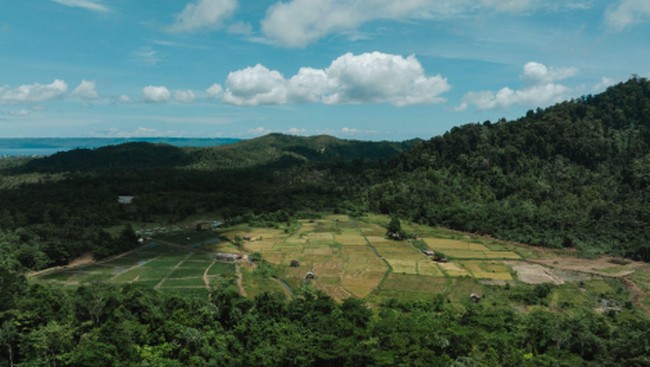
The Indonesian government is continuously pushing for the acceleration of food self-sufficiency as one of the efforts to strengthen national food security. Various programmes are being implemented to increase agricultural productivity, ranging from the use of agricultural technology, land optimisation, to strengthening the role of farmers and agricultural institutions in the regions.
“The President has tasked us to achieve food self-sufficiency as quickly as possible. We are preparing a collective leap forward to make it happen, ensuring prosperous farmers and a smiling society,” said Agriculture Minister Amran Sulaiman, quoted from his official statement on Friday (17/4/2026).
Several steps are being taken by the government to boost agricultural production, including the procurement of superior seeds, pump irrigation programmes on rain-fed lands, and the construction and revitalisation of irrigation infrastructure. Agricultural transformation is also being driven through mechanisation and the application of technologies such as precision agriculture and smart farming to enhance cost efficiency and productivity.
These efforts are reflected in the national rice production increase of 4.07 million tonnes, or up 13.29% in 2025. The government’s rice reserves (CBP) as of April 2026 also reached 4.59 million tonnes, the highest in history.
The national food security target is also supported by the private sector. One example is Harita Nickel’s Sentra Ketahanan Pangan Obi (SENTANI) programme, which has been running since 2022.
CSR Programme Development & Compliance Manager of Harita Nickel, Muhammad Yuda Pranata, explained that SENTANI is part of the Community Development and Empowerment Programme (PPM) designed as a centre for sustainable agricultural development that provides cultivation guidance, support for facilities and infrastructure, and access to markets for local farmers.
“We hope that SENTANI can serve as a model for sustainable agriculture that delivers real benefits to the community. Harita Nickel will continue to assist the farmers so that the results directly contribute to the regional economy,” said Yuda. Through this programme, Harita Nickel provides support to farmer groups in the form of farming tools, seeds, and agricultural education from upstream to downstream in South Halmahera Regency, North Maluku.
A farmer from Buton Village, Obi Island, Darwan Aduhasan (33), revealed that the demand for agricultural commodities is high even at the local level. This indicates that the agricultural sector still has great potential for development. To boost interest among the younger generation, Darwan formed the Obi Food Sovereignty Pioneer Group (PELANGI) and the United Millennial Farmers Cooperative. This group pioneers the strengthening of food sovereignty in the mining area, with the main mission of changing the perception that decent work can only be found in the industrial sector. “The goal is to restore the image of farming as a dignified profession that can support families and fund education. That is my personal inspiration,” he said some time ago.
The Pelangi group initially consisted of 10 members from several areas, such as Akegula, Buton, and Laiwui. The group then received a programme to expand agricultural land by 10.5 hectares, with potential up to 21 hectares, using an environmentally friendly farming approach with organic fertilisers.
“I want to express my appreciation to Harita Nickel, which has been actively involved in the farmer assistance programme through the Community Development and Empowerment Programme (PPM). Through this programme, we are assisted by advisors who are top graduates, including from IPB and other institutions,” he said.
For information, the SENTANI programme involves 30 active members consisting of farmer groups, village-owned enterprises (BUMDes), and the Buton Village Government. In addition to SENTANI, Harita Nickel also runs similar programmes to empower local communities through the agricultural sector.
These programmes include Salam Kawasi as an integrated agricultural learning centre in Kawasi Village, Kabar Mapan in Baru Village, Impresif in Jikatamo Village, and Obi Sehati in Obi Selatan Subdistrict. Support for food security is an important part of the company’s commitment to realising inclusive and sustainable economic growth on Obi Island.