
Synergy Between BREN and TPIA Has Potential to Boost BRPT Performance; Stock Recommendation Check
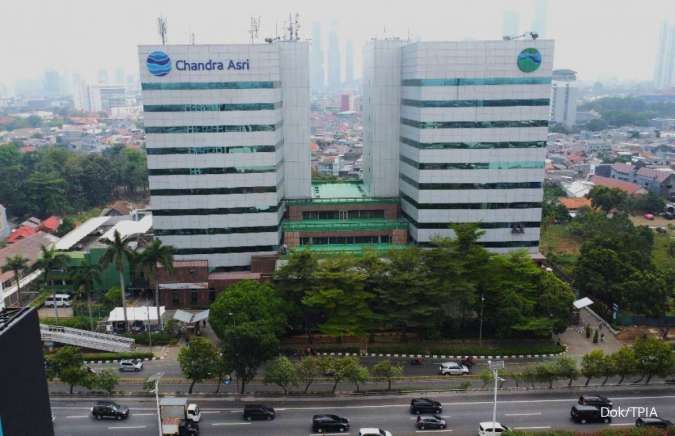
PT Barito Pacific Tbk (BRPT) is expected to maintain strong operational performance in 2026, primarily driven by contributions from two major subsidiaries: PT Barito Renewables Energy Tbk (BREN) in the renewable energy sector and PT Chandra Asri Pacific Tbk (TPIA) in the petrochemicals business.
As of the 2024 financial year, BREN held the largest installed renewable energy capacity in Indonesia, approximately 965 megawatt (MW). The Barito Group is targeting an increase in this capacity to 2.3 gigawatt (GW) by 2032, comprising approximately 1.9 GW of geothermal power generation and 0.4 GW of wind power generation.
Meanwhile, TPIA is Indonesia’s largest petrochemical producer with annual production capacity of approximately 4.2 million tonnes in 2024, equivalent to 40 per cent of total national capacity.
TPIA’s expansion has become increasingly aggressive following the completion in the first half of 2025 of the acquisition of Shell Energy and Chemicals Park (SECP) in Singapore, undertaken jointly with Glencore. The facility has been renamed Aster Chemicals and Energy (ACE). This acquisition increased the group’s annual production capacity to approximately 20 million tonnes from 2025.
Additionally, TPIA is constructing a Chlor Alkali–Ethylene Dichloride (CA-EDC) plant in Cilegon, targeted for completion in 2026. Upon operations beginning in 2027, the company’s petrochemical production capacity is projected to increase to approximately 21 million tonnes per annum.
“BRPT is indeed supported by BREN’s performance in renewable energy and TPIA’s performance in petrochemicals. TPIA’s expansion and acquisition also support increases in its production capacity,” said Nafan to Kontan.co.id on Thursday, 12 March 2026.
The synergy between the energy and petrochemical business lines within the Barito Group is viewed as an additional catalyst. Development of strategic projects in both sectors is also aligned with the company’s business transformation direction.
Additionally, the investment trend based on environmental, social, and governance (ESG) factors is expected to support BRPT’s performance.
Share liquidity remains stable despite adjustments to weightings in global indices, maintaining investor interest in the Barito Group’s shares.
Net profit surged 2,055 per cent year-on-year to US$582 million, from US$27 million previously.
Despite possessing several positive catalysts, Nafan noted that the current price movement trend of BRPT shares remains in a downtrend. Investors are advised to closely monitor price movement first.
“My recommendation is wait and see whilst awaiting signals of a trend reversal in the market,” Nafan added.