
Syed Muhammad Naquib al-Attas and the Philosophy of History in Islam in the Malay World
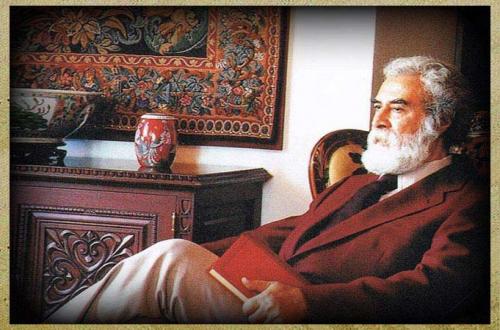
There are moments when history serves not merely as a sequence of past events, but as a mirror reflecting the meaning of a nation’s life. Without historical consciousness, people easily become trapped in the routines of their time, unable to assess the direction of the civilisation they are building.
History, in its deeper sense, is not merely a collection of facts, but an intellectual endeavour to understand the essence of human experience, the values that shape it, and the purposes it seeks to achieve. In contemporary Islamic intellectual tradition, few scholars have attempted to elevate history to such a profound level of thinking.
Among the names frequently cited in this field are the late Malek Bennabi of Algeria and Professor Dr Syed Muhammad Naquib al-Attas. Whilst many historians gather data and events from the past, only a few have attempted to formulate a systematic and creative philosophy of history. In the view of many scholars, al-Attas possessed a more comprehensive breadth of thought, both in terms of philosophical framework and methodology, particularly in understanding Islamic history in the Malay world.
Al-Attas’s pioneering thinking was reaffirmed through his important work, “Historical Fact and Fiction”, published by Universiti Teknologi Malaysia in 2011. This book represents mature thought following more than four decades of diligent and consistent study of Malay history. In this work, al-Attas demonstrates how the philosophy of history cannot be separated from the Islamic worldview and the epistemology that derives from it.
Within the Islamic knowledge framework, sources of knowledge are not limited to empirical experience alone. Islam recognises three primary channels of knowledge: healthy senses, sound reason, and authentic reports (khabar shadiq). This principle was systematised by classical scholars such as Abu Hafs Najmuddin al-Nasafi in the twelfth century and became the foundation of theological thought taught throughout the Islamic world, including in the Malay world for centuries.
As a scholar deeply rooted in the Sunni tradition (Ahlus Sunnah wal Jamaah), al-Attas applied this epistemological framework to his historical approach. For him, knowledge must not be understood in isolated compartments. The scientific approach must be characterised by tawhid, uniting the various dimensions of knowledge into one unified view of reality.
This perspective had long occupied al-Attas’s attention. In his classical work, “Islam in the History and Culture of Malays”, he emphasised the importance of history for human life. He cited a poetic expression illustrating the value of history to civilisation: a heart that does not preserve history will be unable to appreciate the greatness of life, whilst a person who keeps records of the past gains a renewed life repeatedly.
The personal experience of many scholars also demonstrates the profound intellectual influence of al-Attas. In the early 1980s, whilst conducting research at the University of Chicago, al-Attas was known as an exceptionally thorough and profound researcher. Indeed, a great thinker such as Fazlur Rahman once referred to him as a genius after reading his works, including “Islam and Secularism” and “The Concept of Education in Islam”.