
Syaikhona Kholil Bangkalan: National Hero and Teacher of Ulama
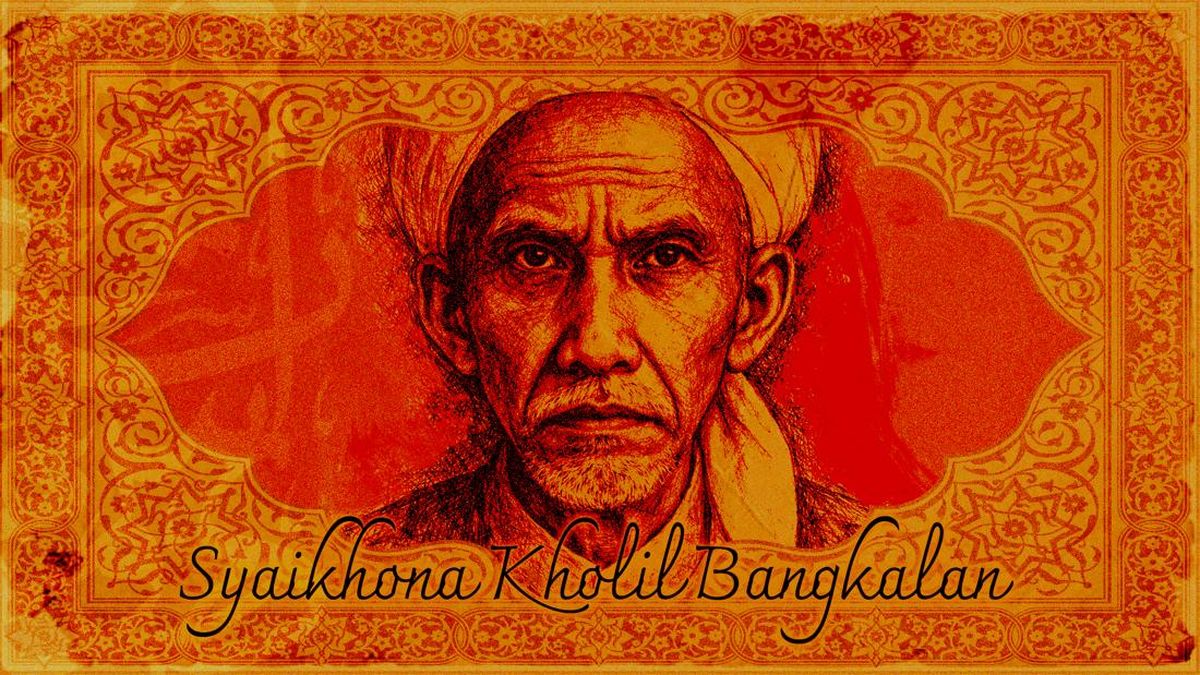
The proliferation of pesantren institutions across Java, Kalimantan, and Sumatra is largely attributable to the efforts of Syaikhona Kholil Bangkalan (1835-1925), a figure honoured as the Father of Indonesian Pesantren. The Indonesian state formally recognised him as a National Hero on 10 November 2025.
Syaikhona Kholil was born in Bangkalan, Madura Island, East Java in Safar 1252 Hijriah (1835 CE) to parents KH Abdul Latif and Nyai Siti Khadijah. According to NU Online, Syaikhona possessed five genealogical lines connecting him to the Prophet Muhammad, through the paths of Sunan Kudus, Sunan Ampel, Sunan Giri, Sunan Gunung Jati, and Basya’iban.
Within Nahdliyin circles, three prominent figures are recognised as instrumental in establishing Nahdlatul Ulama: KH Hasyim Asy’ari, KH Abdul Wahab Chasbullah, and KH Bisri Syansuri. However, the foundational inspiration for NU is inseparable from Syaikhona Kholil, who served as their mentor.
From childhood, Syaikhona Kholil demonstrated exceptional intellectual ability, surpassing his peers. In his youth, he memorised one thousand verses of the Alfiyyah of Ibn Malik and rapidly mastered Arabic grammar (nahwu), morphology (sharaf), and Islamic jurisprudence (fiqih). As a teenager, his father KH Abdul Latif sent him to prominent pesantren throughout Madura and Java to deepen his religious knowledge.
In 1859, Syaikhona Kholil travelled to Mecca to perform the pilgrimage and remain there to advance his Islamic studies. In Mecca, he studied numerous exoteric sciences including Quranic exegesis, hadith, jurisprudence, and Arabic grammar under various sheikhs. He also pursued esoteric sciences under several spiritual guides, notably Shaikh Ahmad Khatib Sambas ibn Abdul Ghofar al-Jawi, founder and adherent of the Qadiri and Naqshbandi orders.
Upon returning to the Indonesian archipelago in 1863, Syaikhona Kholil established a pesantren in his hometown of Jengkebuan, Bangkalan. As this institution flourished, he entrusted it to his son-in-law KH Muntaha and relocated to Demangan, where he founded another pesantren.
Syaikhona Kholil’s nationalist sentiment is evident in his students, nearly all of whom became leading figures in Islamic nationalist movements and promoters of 19th-century Indonesian nationalism. His Islamic network, particularly his disciples, became instrumental catalysts in awakening political consciousness and fostering cultural resistance against colonialism.
Syaikhona Kholil was honoured with the title Shaikh al-Jawiyyin, supreme teacher of the Javanese people. Though Nahdlatul Ulama emerged after his death, his role was crucial in establishing the intellectual foundations of NU’s founders. According to NU Online, around 1920, approximately 66 ulama from across the archipelago convened in Bangkalan to seek Syaikhona Kholil’s guidance regarding a new Islamic movement deemed threatening to Ahlussunnah wal Jamaah teachings. The perspectives, stance, and blessing of Syaikhona Kholil subsequently became the driving force behind NU’s establishment as a bulwark of moderate Indonesian Islam.
According to NU Risalah magazine (edition 116), one of his students, KHR As’ad Syamsul Arifin—himself honoured as a National Hero—was summoned by Syaikhona Kholil to deliver prayer beads (tasbih) to KH Hasyim Asy’ari. Syaikhona instructed As’ad to recite the dhikr “Ya Jabbar, Ya Qahhar” throughout the journey from Bangkalan to Tebuireng, Jombang. Upon arriving in Jombang, As’ad presented the prayer beads to Hasyim Asy’ari, grandfather of Indonesia’s fourth president Abdurrahman Wahid (Gus Dur). Hasyim interpreted this gift as his teacher’s blessing for him and his associates to establish Nahdlatul Ulama.
Syaikhona Kholil died in 1925. Despite living during the era of photographic technology, he left no photographs of himself. As internet technology and social media proliferated, various photographs purporting to depict Syaikhona Kholil circulated online.
In 2025, stakeholders facilitated by the East Java Provincial Government settled on a black-and-white sketch of Syaikhona Kholil’s face. This sketch served as the official reference when submitting his candidacy for National Hero status.
Among the requirements for National Hero designation is the availability of a photograph or at minimum a portrait that can represent the figure. The East Java Provincial Government and relevant parties consulted on this matter. The sketch was painted by Ki Nonot Sukrasmono, a Lesbumi elder, based on testimonies from Syaikhona Kholil’s descendants.
According to NU Online East Java, KH Makki explained that a photograph of Mbah Kholil does exist in his pilgrimage travel documents. However, the family could not locate his passport containing the photograph. Additionally, some claim a photograph exists in immigration documents preserved in the Netherlands, though the family could not authenticate this with comparative evidence.
“In passport records, there were two photographs—one on the passport and one in the immigration file. However, the passport has not been found to date. Some have presented purported passport photographs of Syaikhona Kholil, but when asked about the passport itself, no one could provide it. Due to insufficient authentic evidence, we could not accept it,” KH Makki explained.
The Syaikhona Kholil sketch was regarded as a middle path, though subject to certain conditions. The sketch was deliberately rendered in black-and-white to preserve authenticity and avoid excessive interpretation. The family refrained from adding skin tone or other details to the sketch out of respect for Syaikhona Kholil’s legacy.