
Sustainable Migration Economy: Time for Endowment to Drive Community Self-Reliance
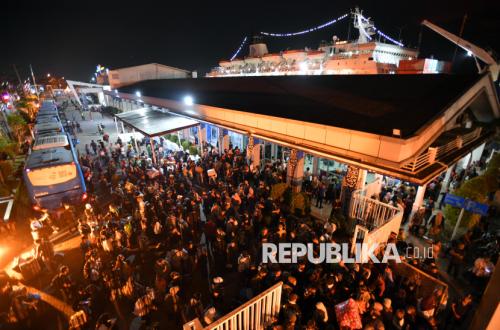
Every migration season, Indonesia experiences a distinct economic pulse. Highways become congested with vehicles, stations and airports swell with crowds returning to their hometowns, traditional markets flourish, and villages that are typically quiet suddenly come alive with intense economic activity.
Migration is not merely a journey home before Eid al-Fitr. It is a social phenomenon that simultaneously presents large-scale economic dynamics. Within a short timeframe, human movement is accompanied by the movement of money in vast quantities, flowing from urban economic centres to various regions across the country.
This phenomenon reveals that migration has not only cultural and spiritual dimensions but also tangible economic dimensions.
Observations on migration economy previously shared by Mohammad Nur Rianto Al Arif provide important perspective in understanding this. He demonstrates that migration can be viewed as an annual mechanism of economic redistribution from cities to villages.
When migrants return home with their earnings, that money circulates in their hometowns through various forms of consumption—from purchases for Eid celebrations, souvenir shopping, to various family social activities.
From a regional economic perspective, this phenomenon creates a spike in economic activity in many areas. The transport sector increases sharply, local trade experiences increased demand, and small business operators and traditional traders gain opportunities for greater income.
However, behind these dynamics lies an important question worth reflecting upon: is this large circulation of money capable of leaving a lasting foundation of prosperity for village communities?
From Seasonal Consumption to Economic Foundation
In reality, most of the economic impact of migration remains temporary. Money brought by migrants to their hometowns is generally spent on consumption needs during Eid celebrations.
Local economic activity does indeed increase in the short term, but after the return journey concludes, many regions revert to their previous economic condition. This phenomenon demonstrates what is termed economic momentum leakage.
Large money circulation is not always accompanied by the formation of productive assets capable of supporting long-term economic activity. The economic energy that emerges during migration has not yet been fully converted into structural strength for village economies.
Yet, if this momentum were managed with a more strategic perspective, migration could become the starting point for strengthening local economies.
Within this framework, the idea of sustainable migration economy emerges—an approach that seeks to direct the circulation of money during migration season so that it does not stop at temporary consumption but also generates benefits that continue after celebrations end.
Sustainable migration economy requires mechanisms capable of converting part of this money circulation into productive assets. Thus, money that arrives in villages functions not only as a driver of short-term consumption but also as social investment that strengthens community economic self-reliance.
This is where the importance of introducing instruments capable of sustaining these economic benefits becomes evident.
Endowment as an Instrument of Sustainability
From the perspective of Islamic economics, one of the instruments with the strongest characteristics of sustainability is wakaf (endowment). Since classical Islamic civilisation, wakaf has played an important role in developing various social and economic facilities for communities.
Universities, hospitals, educational facilities, and even public infrastructure in various regions of the Islamic world in the past were largely established through wakaf institutions.
The superiority of wakaf lies in its fundamental principle: the principal asset is preserved whilst its benefits continue to flow to the community. Unlike consumptive assistance that quickly depletes, wakaf creates a source of benefit that can be used repeatedly over the long term.
If the migration momentum is combined with the spirit of productive wakaf, this annual economic movement can transform into a source of more permanent economic strength. A small portion of funds brought by migrants to their hometowns can be allocated to building productive assets managed collectively by the community.
These assets can take various forms of economic activity relevant to the region’s potential. For example, the development of village MSME centres, people’s markets, local product processing facilities, or entrepreneurship training facilities for young people.
In the village context, such economic infrastructure can become a catalyst for the emergence of new business activities and expanded employment opportunities for local communities.
This approach simultaneously brings together two great forces within Muslim society: the strong spirit of sharing in religious tradition and the need for sustainable economic development.
Connecting Cities and Villages Through Endowment
Migration fundamentally reflects the close relationship between cities and villages. Many migrants work in cities and earn their income there, yet remain socially and emotionally tied to their hometowns. This bond is what brings them back each year.
This relationship can actually become the foundation for community-based economic development models. Migrants have access to economic resources, social networks, and broader work experience.
If some of this potential were channelled through productive wakaf mechanisms, villages would not only receive temporary remittances but also gain access to more sustainable development resources.
In this way, migration becomes not only a return flow of people but also a flow of social investment from cities to villages. The economic circulation that has occurred spontaneously can be directed to become a more planned economic development process.
From a broader perspective, this approach represents an opportunity to transform seasonal economic dynamics into a structured framework for community empowerment and sustainable rural development.