
Sustainable Forest Management is Mandatory Amid Global Pressures
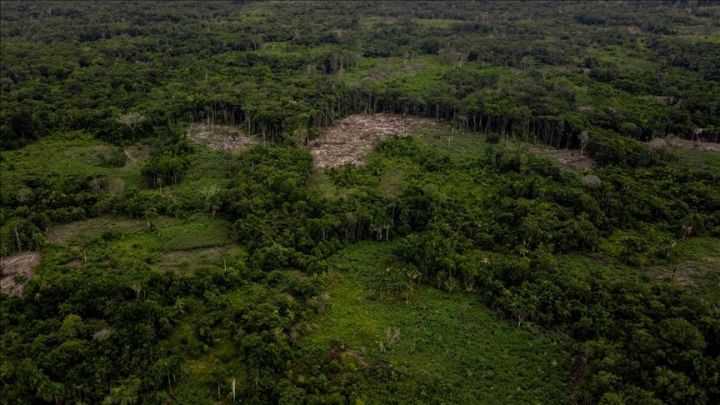
The government faces a policy dilemma with no truly comfortable options.
The Indonesian Forest Entrepreneurs Association (APHI) emphasises the importance of strengthening commitments from forestry business actors to preserve forests, while reinforcing the sector’s role as a pillar of sustainable development.
APHI General Chairman, Soewarso, stated that rising global challenges such as climate change, forest degradation, and pressures on natural resource utilisation demand a more comprehensive approach to forest management. According to him, forest management can no longer focus solely on economic aspects but must prioritise sustainability principles, social responsibility, and ecological balance.
“APHI is committed to expanding forest cover through planting and enrichment, as well as ensuring wise utilisation of forests,” said Soewarso.
He added that a multi-business forestry approach will be the main direction for managing the sector going forward, with strengthened governance as well as social and environmental responsibility.
On that occasion, APHI also stressed the importance of increasing internal solidarity and collaboration with the government and other stakeholders to drive innovation in forest management.
From the government’s side, Secretary General of the Ministry of Forestry, Mahfudz MP, stated that strengthening forestry governance continues to be pursued, including through improved coordination between central and regional governments. The government also plans to develop forest management ecosystem centres as connectors for spatial planning policies, while strengthening field-level supervision.
He mentioned that the number of Forest Police (Polhut) will be gradually increased from around 4,800 personnel to 21,000 personnel to strengthen supervision.
Meanwhile, Deputy for Sustainable Environment and Natural Resources at the Ministry of Environment, Sigit Reliantoro, emphasised the need for a paradigm shift in natural resource management. According to him, humans can no longer be positioned as owners of nature but as parties responsible for maintaining environmental balance.
“Natural resource utilisation must be based on ecological limits, not solely economic considerations,” said Sigit.
He assessed that the current environmental crisis is a result of imbalances in resource management, thus requiring corrections through more sustainable policies and practices.
In that context, APHI is seen as having a strategic role in driving the transformation of the forestry sector towards more sustainable practices, while also serving as a partner to the government in maintaining the balance between forest utilisation and preservation.
The Ministry of Forestry emphasises ecological aspects as the top priority, namely ecosystem restoration activities and biodiversity protection.
Forestry Minister Raja Juli Antoni stressed the need for a change in mindset and fundamental approach in Indonesia’s forestry governance.
The emergence of the “buy the forest” social action by the public on social media serves as a harsh critique and illustration of public distrust in forest management by stakeholders.
The Ministry of Forestry received the 2025 Policy Quality Index Award (IKK Awards) with an excellent qualification from the National Civil Service Agency (LAN).
Forestry Minister Raja Juli Antoni, along with Deputy Minister of Forestry Sulaiman Umar, immediately held a leadership meeting at Manggala Wanabhakti on the first day of work.
Indonesia’s forestry industry now faces serious threats. The sector, which was once an economic mainstay, is now considered a sunset industry.