
Suspect in Rp 242 Billion Corruption Case Cries Upon Arrest
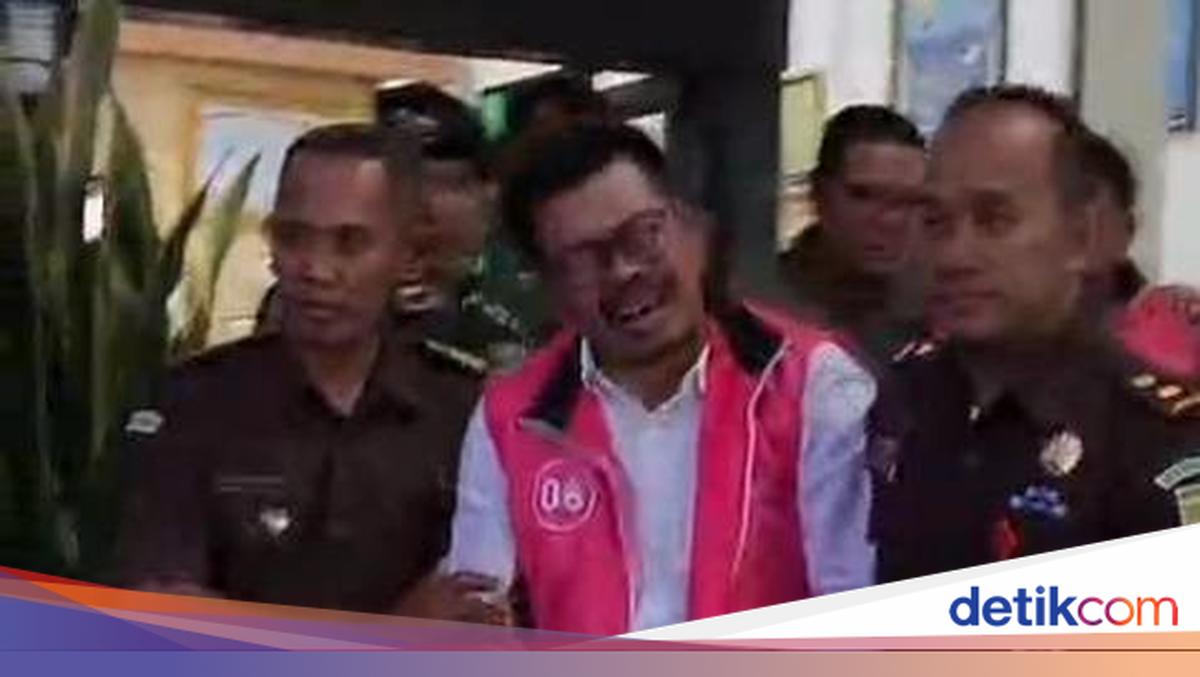
The Magetan District Prosecutor’s Office (Kejari) has designated Suratno, the Chairman of the Magetan DPRD, as a suspect in the corruption of grant funds for legislative priorities (pokkir) in the 2020-2024 fiscal years, amounting to Rp 242 billion. The PKB politician cried when he was detained.
Suratno was named a suspect along with five others. They are JML, a Magetan DPRD member for the 2019-2024 and 2024-2029 periods; JMT, a Magetan DPRD member for the 2019-2024 and 2024-2029 periods. Then AN, TH, and ST, who serve as council aides.
All the suspects were then escorted one by one to the detention vehicle. Suratno was the first to be led away by the officers. He was wearing blue jeans and a long white shirt, along with a detention vest, and his hands were handcuffed.
Escorted by Kejari officers, Suratno appeared to sob and cry, attempting to cover his face from the journalists’ cameras until he entered the detention vehicle.
The Head of the Magetan Prosecutor’s Office, Sabrul Iman, stated that the naming of suspects was carried out after special crime investigators (pidsus) examined 35 witnesses and collected evidence consisting of 788 bundles of documents and 12 units of electronic evidence.
“Sufficient strong evidence has been fulfilled to designate the status of six witnesses as suspects,” said Iman in his official statement on Friday (24/4/2026).
Iman explained that the case originated from the allocation of pokir grant funds by the Magetan DPRD for 2020-2024, with a total realisation of Rp 242.9 billion. The funds were channelled through 13 regional work units for the aspirations of 45 DPRD members.
Investigators then discovered systematic deviations where certain council members allegedly controlled all stages of the grants, from planning to disbursement. Recipient community groups (pokmas) were merely used as administrative formalities.
“Proposals and accountability reports (LPJ) were not independently prepared by the recipients, but rather conditioned by the council members through networks of trusted individuals,” Iman clarified.