
Survey Shows Berau Sea Turtle Nesting Habitats in Good Condition
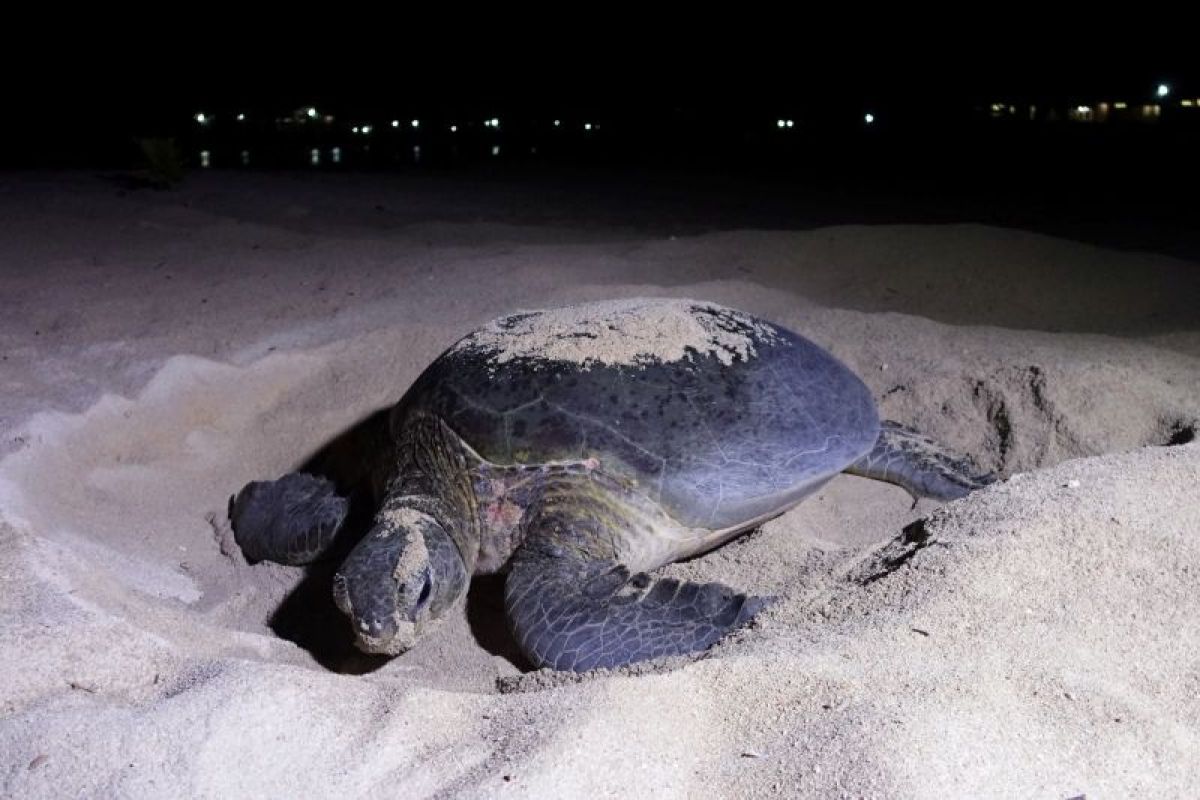
Results from a survey conducted by the Ministry of Marine Affairs and Fisheries in collaboration with local authorities and the Yayasan Konservasi Alam Nusantara (YKAN) show that sea turtle nesting habitats on small islands in Berau Regency, East Kalimantan, are in good condition. Director of YKAN’s Marine Program, Muhammad Ilman, stated in Samarinda on Friday that the survey covered key locations including Mataha Island, Bilang-bilangan, Sangalaki, Derawan, Teluk Sulaiman, and Balikukup. The activity included surveys of sea turtle nesting habitats, population monitoring using drone technology, and coastal community perception surveys on sea turtle conservation. Berau is part of the Sulu-Sulawesi marine landscape within the Coral Triangle region. The area is renowned as Indonesia’s largest habitat for green sea turtles (Chelonia mydas) and a migration route for ecologically significant marine species. In addition to ecological monitoring, the survey assessed coastal community perceptions towards sea turtles. Seventy-five fishermen from Balikukup, Derawan, Maratua, Teluk Sulaiman, and Biduk-Biduk were interviewed. Results showed high community awareness of the importance of sea turtles, with 98% of respondents aware that hunting turtles is illegal. Most fishermen reported frequent encounters with turtles in the sea and along the coast year-round, particularly green and hawksbill turtles. Many respondents noted that turtle populations have started to increase compared to previous years due to legal protections, monitoring, and conservation efforts. ‘Berau holds significant ecological value not only for East Kalimantan but globally. This monitoring shows that sea turtle nesting habitats in several locations remain excellent and must be preserved through collaborative conservation area management with local communities,’ Ilman said. Irhan added that the local government is continuing to strengthen area surveillance, sustainable tourism management, and community education to support the sustainability of Berau’s turtle populations. ‘Out of 27 observation points, 26 fall into the green category or are highly suitable as sea turtle nesting sites. These locations have supportive beach characteristics such as suitable sand, ideal slope, natural vegetation, and minimal human disturbance,’ Irhan said.