
Survey Reveals Singaporean Workers Unhappy Despite Earning Rp165 Million a Month
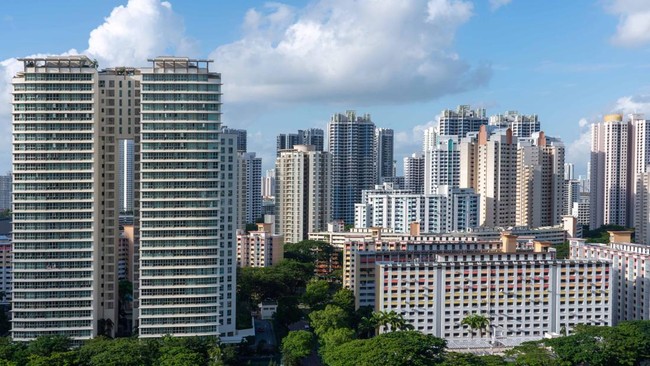
Singapore has continued to record year-on-year increases in average monthly household income, reflecting the strengthening of real wages among Singaporeans that has already outpaced inflation. However, the rise has not made Singaporeans happier.
The average monthly household income in Singapore now stands at S$12,446, or around Rp165 million per month. According to the Key Household Income Trends 2025 report released by the Singapore Department of Statistics (Singstat), the average monthly household income rose from S$11,558 in the previous year. In real terms, after adjusting for inflation, household income rose by 6.8%.
Furthermore, after factoring in household size, the average income per household member rose even more, by 7.5% in real terms, from S$3,837 in 2024 to S$4,160 in 2025, or about Rp55.2 million per person per month.
Prime Minister Lawrence Wong emphasised that this trend signals a real improvement in workers’ welfare. ‘That means that for many workers and households in Singapore, wage growth has outpaced inflation,’ Wong said in a video posted on social media after the data was released, as quoted by Channel News Asia (CNA), Wednesday (11/2/2026). He added that wage growth was strongest for the low-income group.
Singstat explained that from the 2025 report onwards, the definition of household income was broadened to include market income, covering income from both employment and non-employment sources. Non-employment income includes interest on savings and Central Provident Fund (CPF) balances, investment dividends, rental income, as well as payouts from annuities and insurance.
The expansion also covers households with no working members, as Singapore’s ageing population grows.
‘With an ageing population, more households have no income from work but receive income from other sources such as investments and rents,’ Singstat wrote.
Nevertheless, income from employment remains the main source, accounting for 79.6% of total household income in 2025, down from 81.1% in 2024. For the lowest-income households, non-employment income is even more dominant, especially from CPF interest and pension scheme payments.
These data underline that Singaporeans’ wages continue to rise in real terms, with household incomes now reaching hundreds of millions of rupiah per month, while also underscoring Singapore’s economic resilience amid global inflationary pressures.
Singaporeans Unhappy
Unfortunately, the rise in average household income has not automatically made Singaporeans happy.
According to the latest Workplace Happiness Index from Jobstreet by Seek, conducted with the research body Nature and involving a survey of 1,000 workers aged 18 to 64, only 56% of Singaporean workers said they were happy at work. It was among the lowest scores in the region, only slightly higher than Hong Kong’s 47%.
Seek conducted the survey in Singapore between October and November last year. They also polled workers in Hong Kong, Thailand, the Philippines, Malaysia, Indonesia, Australia, and New Zealand.
Other Southeast Asian countries surveyed led the region overall in workplace happiness. Indonesia topped at 82% of respondents saying they felt fairly or very happy at work, followed by the Philippines 77%, Malaysia 70%, and Thailand 67%.
In Singapore, almost half of surveyed workers reported feeling tired or fatigued. Notably, 41% of those who described themselves as happy also reported experiencing burnout at work. Of those, 51% earned more than S$6,000 (US$4,714) per month.
Men (63%) and older workers (66%) were more likely to say they felt fatigued even when happy at work.
Stress levels, career progression, and senior leadership were among the most commonly cited reasons for unhappiness at work.
Salary increases topped the list of desires when respondents were asked what could improve their happiness at work, with 64% placing it in their top five priorities.
A similar pattern was seen in Hong Kong, where 69% of respondents said salary increases would improve their happiness at work.
However, the study found that long-term happiness at work is influenced by other considerations. For those in Singapore, having a sense of purpose ranked the strongest driver, followed by opportunities for career progression and satisfaction with daily roles.
Among Generation Z workers aged 18 to 29, flexible working arrangements ranked first, followed by career development and pay.
Nevertheless, only about half of respondents said they were satisfied with their life goals, while only 37% felt optimistic about their career progression. Half of respondents also reported not feeling sufficiently valued at work.
‘Our latest Workplace Happiness Index shows that workers in Singapore are not disengaged or unmotivated, but feel burdened and undervalued,’ said Esther Lee, managing director of Jobstreet in