
Surge in Package Volumes Ahead of Eid: What Is the Middle Ground?
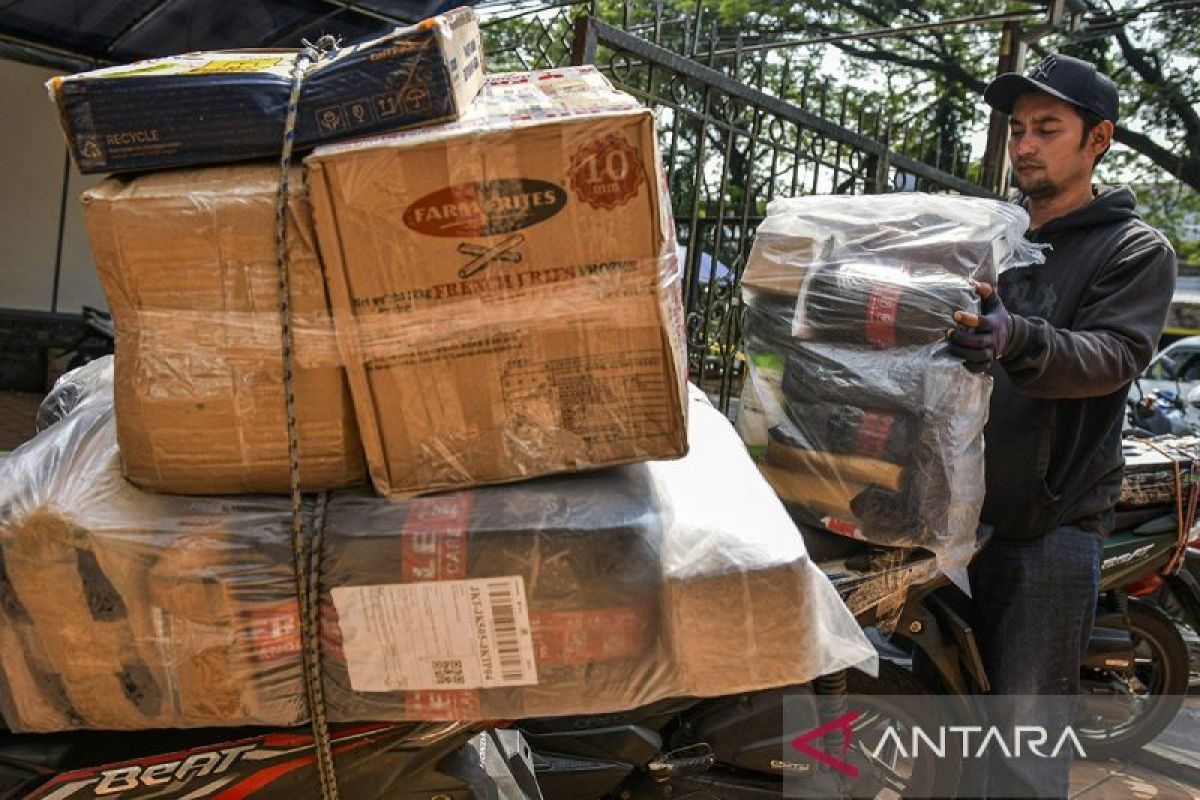
Jakarta (ANTARA) — Ramadan and Eid are closely associated with a surge in consumer spending, ranging from essential goods to clothing. The presence of e-commerce platforms, which provide shopping convenience alongside various promotional programmes, has become a key driver of consumer shopping interest and intensity.
This increased shopping intensity correlates directly with a surge in package volumes that logistics service providers must process. This situation creates challenges in the logistics delivery flow, which can lead to package accumulation at distribution facilities, potentially causing delivery times to extend beyond normal business days.
One social media comment on Instagram @lolafebrianarahayu illustrated the situation experienced by courier companies during Ramadan. The comment noted that whilst people often see videos of accumulated packages and claim delivery services are congested, the reality is that Ramadan is naturally a busy season with significantly higher online checkouts. Therefore, seeing large quantities of packages is entirely normal.
This post sparked debate on social media regarding how courier companies could balance the demand from buyers for rapid delivery against the drastically increased logistical burden.
Djoko Setijowarno, an academic in the Civil Engineering Programme at Soegijapranata Catholic University and logistics observer, explained that the Ramadan and Eid periods naturally increase package processing volumes in line with increased consumer demand and shopping interest.
“Inevitably, increased package volumes will occur—it is an absolute certainty, especially during major occasions such as Ramadan and Eid. Courier companies will certainly process all their packages,” Djoko said.
“Indonesia is currently one of the countries with the largest Muslim population in the world, which also increases the potential for order surges during Ramadan and Eid,” he added.
Industry players estimate that goods distribution volumes during Ramadan can increase by approximately 30 per cent compared to normal periods.
Mahendra Rianto, Chairman of the Indonesian Logistics Association (ALI), stated that this increase occurs across nearly the entire supply chain, from inter-regional delivery to distribution in major urban consumption centres.
“Typically, the volume increase in the supply chain during Ramadan can reach approximately 30 per cent,” Mahendra said.
Elsewhere, a study by American management consulting firm McKinsey & Company highlighted the issue of online shopping customers’ expectations regarding package delivery speed, referred to as the “Amazon Effect.”
The study revealed a profound psychological impact on buyers when package delivery is delayed, with 50 per cent of surveyed consumers likely to cancel their purchases or seek alternative options if delivery times were deemed too long.
“This Amazon Effect is also relevant in Indonesia’s logistics landscape. With the proliferation of instant delivery services, buyers have become accustomed to rapid delivery. This becomes a double-edged sword for courier companies, which are often blamed for even minor delivery delays,” Djoko added.
On the other hand, consumers tend to be indifferent to the processes involved in each package delivery. They simply want their purchases to arrive quickly.
“Because buyers have become accustomed to instant features, they often do not want to know and sometimes do not care about what happens behind the scenes. However, if we examine the process, it is very long and complex: packages must first be collected through first-mile logistics, then enter distribution facilities for sorting, then be sent again to last-mile logistics for final delivery,” Djoko explained regarding the behind-the-scenes delivery process.
In modern logistics systems, particularly in the e-commerce sector, goods distribution does not occur directly from one point to another. The process involves cargo consolidation and staged distribution networks.
Mahendra explained that incoming orders are typically collected until they fill a vehicle’s carrying capacity before being sent to major distribution centres or logistics hubs. “Orders are usually collected until they form a full truck load, then sent from hub to major hubs such as in Semarang, Bandung, or Surabaya before being distributed to destination areas,” Mahendra said.
In the context of Indonesia, which geographically is the world’s largest archipelago with more than 17,000 islands stretching from Sabang to Merauke, inter-provincial and inter-island connectivity remains a significant challenge in the logistics distribution flow.
“Connectivity between provinces and islands remains a genuine challenge. Limited land transport infrastructure, limited maritime and air transport capacity, and varied terrain in remote areas are obstacles that cannot be overlooked and often complicate the package distribution process,” Djoko concluded regarding Indonesia’s logistics challenges.
Responding to package distribution challenges, particularly during peak seasons such as Ramadan and Eid, courier companies in Indonesia continue to make improvements. In recent years, various logistics technologies have been increasingly adopted across Indonesia. These technologies help reduce the time required to deliver packages to buyers.
One such company is the logistics firm SPX Express, which has adopted various automation technologies such as automatic conveyors, automatic scanners, and data-driven delivery systems to provide the most efficient delivery routes.
These automation technologies also increase capacity capabilities for processing packages more efficiently during peak seasons.