
Surabaya Immigration Office Becomes Pilot Site for Official Passport Biometric Data Collection
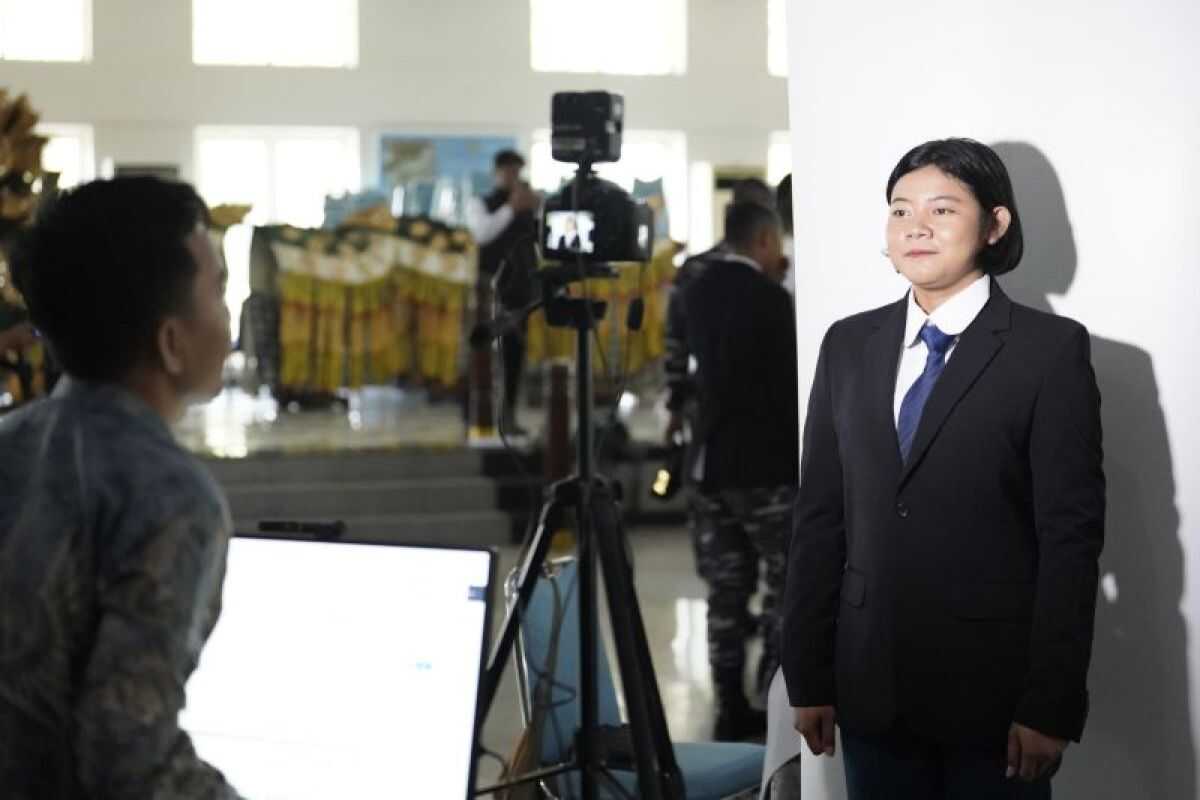
The Class I Special Immigration Office (Kanim) at the Immigration Checkpoint (TPI) in Surabaya, East Java, has officially become a pilot site for biometric data collection services for official passports.
The collaborative initiative between the Directorate General of Immigration at the Ministry of Immigration and Corrections and the Consular Directorate of the Ministry of Foreign Affairs was undertaken to integrate official passport holder data into the immigration system, whilst expanding service reach for state officials at the regional level.
Director of Visas and Travel Documents at the Directorate General of Immigration, Eko Budianto, explained in a statement received in Jakarta on Friday that the innovation represents a solution to several strategic issues in the management of official travel documents.
“Through strengthened regulation and system interoperability, biometric data collection for official passports can now be carried out at immigration offices across Indonesia to ensure all passport holders are recorded in our system,” said Eko.
The cross-ministerial cooperation aims to address technical barriers long experienced by official passport holders, such as biometric data not being recorded in the Immigration Management Information System (SIMKIM) and difficulties with automated gate (autogate) readers at international airports.
Through this synchronisation, state officials can now have their biometric data collected at local immigration offices without having to travel to Jakarta.
During the pilot project in Surabaya, biometric data collection was symbolically conducted for four cadets of the Naval Academy (AAL). Simultaneously, the same service was implemented for 90 other AAL cadets as part of an evaluation of technical readiness and inter-agency coordination mechanisms in the field.
The programme is a development of an initial trial conducted at the Class I Immigration Office TPI Surakarta in November 2025.
Going forward, the service will be gradually expanded to 151 immigration offices across Indonesia to provide convenience for state officials in various regions.
Meanwhile, Director of Consular Affairs at the Ministry of Foreign Affairs, Akio Tamala, said the transformation towards electronic official passports is crucial for supporting diplomatic duties.
“The transformation towards electronic passports is both a technical necessity and a diplomatic instrument to expand ease of mobility for state officials representing the Indonesian government,” he said.
Electronic passports have become an absolute requirement for a number of partner countries to grant visa-free facilities. Several countries, Akio noted, only provide visa-free access for holders of electronic diplomatic and official passports.
“Denmark and Sweden only grant visa-free facilities for holders of Indonesian electronic diplomatic and official passports. Negotiations with Spain and Germany also only cover electronic passports,” he said.
According to data from the Ministry of Foreign Affairs, there are approximately 24,000 official passport applicants each year. Of that total, some 1,200 applications originate from the regions.