
Supreme Court Rules Tariffs Illegal — Has Trump Lost His Signature Weapon?
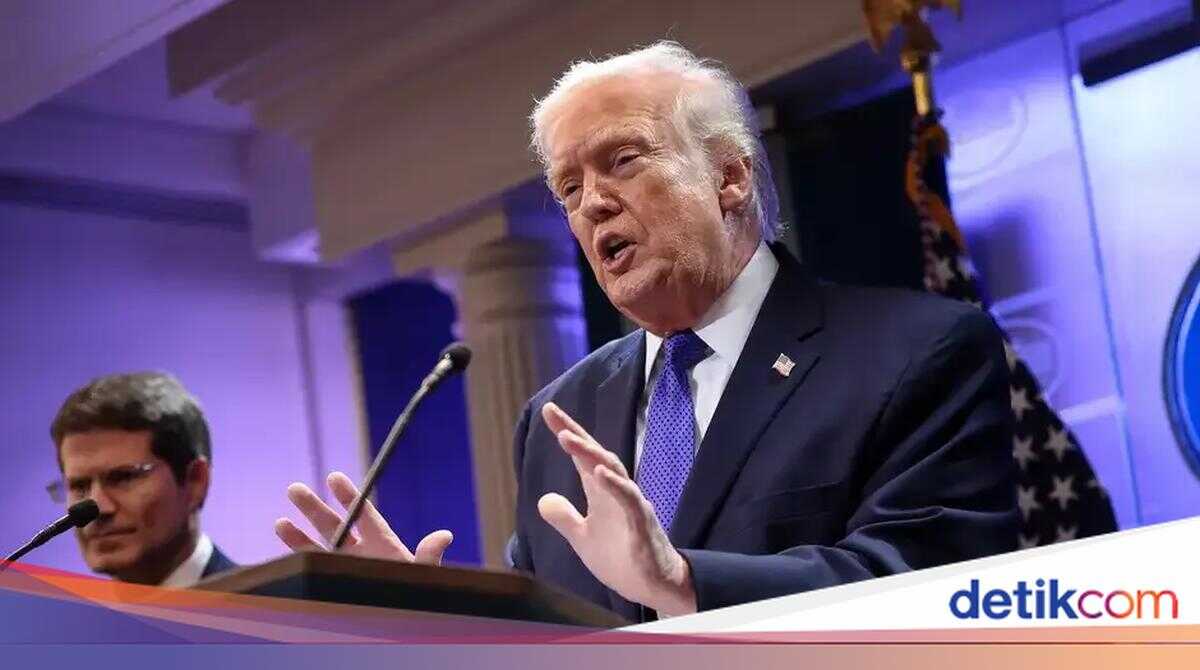
The year 2026 has been remarkably dynamic, even by Donald Trump’s own standards. From the overthrow of Nicolas Maduro in Venezuela, to Trump’s threats to annex Greenland, to his repeated promises of military action against Iran.
Yet amid these events and geopolitical upheavals, one principal instrument has remained a hallmark of both Trump presidencies: tariffs.
Trump’s obsession with tariffs is longstanding. Experts who have observed the US president’s conduct over decades say the obsession is linked to Trump’s views on Japan’s rapidly expanding economy in the 1980s.
Trump believes Japan’s economic success was built on trade relations he considers unfair to the United States. He then came to view tariffs as a powerful remedy for rebalancing trade with other nations. He has maintained this position for over 40 years, regardless of the country or prevailing economic conditions.
He frequently resorts to tariffs when under pressure. At the height of the Greenland crisis, for instance, when European leaders sharply condemned his rhetoric, Trump threatened to impose tariffs on those opposing his plans. His conviction in the effectiveness of tariffs, whatever the issue, appears unshakeable.
“I’ve always said that tariff is the most beautiful word in the dictionary for me,” he declared at his inauguration parade in January 2025. “Tariffs will make us very rich; they will bring our country’s business back.”
Supreme Court declares Trump’s tariffs illegal — has his signature trade tool been stripped away?
This is precisely why the US Supreme Court’s stunning ruling on Friday (20 February) declaring Trump’s emergency tariffs illegal has the potential to become a defining moment of his second term. Does the highest court’s decision eliminate the core power of his economic policy? Will Trump change course? Or will it further entrench his position?
Jacob Funk Kirkegaard, a senior non-resident fellow at the Peterson Institute for International Economics, told DW that the ruling does not remove tariffs from Trump’s strategy but may reduce their impact.
“Whatever happens going forward, this decision removes Donald Trump’s favourite move of using tariffs as a tool to address virtually every foreign and domestic policy issue by suddenly imposing tariffs of 20%, 30%, or 50%,” Kirkegaard said. “The level of uncertainty in US trade policy has now diminished.”
However, following the Supreme Court ruling, Trump promptly set new global tariffs at 10%, then raised them to 15% the following day. Some observers interpreted Trump’s move as a signal that he has no intention of softening his approach.
“So much for those who thought a Supreme Court loss would lead to more restrained trade policy,” said Deborah Elms, head of trade policy at the Hinrich Foundation, via LinkedIn.
Moreover, not all of Trump’s tariffs were struck down. Tariffs remain in force on sectors important to China and the European Union, such as steel, aluminium, and automobiles. The Trump administration is also seeking alternative legal bases for imposing tariffs.
Many of the “reciprocal” tariffs previously levied on various countries have now been removed and replaced by the new global tariffs. These tariffs have a 150-day lifespan due to legal constraints and require US Congressional approval for extension.
The fate of Trump’s trade deals with numerous countries after the Supreme Court ruling
The most pressing question for governments worldwide now concerns the trade agreements they have reached with the US. Will the Supreme Court ruling prompt countries such as India or the European Union to revisit those deals in pursuit of better terms?
Experts believe these countries are unlikely to suddenly cancel agreements, fearing potential retaliation from the US once the legal situation becomes clearer.
“From our recent conversations with various governments, we do not anticipate anyone immediately withdrawing from agreements signed in recent months,” Andrew Wilson, deputy secretary-general of the International Chamber of Commerce, told the Financial Times.
Countries that had negotiated tariffs of around 15% with Trump are also likely to maintain the status quo for the time being.
However, initial reactions from several EU leaders, such as German Chancellor Friedrich Merz and French President Emmanuel Macron, suggest a belief that tariffs for European exporters may be reduced. The EU is even considering delaying the ratification process for the EU-US trade agreement. Meanwhile, the European Parliament’s trade committee is scheduled to hold an emergency meeting on Monday (23 February).
Kirkegaard said that from the EU’s perspective, Trump’s new 15% global tariff would likely render the trade agreement moot, given that the tariff could be added on top of the previously agreed 15% rate.
“That is unacceptable to the EU, and therefore we need to see the specific legal guidance on transatlantic trade that the Trump administration will issue,” he said.
Earlier this month, India and the US reached a provisional trade agreement under which India agreed to set reciprocal tariffs at 18%. However, following the Supreme Court ruling, India postponed plans to send a trade delegation to Washington to finalise the agreement text, which had been due to commence on 23 February.
“Because the legal reference tariff has now disappeared, these agreements may need to be revised,” said Carsten Brzeski, head of global macro at ING Research.
Could the Supreme Court’s tariff ruling benefit China?
If Japan marked the beginning of Trump’s fascination with tariffs, then China remains the most pressing challenge.