
Supporting the 100 GW Target, TMAI Strengthens National Solar Industry Sovereignty
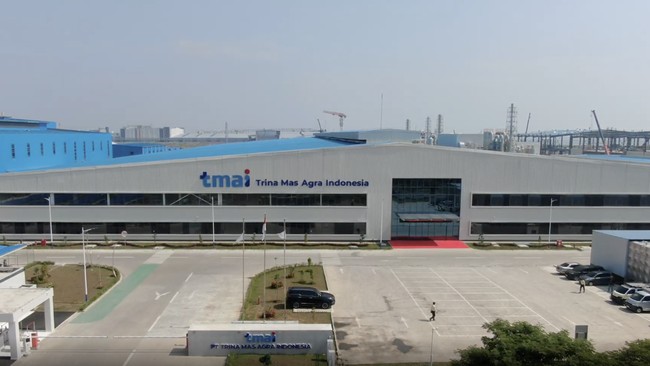
In the midst of the government’s strategic efforts to pursue the ambitious target of building 100 GW of solar power plants (PLTS), the need for domestic clean energy supply is projected to surge sharply. Global decarbonisation trends, the acceleration of the electric vehicle (EV) ecosystem, and the demands of the national green industry require massive, stable, and independent solar energy availability. This target serves as a vital instrument to strengthen national resilience amid uncertain global conditions, from logistics distribution barriers to inter-country export-import restriction policies that often trigger price spikes and shortages of core components. The presence of PT Trina Mas Agra Indonesia (TMAI) as Indonesia’s first and largest integrated solar panel factory, comprising a 1 GW solar cell plant with the latest TOP-CON technology and a 1 GW solar module (solar panel) plant, with panels sized at 720 Wp and class-leading efficiency up to 23.3%, plays a crucial role in providing reliable domestic infrastructure. This facility ensures that the surge in demand for green energy is met independently while keeping the national energy transition on track. Downstreaming for Independence and Equitable National Energy Through an investment exceeding USD 100 million, TMAI has operationalised an integrated manufacturing facility that produces solar cells domestically. This step demonstrates real downstreaming, where the national industry is no longer limited to frame assembly but has mastered core solar cell technology via N-type i-TOPCon Advanced. The existence of this integrated and state-of-the-art solar panel factory, with a local content level of up to 60% as the first in Indonesia, forms the foundation for building a truly independent and globally competitive industry. Deputy Director of PT Trina Mas Agra Indonesia, Lokita Prasetya, stated that the company fully supports the 100 GW PLTS target as the main driver of national green industrialisation. “The presence of TMAI’s integrated factory in Kendal is our concrete step to ensure that the economic value added from this energy transition is fully created and enjoyed domestically. By mastering upstream solar cell technology, we not only strengthen high local content achievement but also build technological independence that positions Indonesia as a key player in the global green energy supply chain,” she said, quoted on Saturday (2/5/2026). Supply Chain Efficiency and Equitable National Energy Access Strengthening the upstream industry domestically is the key to creating competitive economies of scale. Through large production capacity, Indonesia can reduce dependence on global supply chains and significantly mitigate fluctuations in imported component prices. This condition provides more assured supply stability to support the sustainability of various renewable energy projects nationwide. “Besides economic aspects, local manufacturing plays a vital role in shortening the logistics chain, making component distribution faster and more responsive. By cutting international shipping wait times to shorter domestic distribution, the presence of a domestic production base facilitates reach to remote areas,” Lokita added. The presence of this domestic production base aligns with the government’s agenda to accelerate PLTS development in various regions, including remote areas, thereby making green energy distribution more efficient. With closer and more responsive supply availability, TMAI contributes to realising energy justice so that the benefits of solar technology can be felt equitably from Sabang to Merauke. This strategic step also strengthens Indonesia’s grand vision to transform into a competitive green industry hub in Southeast Asia. TMAI operates through strategic collaboration between the private sector, namely PT Dian Swastatika Sentosa Tbk (DSSA) and Trina Solar Co, alongside the state-owned enterprise through PT PLN Indonesia Power Renewables. This synergy ensures that national green industry development runs in line with public interests, adheres strictly to regulations, and guarantees inclusive governance. Through this sovereign and labour-intensive industry, Indonesia transforms from mere consumer to major producer and innovation centre for solar energy in Southeast Asia.