
Support for Resilience in the Narrowing Digital Space
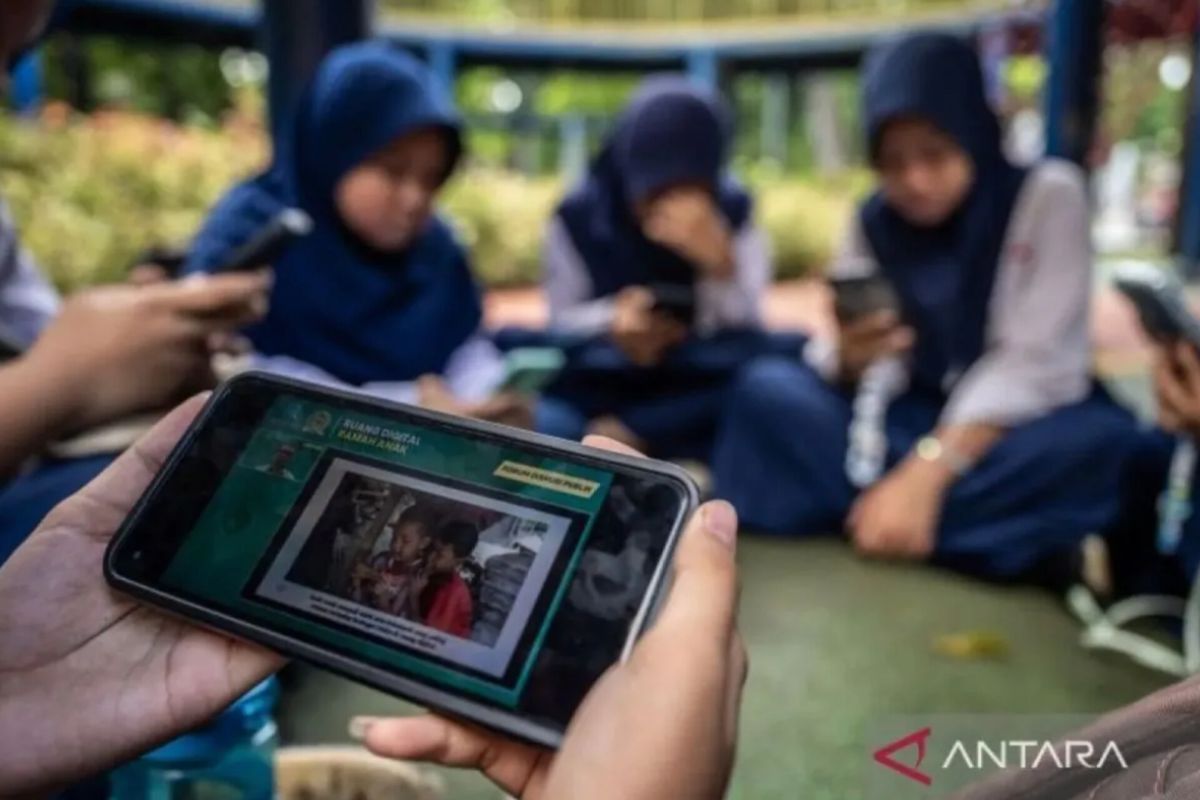
The transformation of education based on mental resilience is an urgent step to ensure the future generation can survive and thrive amid increasingly complex global disruptions.
Jakarta (ANTARA) - Restrictions on digital spaces can be beneficial, as rules that limit access can actually support mental resilience, particularly for children and adolescents during the transition to the current Industry 5.0 era.
This is reflected in the introduction of Government Regulation (GR) No. 17 of 2025 on the Governance of Electronic Systems in Child Protection (GR Tunas), along with its implementing regulations.
This regulation delays account creation for children under 16 years old on high-risk digital platforms, including social media and networking services.
Meanwhile, children under 13 years old are only permitted to have accounts on low-risk digital products and services designed specifically for children, and this must be accompanied by parental permission.
Children aged 13 to 15 years can access medium-risk digital services, but still require parental approval.
The response to this policy is generally positive, particularly from local governments in Jakarta through the Department of Child Empowerment, Child Protection, and Population Control (PPAPP), which believes that this regulation can protect children in the digital space from cybercrime.
The regulation seems to address various research findings that report the serious impacts of current technological disruptions, including the emergence of instant culture and dependent thinking patterns. Technological advancements and the rapid flow of information paradoxically increase mental vulnerability.
Therefore, education expert and Professor at the Jakarta Institute of Quranic Sciences (PTIQ), Prof Susanto, firmly states that increased use of digital media correlates with a rise in depression and mental health problems. This occurs because digital media often serves as a medium for destructive social comparison that damages self-esteem and triggers cyberbullying.
World Health Organization (WHO) data reports that one in seven adolescents aged 10–19 experiences mental health problems. In Indonesia, the Ministry of Health recorded in 2024 that 15.5 million people face mental health issues.
Reflecting on this condition, Susanto, who previously served as Chair of the Indonesian Child Protection Commission (KPAI) for the 2017–2022 period, states that children and adolescents today face a serious crisis of mental resilience.