
Super El Niño Threat Looms, Riau's Forest and Land Fires Under Strict Monitoring
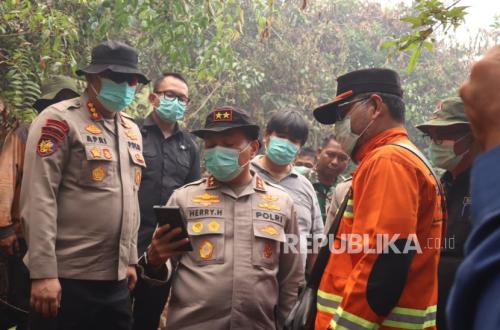
The threat of the Super El Niño phenomenon is looming over the handling of forest and land fires (karhutla) in Riau Province. Police authorities, along with joint teams, are tightening monitoring and accelerating extinguishing efforts, particularly in vulnerable areas such as Bengkalis.
Riau Police Chief Herry Heryawan personally inspected the karhutla location in Sekodi Village, Bengkalis Regency, on Friday (3/4). This visit was conducted to ensure that the extinguishing process is running optimally amid the increasing fire risk as the dry season approaches.
“We are ensuring that extinguishing efforts are carried out maximally and collaboratively. This cannot be done alone; it must involve all parties,” Herry stated.
He emphasised that the main strategy at present is to accelerate early detection and interruption of fire points to prevent them from spreading, especially before the peak of the dry season arrives.
According to him, early handling is far more effective than large-scale extinguishing, which risks causing broader environmental and economic impacts.
In addition to extinguishing, Riau Police are also strengthening law enforcement. Throughout 2025, 74 karhutla cases have been handled, with the same number of suspects.
“There is no tolerance for perpetrators of burning, whether intentional or due to negligence,” he asserted.
As a preventive measure, authorities along with stakeholders have installed hundreds of warning signs in karhutla-prone areas, including prohibitions on utilising previously burned land.
Meanwhile, Professor Bambang Hero Suharjo from Bogor Agricultural Institute warned that this year has the potential to face Super El Niño, which could trigger extreme drought.
He explained that this phenomenon is marked by a rise in sea surface temperature up to 2.7 degrees Celsius above normal, impacting global weather patterns.
“This is similar to the 1997-1998 fire conditions, when burned land reached 10-11 million hectares,” he said.
Bambang also highlighted the high water levels in canals that have exceeded safe thresholds, thereby increasing fire risks in peatlands.
According to him, mitigation steps must be carried out comprehensively, especially through early warning systems and strengthened prevention efforts.
He also appreciated the green policing approach implemented by authorities, including tree planting programmes as part of long-term strategies to reduce emissions from fires.
“Scientifically, tree planting can help suppress greenhouse gas emissions caused by karhutla,” he explained.
In the future, karhutla handling in Riau is expected not only to focus on extinguishing but also to prioritise prevention, law enforcement, and integrated ecological approaches.