
Sunset, cangkrukan and city memories
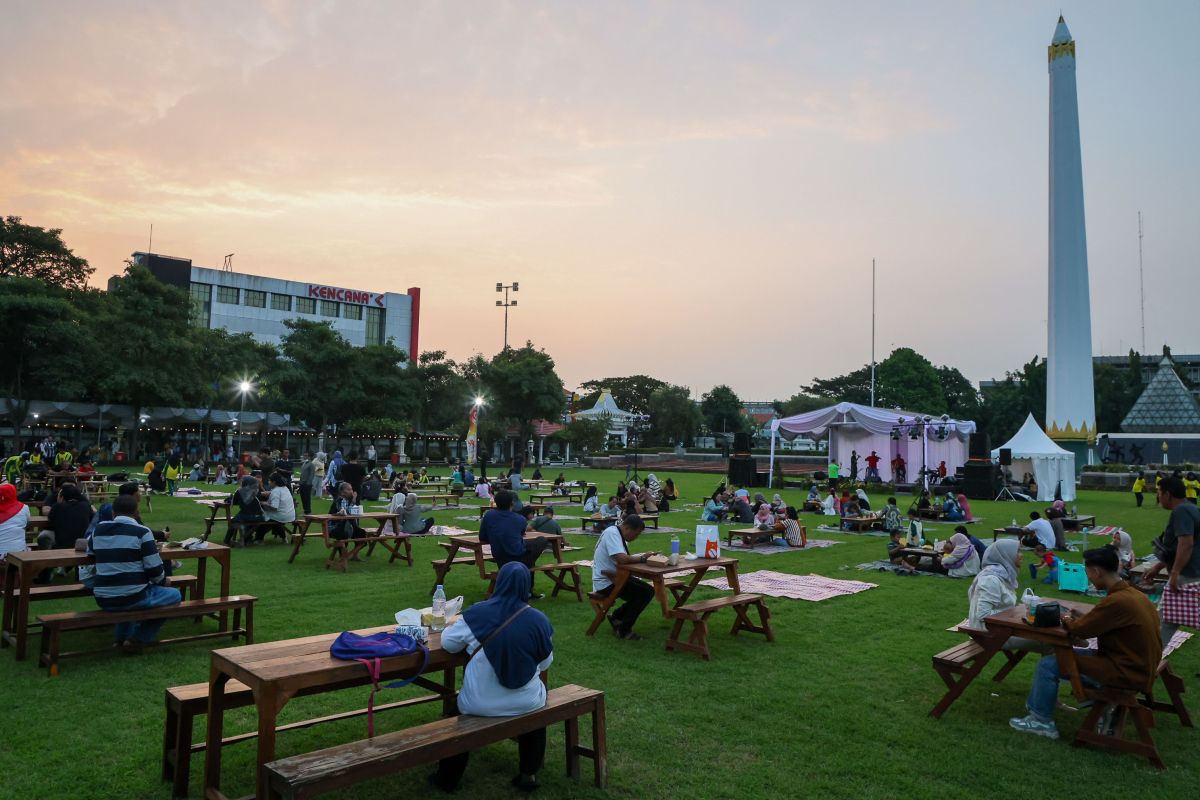
Moving forward, what is needed is not just more festivals, but more spaces enabling citizens to meet, interact, and nurture their own identities. As Surabaya’s sky slowly transforms into an orange canvas above the Tugu Pahlawan monument, a space typically understood as a historical monument, suddenly becomes a vibrant stage of life. Mats are laid out, laughter echoes, the aroma of traditional cuisine wafts, and the distinctive Suroboyoan cangkrukan finds its home once more in a public space steeped in historical significance. The ‘Senja Budaya’ phenomenon in the area is not merely part of the 733rd Surabaya City Anniversary (HJKS) celebrations, but a snapshot of how the city is striving to preserve collective memory through more fluid and inclusive means. During the two-day HJKS event, the Tugu Pahlawan area, typically associated with formal ceremonies and historical tourism, transformed into an open social interaction space for all ages. The Surabaya City Government introduced a concept blending performance art, traditional cuisine, and folk games. This transformation marks a significant shift in how the city perceives public spaces—from mere monumental objects to living areas pulsating with community life. In many global cities, similar approaches have long been strategies for revitalising historical spaces. London, for instance, brings museum districts to life with open-air night festivals, while Kyoto preserves its historic districts through culinary and street performances. Surabaya is now moving in the same direction, transforming Tugu Pahlawan not just into a symbol of the past, but a contemporary social laboratory. A Taste of Memory Amidst the bustle of Senja Budaya, cuisine serves as the strongest entry point to understanding the city’s identity. Kue rangin, putu, semanggi, and nasi jagung are not merely foods, but fragments of memory slowly eroded by the expansion of modern cuisine and instant culture. The return of traditional foods to public spaces like Tugu Pahlawan demonstrates a conscious effort to preserve the ‘memory economy’—a term referring to how cultural heritage can serve as a source of both economic and social value. Data from various cultural tourism studies in Indonesia shows that traditional food-based experiences hold high appeal for younger generations, particularly Gen Z, who seek authentic experiences over mere consumption.