
Sun Tzu's War Strategies in the Hormuz Crisis
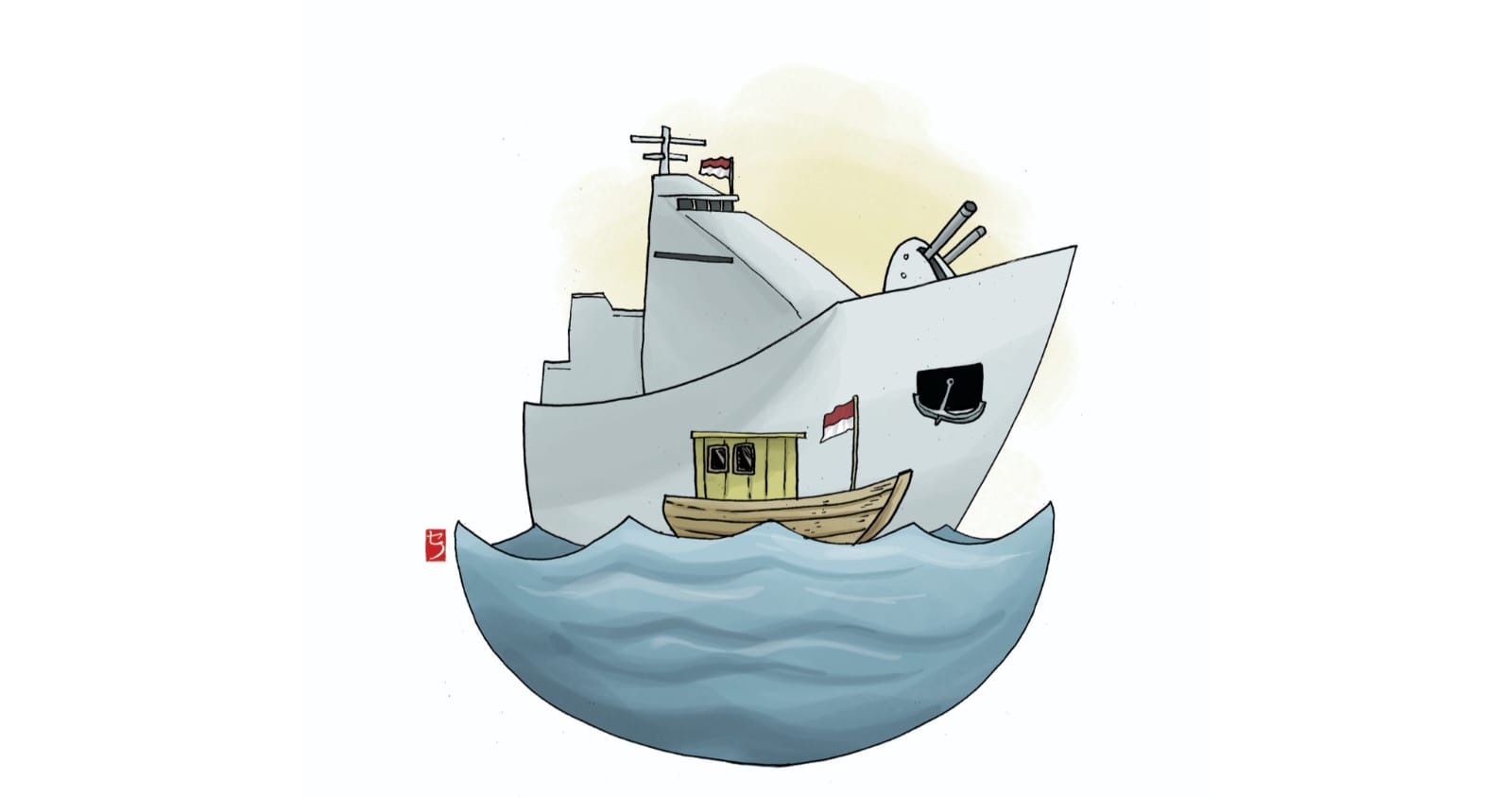
The Iran-United States and Israel war has lasted over a month without signs of ending. Initially aimed at altering Iran’s leadership structure, the conflict has now shifted to a global energy crisis. Iran’s retaliatory attacks with waves of ballistic missiles and drones on Israeli territory and US military bases in the Gulf region have intensified the fighting. Iran has subsequently used the Strait of Hormuz as a geopolitical weapon to pressure the US and its allies.
This strait, with an effective shipping lane just 3 km wide and depths of 60-100 metres, is crossed by more than 20% of the world’s oil supply, making it a strategic global energy trade route. The navigation conditions pose technical challenges for ultra-large crude carrier tankers, requiring high-precision navigation to avoid grounding.
We now realise that the sea is not merely a geographical space but the primary stage for global energy politics. Spiking oil prices, disrupted supply chains, and threats to global economic stability are at risk. The Hormuz crisis illustrates how the sea has transformed from geo-economics to geopolitics.
While military strategists initially doubted Iran’s capabilities, it has in fact endured for over a month, launching increasingly sharp retaliatory strikes. Through its asymmetric strategy, Iran has forced the Allies into a prolonged and costly military campaign, significantly weakening their military and economic capacities.
War is no longer determined solely by the quality of attacks but also by the resilience of the targeted space. Iran has succeeded in adapting its military capabilities by exploiting military geography known as Weather, Terrain, Enemy (WTE). Natural landscapes such as mountains, seas, gulfs, straits, and deserts are never neutral. They can all serve as barriers, protectors, delayers, and multipliers of strength in war.
The Zagros and Elburz Mountains act as natural geographical shields, obstructing enemy radar and creating ‘traps’ that complicate attack detection. The rugged terrain allows Iran to hide military installations underground, neutralising the adversary’s air technology superiority and complicating land invasions.
Iran’s defence is not just a matter of missile or drone numbers but the result of a combination of territorial depth, topographical protection, and the ability to exploit the world’s most sensitive chokepoint, the Strait of Hormuz. Iran’s control over the northern Hormuz space provides strategic value far beyond narrow military calculations.
Sun Tzu (544-496 BC) was a legendary ancient Chinese general, military strategist, and philosopher. His book, The Art of War, is a highly influential guide to war tactics, emphasising victory through intelligence, espionage, and flexibility, even without physical combat. One of Sun Tzu’s sayings is, “Know your enemy and know yourself, and you will win a hundred battles without risk.”
Iran adeptly transforms ancient war strategies into modern methods, concealing drone and missile strengths to appear weak. By hiding true military capabilities and projecting vulnerability while preparing deadly precision missile strikes when the enemy is off guard, the war is prolonged, gradually weakening the opponent’s forces.
HORMUZ CRISIS IN THE INDONESIAN CONTEXT
With 17,504 scattered islands, Indonesia holds a vital role in the Indo-Pacific, serving as a convergence point for various global interests, with around 40% of world trade passing through Indonesian waters. Indonesia must address global geopolitical challenges such as superpower rivalries, South China Sea issues, cybersecurity, and climate change with adaptive and visionary strategies. If these routes are disrupted, the impact would not only cripple naval fleets but also halt factories in East Asian industrial nations.
Iran has one pressure point, the Strait of Hormuz. Indonesia has three main international shipping lanes, the Indonesian Archipelagic Sea Lanes. The Sunda Strait is the primary route to East Asia, while the Lombok and Makassar Straits are traversed by giant ships unable to pass through the Malacca and Sunda Straits. The Ombai-Wetar Strait is crucial for large ships and US nuclear submarines from Australia to the North Pacific.
Indonesia is also crossed by hundreds of submarine optic fibre cables, both domestic and international, making it a key digital connectivity hub. Major international cables such as Apricot, Echo, Bifrost, and INDIGO-West pass through Indonesia. Data from 2021 shows 217 sea cable routes, 209 beach manholes (BMH), with hundreds of active cables scattered, particularly in western Indonesian waters.
In the worst-case scenario, if a Hormuz-like crisis occurs in Indonesia and one of the three shipping lanes closes for maritime security reasons, global ship insurance costs would skyrocket, and industrial nations would see their economies collapse within weeks.
NEED FOR HYDROGRAPHIC DATA
Indonesia has 6.4 million square kilometres of waters and 17,504 islands. Compare this with Iran, which has a land area of 1,636,000 square kilometres and waters of around 12,000 square kilometres. With its asymmetric war strategy, Iran can counter allies with superior military power by leveraging military geographical space to its advantage.
For Indonesia, maritime waters must become a tactical and strategic advantage. Mastery over sea terrain data and information is crucial, impossible to achieve without comprehensive and accurate hydrographic data and information. Bathymetry data, seabed topography, oceanography of water bodies, and meteorology determine locations where