
Sumatran Tree Resin Sought After from China to Italy
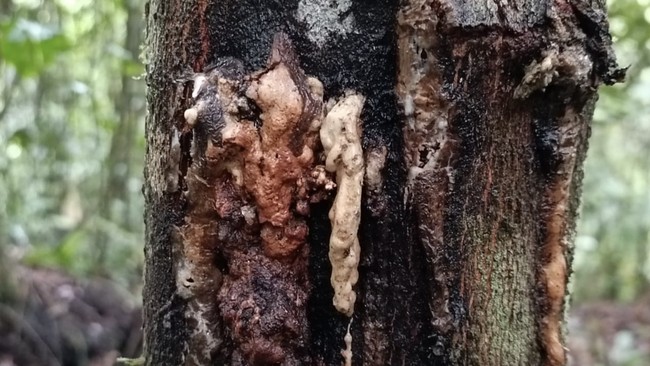
In many regions of Sumatra, benzoin has long been known through the aroma of rituals and ancient stories imbued with spiritual nuances. However, in the international market, benzoin is interpreted differently—as a high-value industrial raw material.
The resin from the Styrax benzoin tree enters supply chains for perfumes, cosmetics, pharmaceuticals, and premium foods.
Data from the Central Statistics Agency (BPS) records that Indonesia’s benzoin exports throughout 2024 reached more than 43,000 tonnes with a value of around US$52 million. In 2023, the value was around US$49 million. This increase occurred while the volume did not change much, indicating that global selling prices remain strong.
India is the largest buyer with a value of more than US$22 million. China follows with around US$4.7 million. Bangladesh, Egypt, France, and Italy also feature in the list of major markets. The distribution of export destinations illustrates that benzoin is used in many sectors with varying needs.
France and Italy have large perfume industries. Benzoin resin is needed as a fixative to make scents last longer. Demand from these two countries helps maintain Indonesia’s position in the premium market. Production centres in North Sumatra are known to produce resin of good quality with a distinctive aroma.
Benzoin’s commercial value also comes from its chemical content. The resin contains cinnamic acid, benzoic acid, benzaldehyde, vanillin, and benzyl benzoate. These compounds are widely used in formulations for antiseptics, ointments, skincare products, and aromatherapy.
The food industry also uses benzoin derivatives as natural flavour and aroma enhancers for candies, beverages, and certain desserts. Therefore, demand for benzoin does not rely on a single sector. When the fragrance market weakens, needs from pharmaceuticals or food can still support consumption.
Traditional demand remains alive as well. In India, gum benzoin is used in religious rituals. Orthodox churches in Russia and Eastern Europe use it as an ingredient in liturgical incense. Such culture-based consumption provides a relatively stable market year after year.
Domestically, the main challenge lies in farmer regeneration. Many young people are leaving the benzoin business due to the long harvest cycle and income seen as less attractive. If this trend continues, raw material supplies could be strained in the coming years.
Another issue is in the downstream sector. Indonesia still sells mostly raw resin, while other countries process it into niche perfumes, health balms, premium candles, and high-value cosmetic ingredients. Price differences occur at the processing stage.
This means there is still wide room for growth in the benzoin industry. If seedling propagation, research, and processing investment are strengthened, this ancient commodity from Sumatra’s forests could rise to become an export product with much higher margins.