
Sumatran Elephant Deaths in Riau Constitute an Ecological Crisis, Not Merely Poaching
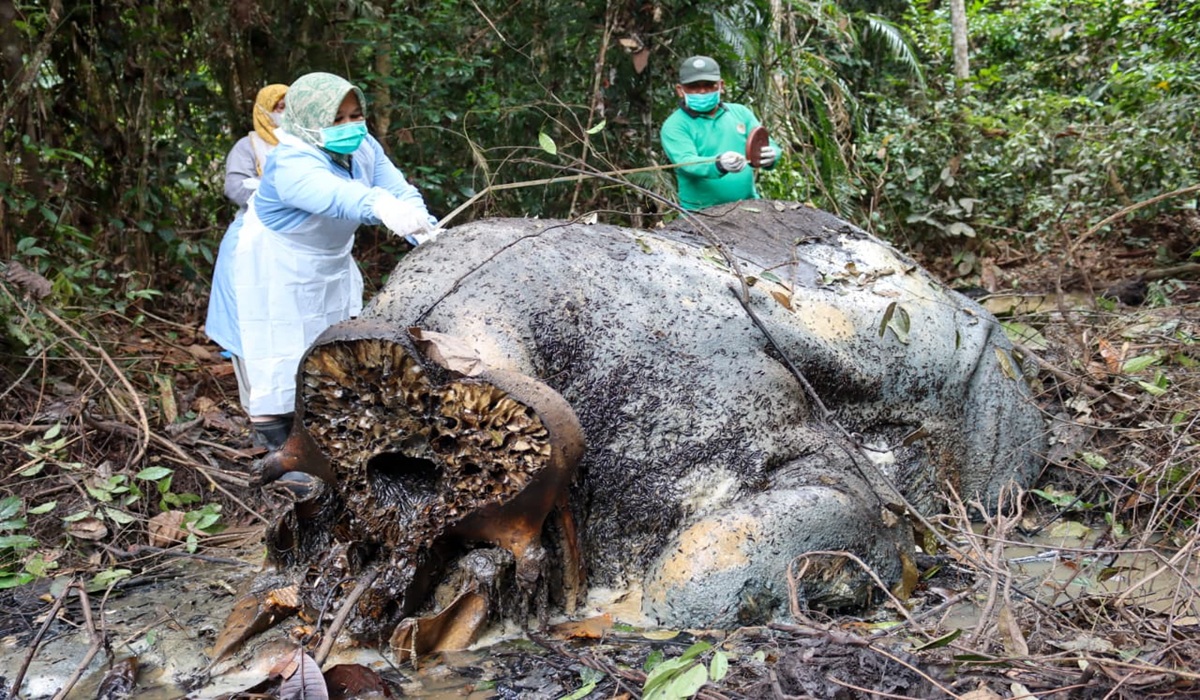
The Jikalahari Forest Rescue Network has emphasised that the series of Sumatran elephant deaths in Riau Province represents a clear indicator of a profound ecological crisis.
This phenomenon is no longer regarded as merely an isolated incident of conventional poaching, but rather a systemic consequence of forest function changes and fragile wildlife habitat governance.
The findings are documented in a brief report titled “Elephant Slaughter Towards Ecological Extinction: Habitat Crisis and Landscape Governance of Sumatran Elephants in Riau.”
The report examines the condition of six primary habitat pockets, now increasingly critical due to industrial concessions and palm oil plantation encroachment.
“Repeated elephant deaths in Riau demonstrate that this issue cannot be viewed solely as a poaching crime by individuals. It reflects the destruction of elephant habitats increasingly fragmented by forest and land-based industries,” stated Arpiyan Sargita, Deputy Coordinator of Jikalahari, on Monday, 9 March.
Currently, the Sumatran elephant (Elephas maximus sumatranus) holds Critically Endangered status.
Of approximately 1,100 elephants across Sumatra, only an estimated 216 remain in Riau. Ironically, their habitat continues to shrink. Jikalahari’s analysis documented massive deforestation in habitat pockets over the past two decades (2006–2025).
Arpiyan explained that the opening of corridor routes and land clearing has made human access to forest interiors increasingly open.
“Pressure on wildlife does not originate solely from poaching. Rapid landscape transformation has made human access to forests easier, ultimately creating opportunities for wildlife poaching,” he added.
Jikalahari recorded at least 77 elephant deaths in Riau over the past 20 years. The majority were found in industrial concession areas; 51 elephants in areas affiliated with APRIL Group and 11 in APP Group areas.
The most recent case in February 2026 uncovered a 40-year-old male elephant death in PT RAPP’s Ukui sector concession with gunshot wounds, followed by a young elephant death in Tesso Nilo caused by snares.
Beyond habitat concerns, Jikalahari highlighted weak law enforcement. Sentences imposed on veteran poachers such as Anwar Sanusi alias Ucok, ranging only from 1–3 years, are considered inadequate as deterrents.
“When penalties are lenient and poaching networks remain unravelled to include financiers and ivory trading chains, elephant poaching practices will continue to repeat,” Arpiyan stated.
In closing its report, Jikalahari urged three concrete measures: integrated habitat restoration planning, strengthened law enforcement addressing the entire poaching supply chain, and transparent policy coordination to prevent regulatory overlap that permits continued environmental destruction.
Beyond legal sanctions, environmental advocates emphasise the importance of planned, measurable ecosystem recovery agendas involving affected communities, and the need to position “Green Indonesia” discourse not as a sectoral issue but as a strategic doctrine for political progress.