
Sumatra–Java gas pipeline could be connected by 2028
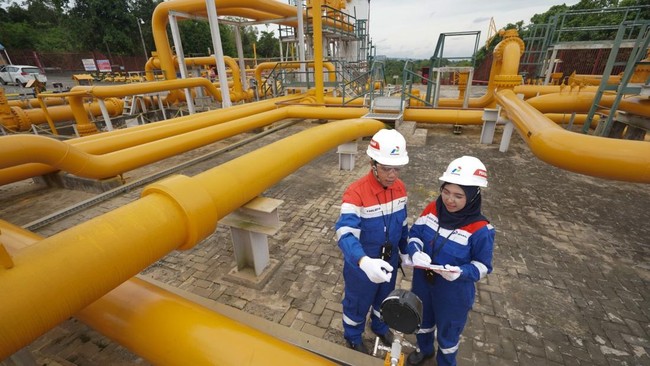
Jakarta, CNBC Indonesia - The Ministry of Energy and Mineral Resources (ESDM) targets the integration of the natural gas transmission pipeline network connecting Sumatra and Java to be completed by 2028. This is to ensure reliability of energy supply on the two islands, which host the largest gas demand in Indonesia.
Laode Sulaeman, Director General of Oil and Gas (Dirjen Migas) at the Ministry of ESDM, said the government is accelerating the development of national gas infrastructure to support domestic energy resilience. He noted that linking pipelines from Aceh to East Java would provide flexibility for the government in distributing gas from various oil-and-gas fields.
‘By 2028. Sumatra and Java will be connected. Actually what hasn't been connected yet is only the Dumai–Sei Mangkei segment. The crossing of the Sunda Strait already has it; the pipeline is already there,’ Laode said in the Podcast Bukan Abulake of the Ministry of ESDM, quoted Tuesday (19/5/2026).
The government is currently focusing on completing the Dumai–Sei Mangkei (DUSEM) pipeline segment, which is projected to be finished next year. This infrastructure is considered crucial to transporting gas from the Andaman Block in northern Sumatra to southern Sumatra and eventually connected to the pipeline network in Java.
‘Hopefully—Dumai, alhamdulillah, we are starting now and, God willing, we will complete it next year. The plan is that the Andaman Block can start in 2028. So we already have the pipeline ready to receive,’ he added.
This also recognises that the majority of domestic natural gas production is now allocated to domestic industry. With the Dumai–Sei Mangkei–Aceh to East Java connection, energy distribution can be more evenly and efficiently supplied to the industrial sector, power plants, and downstream applications.
‘If both of these are in place, then gas transmission from Aceh to East Java will exist, so gas can be injected wherever on these two islands as we utilise it,’ he explained.
This connectivity is also expected to underpin the acceleration of domestic household gas network construction (jargas) as part of government efforts to curb LPG consumption. Through an integrated transmission pipeline system, the government is optimistic that the target of adding one million new household connections in the next two years can be realised soon.
‘The demand for gas is highest on Java and Sumatra, meaning the infrastructure must be strong on both islands. Therefore, a few years ago we already mapped how Aceh and East Java could be connected,’ he said.