
'Sultan Village' in Cilacap and the Story of the Grocery Store Tycoons
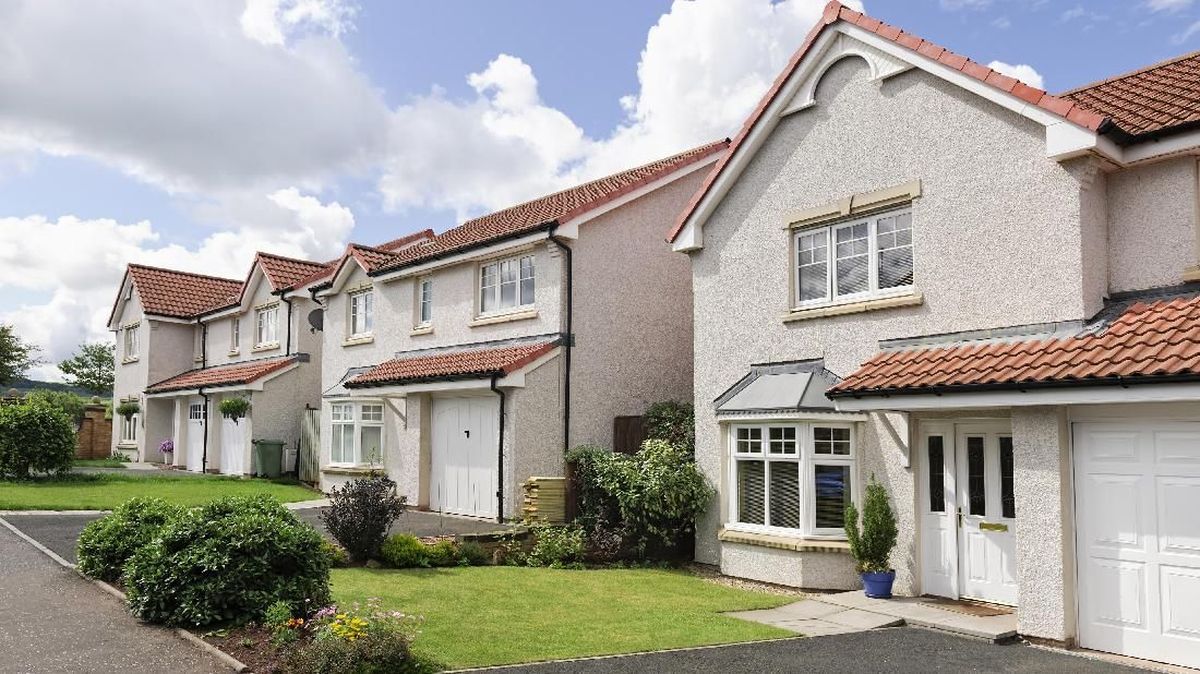
Desa Jambu, in Wanareja District, Cilacap Regency, Central Java, has earned the nickname ‘Kampung Sultan’. Rows of large and luxurious houses stand behind the hills of Wanareja.
Desa Jambu has only one access road from the centre of Wanareja District, which is about 24 kilometres away or a one-hour journey by motor vehicle.
Meanwhile, the village is about 100 km from the centre of Cilacap City, with a travel time of around four hours.
Some sections of the road to the village are smoothly asphalted. However, there are also damaged sections, especially when passing through the pine forest area before entering the settlement.
Although located in a fairly remote area, the face of the Desa Jambu settlement differs from most other villages in Cilacap. Residents’ houses stand in tiers and are magnificent, like a housing complex in the city.
“If compared to other villages categorised as kampungs, it’s indeed different. The houses are multi-storey, luxurious, so to speak. People from the regency sometimes say, ‘This is like a house of a (member of) the council,’” said the Head of the Desa Jambu Welfare Section, Enno Carsono, quoted from detikJateng.
Enno said that the majority of houses in Desa Jambu are valued at Rp500 million to Rp1 billion. According to him, the nickname ‘kampung sultan’ for Desa Jambu emerged from outsiders who visited the village and then shared videos or photos of their captures on social media.
“There might be YouTubers or people who first travelled here, saw the houses were different from other kampungs. From there, the term kampung sultan probably emerged,” he said.
Enno noted that the construction of multi-storey and magnificent houses began in 2015 when many village residents migrated to big cities, especially Bandung, West Java.
Previously, only one or two houses stood out. Now, rows of large buildings have become a common sight in the village.
“The boom started around 2015 with constructions. But the really luxurious buildings are from 2020 onwards. In other kampungs in the area, houses are interspersed with gardens. Here, it’s coincidentally like a city complex,” he said.
Migrants Transform Desa Jambu
Behind the grandeur of these houses lies a long story of struggle by migrants from Desa Jambu.
The village, home to around 3,400 residents, has a very strong tradition of migration. According to Enno, about 70% of its residents choose to seek a livelihood outside the area.
These migrants are spread across various big cities, such as Bandung, Bogor, and Jakarta. However, Bandung is the main destination.
“Usually, the most go to Bandung. For example, out of 500 migrants, around 400 are in Bandung, the rest scattered elsewhere,” said Enno.
Lately, some residents have also begun migrating to eastern areas like Cilacap City, Kebumen, and Purwokerto. Some have opened businesses in other districts.
Before the migration tradition developed, most Desa Jambu residents worked in the agricultural sector. Some were farmers, livestock breeders, daily wage labourers, or construction workers.
“Initially, around the 2000s, one or two people migrated to Bandung or Jakarta. After some time, their efforts were seen to be successful,” said Enno.
“Then, those in the village asked around, what business do they do there. Many sell groceries or run grocery stores,” he explained.
Opening Grocery Stores
One Desa Jambu resident, Taryono (61), recounted how the migration tradition among Desa Jambu residents began developing around the 1990s. These migrants sold groceries or ran grocery stores.
“Around the 90s, the young ones started migrating. Initially, selling groceries, running a kelontong,” said Taryono.
Taryono said that initially, the migrants did not immediately start their own businesses. They usually worked for others first to learn trading.
“At first, they worked for others, became employees for a while. But once they knew how to trade, they finally opened their own in Bandung,” he said.
Gradually, the businesses developed. Now, most Desa Jambu residents are known to open grocery stalls in Bandung.
“Now, the majority of Desa Jambu people open grocery stalls. Almost all their migrations are to Bandung,” he revealed.
Taryono himself has six children, all of whom have migrated since decades ago. Most settled in Bandung, while one works in Jakarta.
“My children started migrating from the 90s, all six of them. One in Jakarta, the rest in Bandung,” he said.
Their hard work in migration has borne fruit. His children have their own houses in the cities where they work.
“There, they have bought their own houses. Here too they have houses. But the big houses are actually here,” he said.
Taryono said his children have built six houses on family-owned land in Desa Jambu.
“In total here there are already six houses, each child has one,” he explained.