
Sukabumi Man Expelled from Indonesia Becomes King of Global Hotels
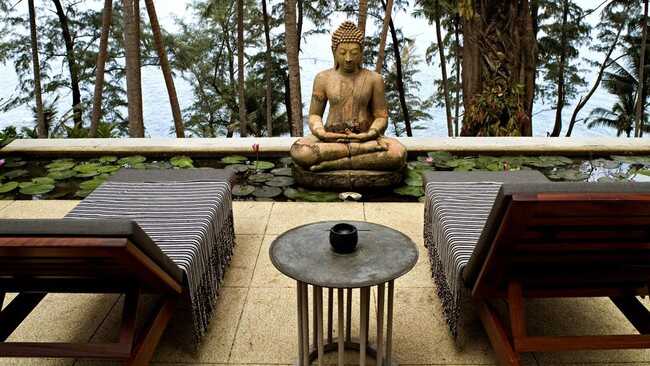
Aman Resort is a network of luxury hotels spread across various parts of the world. Aman Resort is renowned for its distinctive cultural aesthetic, which attracts travellers from many countries. Accommodation prices at Aman Resort vary, with average nightly rates reaching tens of millions of rupiah. In Indonesia, one of the most famous Aman Resort properties is located in Magelang, Central Java. Named ‘Amanjiwo’, guests can enjoy spectacular views of Borobudur from a unique vantage point.
However, it is remarkable that the figure behind one of the world’s largest hotel chains originally came from Sukabumi, West Java.
Currently, Aman’s CEO is a Russian national named Vladislav Doronin. However, long before Doronin took control, Aman Group was founded by Adrian Willem Ban Kwie Lauw-Zecha, also known as Adrian Zecha.
His life story proved quite difficult. He was an entrepreneur who was expelled from his homeland, yet managed to achieve great success by carving out a major career in the global hospitality industry.
Adrian first established Aman Resort in 1988, and it now operates in 20 countries. He grew up in a prominent and wealthy ethnic Chinese family. In The Chinese of Sukabumi (1963), Mely Tan described his family as the ‘upper branch’, referring to a wealthy and successful ethnic Chinese family in Indonesia.
His father, William Lauw-Zecha, was the first Indonesian to graduate from Lowa University in the United States in 1923. Meanwhile, his siblings successfully held top positions in the colonial government. Given these privileges, it is little wonder that Adrian enjoyed many advantages.
He is recorded as having studied in Pennsylvania around the 1950s. However, his family’s honourable position in Indonesia collapsed during 1956-1957.
Family Business Nationalised
During that period, Indonesia’s first President Soekarno undertook the nationalisation of private enterprises in the country. The nationalisation was accompanied by increased sentiment against non-Indonesian residents. As a result, the Zecha family’s business was forcibly taken over by the state. The entire family was forced to relocate and settle in Singapore.
Fortunately, Adrian was still in the United States at that time because he had continued working as a journalist at Time. Indeed, long before entering the hotel business in 1988, Adrian pursued a career as a travel journalist for various media outlets.
Working as a travel journalist allowed him to travel the world, from one tourist destination to another. This experience fostered his growing interest in tourism and hospitality.
According to Martin Roll’s Asian Brand Strategy (2015), Adrian’s first involvement in the hotel business occurred in 1972, when he helped establish Regent International Hotels before eventually founding his own hotel company in 1988.
A Dissatisfaction with Hotels Worldwide
The story of how he came to establish his own hotel is quite interesting. The creation of his own venture stemmed from Adrian’s dissatisfaction with the prevailing hotel concept at the time, which offered large spaces with varying class levels. For him, this type of concept required hotels to be built as large structures that obscured the natural beauty of the surrounding location.
As a result, he wanted to create hotels with a different concept—exclusive and small, with just 50 rooms. This smaller footprint allowed remote tourist destinations to have hotels without overwhelming the landscape.
He first realised this concept in Phuket, Thailand. Together with his friend Anil Thadani, they invested jointly and built a hotel there at a cost of US$4 million.
In December 1987, the hotel was completed and named Amanpuri. As the name suggests, “Aman” is derived from Sanskrit, meaning “Peace”. He wanted his hotel to provide a sense of peace to visitors.
Based on this founding philosophy, Amanpuri featured fewer than 50 rooms, designed to maintain exclusivity for guests. Adrian believed that the fewer rooms available, the more he could ensure service quality would be maximised, thereby delighting guests. This differs from other hotels that pay less attention to service despite having many more rooms.
According to Asian Brand Strategy (2015), with this strategy, Adrian and Aman successfully provided guests with a differentiated experience, which increased their fame. In addition to this, the success stemmed from Aman’s skill in identifying and securing locations in remote tourist destinations.
Whenever a remote tourist destination became available, Adrian would immediately select and develop an Aman property there.
Today, Aman Hotel has become one of the world’s largest hospitality companies. Whenever you see a hotel with “Aman” in its name, such as Amanjiwo, Amanpuri, Amankila and others, it falls under the Aman Group umbrella, founded by this man from Sukabumi.
Considering its history, Indonesians can take pride in the fact that the renowned Aman Resort brand, known worldwide, originated from the brilliant idea of a son of Indonesia.